| |
|
Scroll
down to browse through some archived SWIMMING POOL
questions and answers. Please click the Pool
Problems Link, on top of every page, to access a
complete listing of Pool Problem subjects, an
alphabetized Website Table of Contents, Pool Equipment
Information, About Alan Biographic Material and a Pool
Glossary. Use the other links to access additional
subject information. More information about some new and
unique products, for pools and spas, can be found by
visiting
The Website
Store. You'll never know what you'll find and
that's always fun. Be better prepared and avoid
costly problems!
|
|
 |
Shipping is FREE* . . . within
the Continental U.S.
A $9.99
handling charge will apply
to Continental U.S. Orders,
under $75.00. Orders
outside of the Continental
U.S. may require some
additional charge, based on
quantity and destination.
Most products can be
shipped World-Wide. International
and orders outside of
Continental U.S. - see
comments on the ordering
pages. |
|
 |

Major
Credit Cards and PayPal are accepted. |
|
On-line
shopping since 2002 - Safe and Secure!!! |
|
Optimizing water chemistry, improving
circulation and eliminating
phosphates!!! |
|
When the
water chemistry is out of balance, the
likelihood of algae growth increases and
the growth of sanitizer-resistant
strains, due to impaired sanitation, can
be the result. A
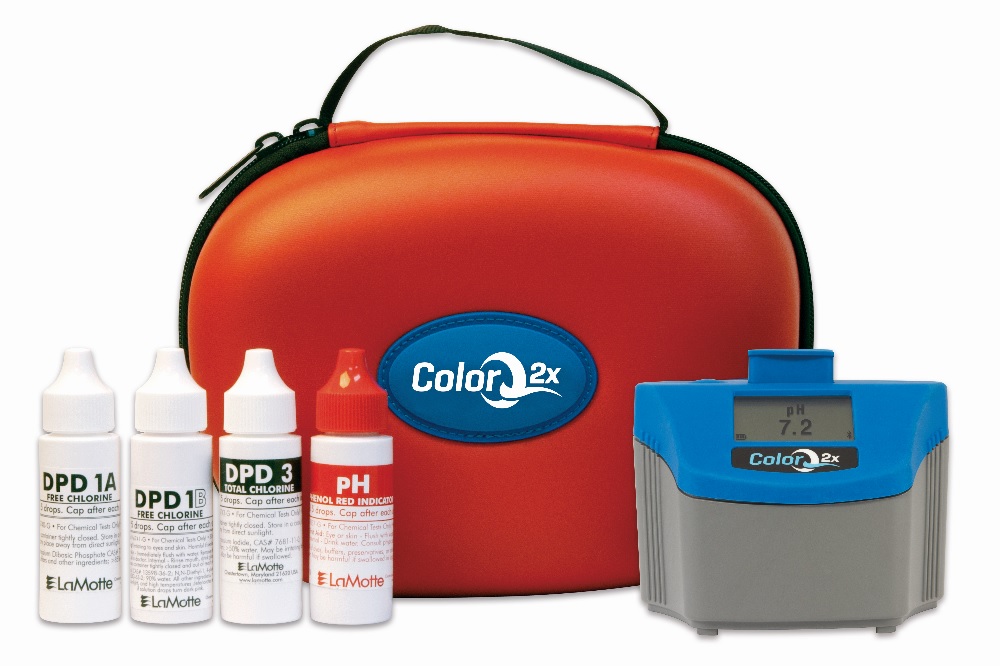
ColorQ, All-Digital Water Tester
can perform all of the common pool water
tests, eliminates the color-matching and
guesswork. There is a model, for
every pool testing need. Reliable
water testing will help solve and avoid problems. Better
Circulation helps make everything work
more effectively. The
Circulator is a return jet
replacement fitting, that improves
filtration, eliminates the dead zones that
promote algae growth, improves sanitizer
distribution and improves heat
dispersion. Phosphates and Nitrates
can increase the growth of algae and
make treatment more difficult, as both
are vital plant nutrients. Nitrate
removal is not practical, but phosphate
removal is easy enough to do.
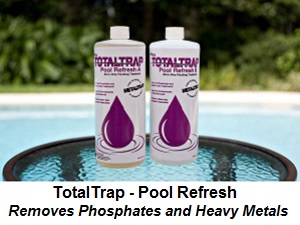
Adding Pool
Refresh Total Trap will allow
you to vacuum and filter out phosphates
and should make algae control more
effective. |
|
|
If you have a pool or spa water testing
need, we should have the product.
►
Scroll down to read through some
Question & Answer information.
◄
|
|
Alternative Pool Water Sanitizers |
|
When algae
is a frequent problem, it is the result
of inadequate sanitation. as well as
other factors. Adding some
backup sanitizing is important, as
chlorine level rise and fall, based on
pool usage and chemicals being added. A
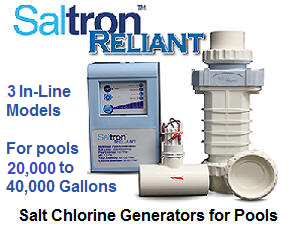
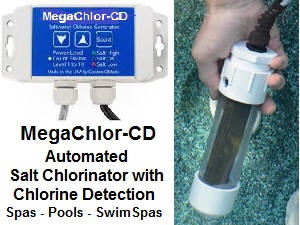
Salt
Chlorine Generator is definitely
a better way to do chlorine. Salt
chlorine generators are highly automated
and give you better control.
In-Line and no-installation-required
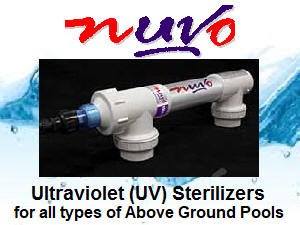
models are available. Adding an
Ultraviolet Sterilizer kills
virtually everything, passing through
the cell, and improves the overall
sanitizer effectiveness, while reducing
chemical usage. This
reduces the amount of chlorine required,
to maintain an optimum level. |
|
|
If you have a pool or spa water testing
need, we should have the product.
►
Scroll down to read through some
Question & Answer information.
◄
|
|
How to treat pink algae, slime and mold,
pool water. |
"Pink" algae or
slime may be pinkish in color, but it is not an
algae. The problem is actually bacterial in
nature. The best algaecides to use for this
problem are either Polymer Algaecides or Silver
Algaecides. These products exhibit some
antibacterial properties: other algaecide such
as "quats" or copper are not effective against
these bacterial problems. Another effective
treatment is the use of a Sodium Bromide
product. However, the use of sodium bromide, in
a chlorine pool, can increase chlorine usage,
for an indeterminate length of time. Either
course of treatment must involve
superchlorination, in order to kill and
decompose the bacterial growth. This type of
problem can recur, if the conditions and water
chemistry are hospitable. When pink algae, mold
or slime issues, occurs in a biguanide-sanitized
pool, on a recurring basis, it is a sure sign of
the development of a sanitizer-resistant
microorganism. The sensible solution is to stop
using biguanide and permanently switch to
another type of sanitizer. In
addition to proper sanitation, good circulation
is a must to help prevent algae growth in areas
with stagnant water or dead zones. The use
of The Circulator, as a
replacement for standard return jet fittings,
can dramatically improve circulation, better
distributing sanitizer to all areas of the
pool. Should problems arise,
refer to the
Pool Problems Page, as a source of
problem-solving information, broken down into
various categories. Scroll down the page
and click on the linked
keywords,
catch phrases
or images, in the archived answers below, to access additional information, on that topic or product.
Do you know what's in
your water? If you're having problems, with
sanitation or water clarity, testing allows you to better
understand the chemistry and determine the cause of the
problem. Once understood, you can select the best
treatment option. Understanding the nature of the
problem, should be step one. For information about
our full selection of testing options, visit our
Test Equipment Store.
 |
Join our E-Letter Mailing List.
You'll receive 1-3 E-Letters a
month, featuring helpful pool
and spa advice, new product
information and sale
announcements. All we
require is your e-mail address
and you can opt out anytime you
wish.
Your information
will never be shared or sold. |
|
▼
Helpful,
Problem-Solving Information, in a question and
answer format.
▼ |
►
Pink Algae, Sodium Bromide And What To Do?
First, let me say that you
and your website are AWESOME! I have had my
pool for 10 years now, and have gained most of
my knowledge through your website, so thank you
very much. In the 10 years, thankfully, I have
not had many problems because I am meticulous
with my pool and keep my chemistry perfectly
balanced and circulation is great. I have
a slight problem that I know you have the answer
to, and here it is: My pool is a free form
gunite pool with plaster, 35,000-40,000 gallons
with a DE filter and salt chlorinator. I
was experiencing "Pink Algae" and tried to use
algaecide (as you recommended) with a lot of
shock, and spending countless hours in the pool
brushing every bit of the pink blooms. It got
rid of it for about a week and it came back.
Frustrated, I used 4 pounds of United
Chemical's "Pink Treat" and followed their
instructions (the bottle and website say that it
can be used in chlorine pools as well as salt
generator pools). "Pink Treat" is sodium
bromide 88.8%. The pink algae is definitely
gone, however, even by following the directions
on the bottle, I cannot get any reading for
chlorine, no matter how high I turn up the
chlorinator (salt generator) and now I'm worried
that I converted my pool to a BROMINE pool.
I've read all of your answers about this topic,
and even others on the web, and I'm really
concerned that I will have to drain my pool to
start over if I want to get rid of the bromine.
I've also read that by "making chlorine" that I
am continually "assisting making more bromine."
Is this also true. Please help and let me
know what I can do to get my pool back to
chlorine generation from my cell, and/or get rid
of the bromine. Right now my chlorine level is
ZERO. However, all of my other levels seem
good. Thank you for your prompt reply, and
the great website. Warmest Regards,
Rob S.,
Montville, NJ, 8/26/2017
This is something that they don't tell you. and
causes confusion. The type of algae, that you had,
was evidently resistant to
normal level of chlorine. When you added the sodium
bromide, the chlorine converted the bromide to
bromine. In essence, you now have a
bromi ne
pool. So long as you keep generating
chlorine, it will convert the bromide to bromine.
It will be a closed system, so it will keep on
cycling. The down
side is that bromine
cannot be protected, from the SUN's UV rays, as can
chlorine. Therefore, it will be best if you run the
system, after the Sun has gone down. This will
allow the bromine level to rise and persist and give
you a reading the following morning. You could run
the filter, for as few hours during daylight to
promote circulation. To dramatically improve
circulation, you could replace the existing return
jet fittings with The
Circulator. Better circulation cures a
whole host of problems. The possible downside for trying to run
the salt cell 24/7 is that you will shorten its cell
life. This may not be exactly what you wanted to
hear, but it did solve the resistant algae problem.
Adding a 60% polymer can help provide some algae
protection, during the daylight hours. If this
website was helpful, in answering your question, please
consider joining our
E-Letter Mailing List. You'll receive E-Letters, with helpful information, new product
updates, suggestions and sale announcements. I hope that
this
recommendation works out for you. ne
pool. So long as you keep generating
chlorine, it will convert the bromide to bromine.
It will be a closed system, so it will keep on
cycling. The down
side is that bromine
cannot be protected, from the SUN's UV rays, as can
chlorine. Therefore, it will be best if you run the
system, after the Sun has gone down. This will
allow the bromine level to rise and persist and give
you a reading the following morning. You could run
the filter, for as few hours during daylight to
promote circulation. To dramatically improve
circulation, you could replace the existing return
jet fittings with The
Circulator. Better circulation cures a
whole host of problems. The possible downside for trying to run
the salt cell 24/7 is that you will shorten its cell
life. This may not be exactly what you wanted to
hear, but it did solve the resistant algae problem.
Adding a 60% polymer can help provide some algae
protection, during the daylight hours. If this
website was helpful, in answering your question, please
consider joining our
E-Letter Mailing List. You'll receive E-Letters, with helpful information, new product
updates, suggestions and sale announcements. I hope that
this
recommendation works out for you.
Sincerely. Alan Schuster, 8/26/2017
However, I want to "convert"
back to a chlorine pool, what do I do? Do I
have to drain all of the water? Or, can I dump
some at a time and refill, and get the bromine
levels down. Eventually, will the bromine
dissipate to non-existent levels and I can go
back to "normal chlorination with the salt
cell?" If I keep running the chlorinator,
which I have off now, the bromine will never go
away, right? I really don't want a "bromine"
pool, so what do I do? UGH!
Sincerely.
Rob S., 8/26/2017
The only way
to eliminate the bromides is water
replacement. Partial replacements will take
many such actions. And if you do
it, the problem algae will most likely
return. So why not make the best of it, as
I described? A bromine pool will smell
better, is less irritating and still works
at high pH levels.
The problem is the Sun's UV rays, which
break down the bromine to bromides. If
you add chlorine, after the Sun goes down,
it will last through the night and into the
next day. This would be my choice,
short of total water replacement
Sincerely.
Alan, 8/26/2017
►
Pink Algae?
There is some pink, slimy looking,
slippery-feeling, growth in the hopper end of the pool -
vinyl, built-in, chlorine maintained, 20000 gallons, heated
and not looking so great. If it wasn't for the color, I'd
think that it was algae. What do you think and how do I
handle it?
Martin A., Terre Haute, IN, 6/23/2018
What you think might be "pink" algae is really not algae at
all. It is a bacterial slime problem and can be controlled.
Make sure that your pH is 7.0-7.2, in order to make the
chlorine more effective. Add a quick acting shock at the
rate of 2 pounds per
5000 gallons, in order to boost the
Free Chlorine Test reading to 5-10
PPM. Use a Free Chlorine Test Kit -
this is important! Operate the
filter continuously and try to
maximize circulation in the deep
end. Retest the Free Chlorine every
few hours and add more shock, as
might be necessary. Brush any areas
with deposits. Add either a Silver
or Polymer Formula Algaecide: these
products have effectiveness against
many types of algae and bacteria. As
an alternative to these algaecides,
or even in addition, add one of
those "Yellow" Sodium Bromide
Products. This will generate bromine
in the water, which is especially
effective against "pink" algae or
slime. If after an overnight period,
the Free Chlorine level is at 1-3
PPM, marked improvement should be
seen. If the water is cloudy, it is
likely from dead algae and organic
debris: use a liquid clarifier to
help remove these materials. Once sodium bromide is added chlorine usage will increase
for some indeterminate length of time. However, if it
solves the problem, it is worth doing. Restore the
pH to optimum and resume normal filtration and chlorination.
I hope that I have been of assistance.
Sincerely. Alan Schuster, 6/23/2018
► Pink Staining On Liner Track?
I opened my pool yesterday to discover
pink stains on the top band of the liner. It is only on the
one inch white strip where the liner is attached to the wall
track, well above the water level. From other articles on
the web, it appears to be an algae, but no reference is made
as to how I get rid of the stain. Any suggestions would be
appreciated.
Randy M., Nova Scotia, Canada, 4/30/2012
It would seem to be some type of microorganism that
developed, not in the water, but in the condensed moisture
that formed on the track that holds the liner in place. As
the springtime weather improved, the winter cover allowed
the side wall area, directly under it, to become moist and
warm. This, in turn, permitted this microorganism to grow.
You should be able to use a scrub brush and an solution of 1
part algaecide and 3 parts water, to remove the stain. Once
the pool water level has been restored and the water quality
optimized, the chlorine in the water should destroy any
remaining stains, by sponging water onto the effected areas.
I hope that this information will prove helpful.
Sincerely. Alan Schuster, 4/30/2012
► Pink Slimy Stuff?
After finding pink slimy stuff in my
swimming pool, I called the pool company which installed my
pool and they told me that I should use a copper based
algaecide. I tried to find the copper based algaecide
locally but to no avail. I called another pool company
which is closer than the company who installed my pool and
they told me to bring in a water sample and they could help
me treat my problem. They gave me granular trichlor and told
me to shut off my pump and to brush my pool and let it sit
over night and then vacuum to waste. Then to clean my
filter. I will do that today but I am concerned that not all
of my pink areas have disappeared even after I have scrubbed
and scrubbed on them. I have a 35,000 gallon inground gunite
pool. I see that you recommend treating it with Silver or
Polymer Formula Algaecide. How do you know if an algaecide
is one of those? Is it the active ingredient? Have I just
wasted $60, if my problem is not solved, did I get wrong
information? Sincerely.
Michele in Missouri, 5/18/2014
Copper would not be my recommendation, as you have already
discovered. The "pink" algae is a bacterium and copper algaecides are not bactericidal. Polymer and silver
algaecides are much more effective against this problem.
Yes, you will have to read the ingredient statement on the
label to make sure that you are adding the correct type of
product! Another good method is to add a "Yellow" sodium
bromide product and shock the pool. This will create bromine
in the pool and that has been shown to be effective against
this type of pink slime problem. Add enough shock to raise
the Free Chlorine reading to 5-10 PPM and keep it there
until improvement is seen: usually 1-2 days. The granular
Trichlor will only work on local areas and is not a good way
to treat an overall condition. I don't know if the condition
is overall or limited to spots, so I can't comment on the
appropriateness of the product. However, improving the water
circulation will aid in the distribution of chemicals and
that can help prevent and solve many problems. The
Pool Circulator is an easy-to-install accessory that can boost
circulation, in a very dramatic. I hope that I have
been helpful. Good luck.
algaecides are not bactericidal. Polymer and silver
algaecides are much more effective against this problem.
Yes, you will have to read the ingredient statement on the
label to make sure that you are adding the correct type of
product! Another good method is to add a "Yellow" sodium
bromide product and shock the pool. This will create bromine
in the pool and that has been shown to be effective against
this type of pink slime problem. Add enough shock to raise
the Free Chlorine reading to 5-10 PPM and keep it there
until improvement is seen: usually 1-2 days. The granular
Trichlor will only work on local areas and is not a good way
to treat an overall condition. I don't know if the condition
is overall or limited to spots, so I can't comment on the
appropriateness of the product. However, improving the water
circulation will aid in the distribution of chemicals and
that can help prevent and solve many problems. The
Pool Circulator is an easy-to-install accessory that can boost
circulation, in a very dramatic. I hope that I have
been helpful. Good luck.
Sincerely. Alan Schuster, 5/19/2014
► Pink Water Mold?
I have been using biguanide for a few
years and have developed a problem with something being
called "water mold." It has a pink look to it. I shocked it
a few times with peroxide. It got somewhat better, but is
still there. I have heard that this can be an ongoing thing.
What's the story? Thanks.
Paul B., Marlboro, NJ, 8/3/2009
From your description, it sounds like you are experiencing a
problem that is not uncommon amongst biguanide users. Water
mold is caused by a microorganism that has, unfortunately,
become resistant to the biguanide. In order to treat the
problem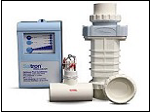 , chemicals such as chlorine shock or non-chlorine
shock, have to be added to the water until a Free Chlorine
level of 5-10 PPM is achieved. It is important to perform
the Free Chlorine Test. The water will go through various
green-brown-cloudy stages, until finally the water clears
up. It takes a lot of shock, at least 2 pounds per 5000
gallons, in order to start the treatment. If after
application of the shock, a Free Chlorine reading of at
least 3 PPM is not reached, it will be necessary to add
additional shock product. The shock will destroy all of the
biguanide and there must be an excess, in order to destroy
the water mold. A consequence, of adding the shock, is the
destruction of all of the biguanide. Resuming maintenance on
biguanide will require that you start from scratch. To
resume on biguanide, you must neutralize all of the chlorine
remaining in the pool. A chlorine neutralizer product is
available for this purpose. Once a biguanide-resistant
microorganism has developed, there is no guarantee that it
will not return, even after successful treatment. For this
reason, you might consider an alternative sanitizer:
chlorine, bromine, salt Chlorine generators,
ultraviolet
sterilizers, ozone generators, ionization or a combination.
Otherwise, you just might get the problem back, in spite of
your best efforts. I hope that I have been helpful. Good
luck. , chemicals such as chlorine shock or non-chlorine
shock, have to be added to the water until a Free Chlorine
level of 5-10 PPM is achieved. It is important to perform
the Free Chlorine Test. The water will go through various
green-brown-cloudy stages, until finally the water clears
up. It takes a lot of shock, at least 2 pounds per 5000
gallons, in order to start the treatment. If after
application of the shock, a Free Chlorine reading of at
least 3 PPM is not reached, it will be necessary to add
additional shock product. The shock will destroy all of the
biguanide and there must be an excess, in order to destroy
the water mold. A consequence, of adding the shock, is the
destruction of all of the biguanide. Resuming maintenance on
biguanide will require that you start from scratch. To
resume on biguanide, you must neutralize all of the chlorine
remaining in the pool. A chlorine neutralizer product is
available for this purpose. Once a biguanide-resistant
microorganism has developed, there is no guarantee that it
will not return, even after successful treatment. For this
reason, you might consider an alternative sanitizer:
chlorine, bromine, salt Chlorine generators,
ultraviolet
sterilizers, ozone generators, ionization or a combination.
Otherwise, you just might get the problem back, in spite of
your best efforts. I hope that I have been helpful. Good
luck.
Sincerely. Alan Schuster, 8/3/2009
► Pink Mold?
I found pink mold in my pool as I was
closing it for winter. I plan to get rid of it when I open
the pool in the Spring (I hope), but I'm wondering if this
is harmful to people who swim in the pool? I also want to
thank you for your web site. It was very helpful to me on
how to get rid of this Pink Mold. Thank you.
Tom I., 10/9/2008
Pink mold is a bacterial problem and is probably the result
or poor sanitizing practices and/or poor circulation.
The
Circulator is the easy to improve circulation and
eliminate those dead zones, that
promote algae growth. It can be
somewhat resistant to sanitizers,
especially biguanide. I suggest that
you treat with a shock
treatment, upon opening. While this particular bacterium
might be benign, the presence of obvious microorganism
growths does indicate the possibility of inadequate
sanitation. You might consider a switch to a
Salt Chlorine Generator.
It is the better way to do chlorine,
providing more control, better
results and no more chlorine to
measure. handle or store. Good luck next spring and thanks for the kind
words.
Sincerely. Alan Schuster, 10/9/2008
► Pink Bacteria?
I've had pink bacteria for a couple of
years. I've super-chlorinated, it comes back. I added an
ammonium sulfate product last year - it was still there when
I took off the winter cover. I super-chlorinated. & added
the product again. Thought things where going ok, but my
readings are way off - total chlorine ok at 3 but free
chlorine ~10, hardness ~1000, stabilizer ~150 (dipstick
reading). Lots of birds pooping in the water, but afraid to
shock any more. I took the stabilized tablets out of the
skimmer, took off the pool cover, increased the heater temp.
pH ok ~7.5, total alkalinity ~150. pool high right now
(rain) ~45,000 gallons, 20x40. Any thoughts?
Margaret, 5/28/2016
Ammonium sulfate and is used primarily to boost the combined
chlorine readings, which in turn seems effective against
certain problems. Given your lack of success, I suggest that
you try something else. Try adding a sodium bromide product.
This product will convert the chlorine, both free and
combined into bromine sanitizer. Bromine seems to much
better than chlorine, in controlling the pink bacteria
problem. To start off with a level playing field, after the
sodium bromide is added, add shock, as necessary, to boost
the Free Chlorine level to 5-10 PPM. Test the level, every
few hours, and add more shock, if required. Once the Free
Chlorine has stabilized, the problem should be gone.
Thereafter, maintain normal pool chemistry. The recurring
nature, of the problem, could be indicative of dead zones
and poor circulation. The Pool Circulator is a circulation
booster insert, that dramatically eliminates dead zones and
makes the water come alive. You'll get better distribution
of sanitizers and that should help minimize algae and other
related problems. I hope that the information proves to be
helpful.
Sincerely. Alan Schuster, 5/28/2016
► Pink Algae And Poor Choices?
Is it possible to have pink bacteria
in a pool with a salt system installed? If so what is the
best way to get rid of it? We have used an algaecide that
contains 3.3% copper and 96.7% other ingredients. It
contains polymeric polyacrylate and gluconate stabilizing
agents. Is this considered a polymer algaecide? I think it
would be beneficial to drain a portion of the pool,
especially, if the cyanuric acid levels are too high. I do
have a test strip reader and I have not been happy with the
inconsistency of the results.
Jeff S., 5/16/2008
"Pink" algae is a microorganism that might be somewhat
resistant to chlorine, as opposed to an algae problem.
Salt
chlorine gener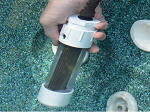 ators tends to make the pH rise and,
if not corrected, this makes
chlorine less effective. Adding a polymer algaecide is also
a good idea. The pink problem could have
been made worse by
high pH and high cyanuric acid levels. That is a copper
algaecide and is a poor choice for this problem. Copper is
an effective algaecide, but "pink" algae is actually a
bacterial problem. A polymer algaecide contains a chemical
with the term (dimethyl iminio) repeating several times. It
is a much better choice, for this
problem. Keep the pH closer to 7.2 and the free chlorine
at the high side of 1-3 PPM.
Test strips give suitably
accurate results, with great convenience. They are not
exact! Adding a strip reader does not make it more exact and
can add another layer of complexity and error. A better
water testing choice would be the
ColorQ Water Analyzer. It
is all digital, eliminating color-matching and guesswork. If
the cyanuric acid level is too high, over 100-150 PPM,
replacing some water will make the chlorine, at any given
level, more effective. Don't forget to test the salt level,
after the water replacement, and make the necessary salt
addition. I hope that this information proves to be helpful. ators tends to make the pH rise and,
if not corrected, this makes
chlorine less effective. Adding a polymer algaecide is also
a good idea. The pink problem could have
been made worse by
high pH and high cyanuric acid levels. That is a copper
algaecide and is a poor choice for this problem. Copper is
an effective algaecide, but "pink" algae is actually a
bacterial problem. A polymer algaecide contains a chemical
with the term (dimethyl iminio) repeating several times. It
is a much better choice, for this
problem. Keep the pH closer to 7.2 and the free chlorine
at the high side of 1-3 PPM.
Test strips give suitably
accurate results, with great convenience. They are not
exact! Adding a strip reader does not make it more exact and
can add another layer of complexity and error. A better
water testing choice would be the
ColorQ Water Analyzer. It
is all digital, eliminating color-matching and guesswork. If
the cyanuric acid level is too high, over 100-150 PPM,
replacing some water will make the chlorine, at any given
level, more effective. Don't forget to test the salt level,
after the water replacement, and make the necessary salt
addition. I hope that this information proves to be helpful.
Sincerely. Alan Schuster, 5/16/2008
► Purple Slime?
Dear Alan, the other day when took out
my pool cleaner I noticed a purplish slime on the hoses.
When I rubbed my finger across it, the purple residue just
wiped off easily. I looked over the entire pool, and there
doesn't seem to be any of it anywhere else. I did have an
outbreak last summer of pink algae, but I used your
suggestion of sodium bromide, and it took care of the
problem. What do you think this might be? Sincerely.
Ken M., 2/21/2020

It is probably some type of microorganism. The fact that it
is not present, in the pool, should mean that it is not
chlorine-resistant. In the future, if you see something like
that, soak the parts in a large container or barrel with
some water and chlorine. While it is not a guarantee that it
won't get into the pool, it is a good practice, especially
after a problem situation. The best defense against
microorganisms is proper testing and sanitation. The two do
go hand in hand. No matter how a pool is being sanitized,
there is a ColorQ
2X All-Digital Tester that will do the job.
Glad to hear the advice worked. Enjoy the season.
Sincerely. Alan Schuster, 2/21/2020
►
Bye-Bye Pink Slime?
I let the FC in my salt-water pool
fall to 0.2 for about a day a couple weeks back which
resulted in cloudy water. Using extra chlorine and blue
clarifier, it cleared up nicely. Well now, about a week
later I find this pink, slimy stuff. Well now I’m an expert
on that, too. I’ve just set the chlorinator for 100% and
plan to shock the living, holy $*#@ out of it. I think I’m
going to go for 10 ppm. Then let the sun bake it back down
to 5 where I’ll leave it for a few days. In the meantime the
filter will be running non-stop. I’ve got a pool party
planned for 2 weeks from now, so I don’t want to mess
around. My research has indicated that a high chlorine dose
is the best way to go, especially for someone who makes it,
right in his pool. Anything that has been in the pool, such
as my brush should also reside in there during the shocking.
One other thing I found was to backwash the filter when it’s
all said and done to get rid of the stuff and one person
suggested changing the media. Early backwashing goes against
what you and I have discussed as far as filtration quality
is concerned, but in this case, I think I like the idea of
sending that gunk down the line. But what about media
replacement? Is that overkill? Mine’s only about a year old.
Thanks again, Alan.
Kendall, 8/7/2006
When you recirculate water with 10 PPM of free chlorine, you
pretty much sanitize the filter as well. Backwashing reduces
the filter efficiency. However, if the pool is a swamp, it
helps get rid of loads of chlorine-consuming gunk. Your pool
is not a swamp and I would backwash only when the pressure
is too high. For better results and a reduced need to
backwash, replace the sand with zeolite a sand
filter replacement media. It works even better with a
salt
chlorine generator. Adding brushes to the pool can't hurt.
But, I am not sure it really solves anything. You can't
sterilize the environment and algae is really always there:
just waiting for the right moment to bloom. I hope that this
information is helpful.
Sincerely. Alan Schuster, 8/7/2006
|
Visit The Website Stores . . . for
better informed shopping!!! |
|
|
Shipping is FREE* . . . within
the Continental U.S.
A $9.99
handling charge will apply
to Continental U.S. Orders,
under $75.00. Orders
outside of the Continental
U.S. may require some
additional charge, based on
quantity and destination.
Most products can be
shipped World-Wide. International
and orders outside of
Continental U.S. - see
comments on the ordering
pages. |
|
|
Major
Credit Cards and PayPal are accepted. |
|
▲
Return To Top Of Page
▲
Aqualab Systems, LLC does not
make any warranty or
representation, either expressed
or implied, regarding the
accuracy or completeness of the
information provided by this
website; nor does Aqualab
Systems., LLC. assume any
liability of any kind whatsoever
related to, or resulting from,
any use or reliance on this
information. The content of this
website should not be used, if
it is conflict with any
applicable federal, state or
local regulations or guidelines.
© Aqualab Systems, LLC. All
rights reserved
|
|