|
 |
Shipping is FREE* . . . within
the Continental U.S.
A $9.99
handling charge will apply
to Continental U.S. Orders,
under $75.00. Orders
outside of the Continental
U.S. may require some
additional charge, based on
quantity and destination.
Most products can be
shipped World-Wide. International
and orders outside of
Continental U.S. - see
comments on the ordering
pages. |
|
 |

Major
Credit Cards and PayPal are accepted. |
|
On-line
shopping since 2002 - Safe and Secure!!! |
|
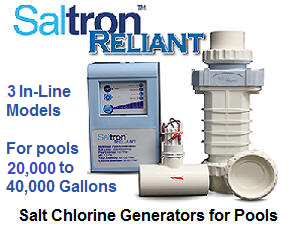
Using a Salt Chlorine Generator, in a
pool. |
The use of
a
salt chlorine generator is a more
effective and convenient way to use
chlorine, as compared to traditional
chlorine products. It eliminates
many of the odor problems, associated
with chlorine and ends the handling,
measuring and storage of chlorine.
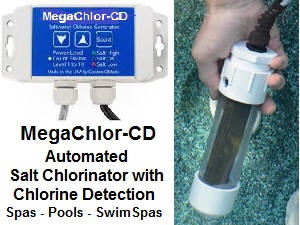
In-line and no-installation-required
models, are available for all types of pools.
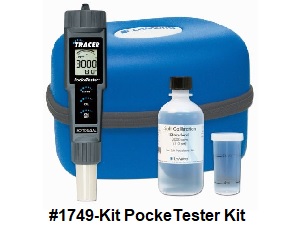
A
PockeTester Kit
is a convenient way to monitor the salt
level, to help assure proper performance
of salt chlorine generators.
|
COVID-19 Virus and Pool and
Spa Water |
|
On
March 10, 2020, CDC.gov,
released information confirmed
by NCIRD (National Center for
Immunization and Respiratory
Disease), that COVID-19 cannot
live in properly maintained pool
and hot tub water and asserts
that chlorine "should remove or
inactivate the virus that causes
COVID-19." |
|
|
Salt Chlorine Generators - 3 models |
Testing The Salt Level |
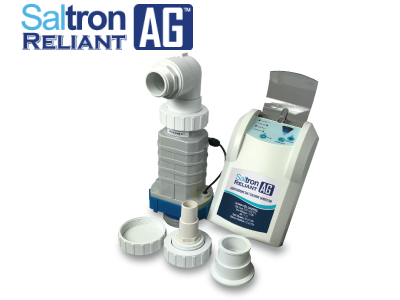
Salt Chlorine Generator - No
Installation |
 |
 |
 |
|
Product and Ordering Information |
Product and Ordering Information |
Product and Ordering Information |
If you have a pool or spa water
testing need, we should have the
product.
►
Scroll down to read through some
Question & Answer information.
◄
|
|
A
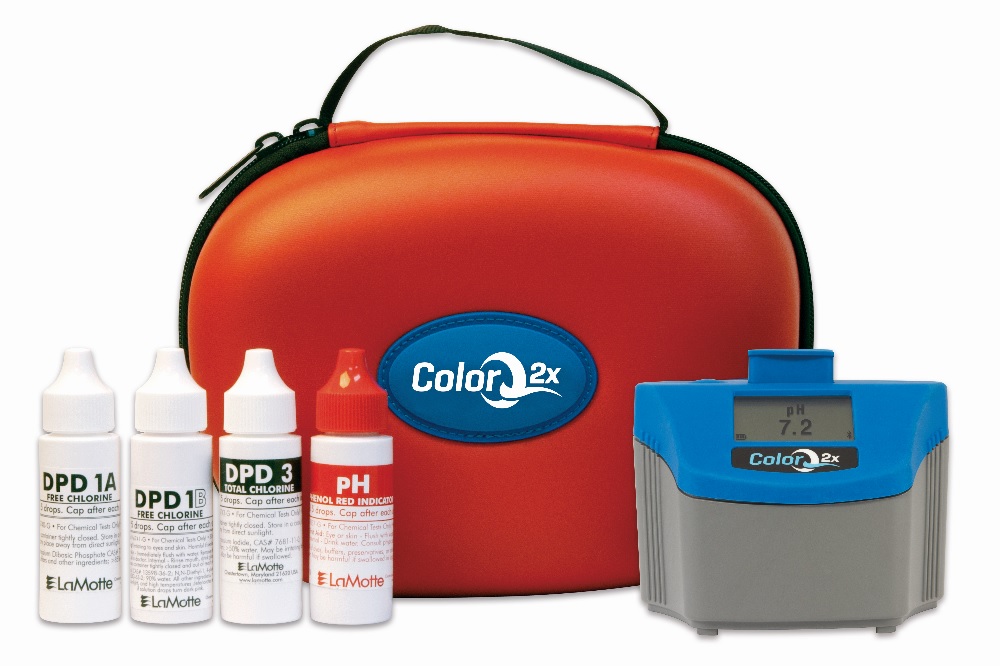
ColorQ 2X is a 2nd generation,
Bluetooth, Waterproof, all-digital tester,
that can
measure all the common test factors. There is a model, for every sanitizing
need.
The Circulator is a
replacement return jet fitting,
that dramatically improves
circulation, by creating a
spiral return flow. Better
circulation helps sanitizers
work more effectively. The
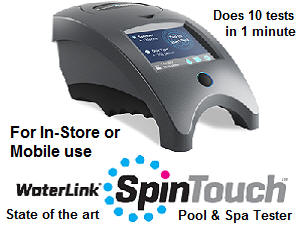
WaterLink SpinTouch Labs
are the ultimate tester, doing
up to 10 different water test
factors, in just 1 minute.
Voted product of the year. |
|
ColorQ All-Digital Water Testers |
Circulation Boosting Return Jet
Fittings |
WaterLink SpinTouch Labs |
 |
 |
 |
|
Product and Ordering Information |
Product and Ordering Information |
Product and Ordering Information |
If you have a pool or spa water
testing need, we should have the
product.
►
Scroll down to read through some
Question & Answer information.
◄
|
|
|
How
to use a salt chlorine generator, in a
pool? |
Salt Chlorine
Generators, also referred to as Salt
Chlorinators, Saltwater Chlorinators or Salt
Chlorinating Systems are actually miniaturized
chlorine manufacturing plants: the same
technology is utilized. The devices work by electrolytically converting
salt, in the pool water, into chlorine as it
passes over specially coated titanium electrode
plates. Salt must be added to the pool prior to
start up, as directed. Thereafter, salt need
only be added occasionally, to replace that lost
due to splash out, pump outs or backwashing. The
device generates Free Chlorine and destroys
odorous and irritating chloramines, as the water
passes through the cell. Chlorine production is
controllable by a setting and the equipment
operates in conjunction with a timer. Properly used, there is
much less sensation of chlorine being present.
The other water analysis parameters must be
maintained, as with any chlorine-maintained
pool. It certainly is easy-to-use and convenient
and lends itself to pool automation. If
problems arise, refer to the
Pool Problems
Page, as a source of problem-solving
information, broken down into various
categories. Scroll down the page and click on the linked
keywords,
catch phrases
or images, in the archived answers below, to access additional information, on that topic or product.
 |
Join our E-Letter Mailing List.
You'll receive 1-3 E-Letters a
month, featuring helpful pool
and spa advice, new product
information and sale
announcements. All we
require is your e-mail address
and you can opt out anytime you
wish.
Your information
will never be shared or sold. |
|
▼
Helpful,
Problem-Solving Information, in a question and
answer format.
▼ |
►
High Cyanuric Acid (CYA) Level
I received the
ColorQ 2X PRO
7 Kit last week and have run three test on my pool
water. All three tests are telling me to drain 80 to 90% of
my pool water. I have an above ground pool with a vinyl
liner so therefore I cannot drain my pool. The only abnormal
reading is Cyanuric Acid which is reading
at 335 ppm. pH is at 6.4 . I am concerned that if I add PH
increaser the cyanuric acid level will increase. Any
suggestions?
Stephen V. 4/25/2022
The ideal CYA reading is under
50 PPM, with 25 PPM being a good target. The only way you
will get there is to replace most of the water. High levels
of CYA force you to maintain higher levels of free chlorine,
in order to maintain the water quality. The calculations can
be complica ted,
but it works out to 7% of the CYA content. At 335 PPM that
means 22 PPM of free chlorine. If the CYA was 25 PPM, you
would be OK at 1-3 PPM. Adjusting the
pH will not affect the CYA. It seems a certainty that you
are using trichlor tablets, which cause the pH to drop and
the CYA to rise. Draining the pool may be a bad option, as
it could lead to the liner shrinking or possible structural
issues. You could replace water at the rate of 1-2 week, at
a time, without the risks. However, unless you stop using
stabilized chlorine, the CYA will rise up, over time. A salt
chlorine generator would be a good option, for the future.
But first you need to get the CYA right. To use a
salt
chlorine generator you have to a add a lot of salt, so
dumping water would remove the salt as well. I would switch
to liquid chlorine, until you get the CYA to around 25 PPM.
Then you could consider a salt chlorine generator or
continue to use liquid chlorine. Most people cling to
the outdated notion of a CYA reading of 100-150 PPM. They
also ignore the fact that the use of stabilized chlorine is
the cause of the inevitable rise of the CYA. I hope
this is helpful.
ted,
but it works out to 7% of the CYA content. At 335 PPM that
means 22 PPM of free chlorine. If the CYA was 25 PPM, you
would be OK at 1-3 PPM. Adjusting the
pH will not affect the CYA. It seems a certainty that you
are using trichlor tablets, which cause the pH to drop and
the CYA to rise. Draining the pool may be a bad option, as
it could lead to the liner shrinking or possible structural
issues. You could replace water at the rate of 1-2 week, at
a time, without the risks. However, unless you stop using
stabilized chlorine, the CYA will rise up, over time. A salt
chlorine generator would be a good option, for the future.
But first you need to get the CYA right. To use a
salt
chlorine generator you have to a add a lot of salt, so
dumping water would remove the salt as well. I would switch
to liquid chlorine, until you get the CYA to around 25 PPM.
Then you could consider a salt chlorine generator or
continue to use liquid chlorine. Most people cling to
the outdated notion of a CYA reading of 100-150 PPM. They
also ignore the fact that the use of stabilized chlorine is
the cause of the inevitable rise of the CYA. I hope
this is helpful.
Sincerely. Alan Schuster 4/25/2022
►
Does A 3.0 PPM Chlorine Level Suffice?
Strange
question but here it is. If I do maintain chlorine at 3ppm
all summer long via pucks, do I still need to shock the
pool, aside from once at the beginning of the season?
Vince,
7/19/2020
It is not a strange question, but my answer will be
unexpected. Under normal conditions 3.0 PPM probably does
kill 99.9 of the microorganisms. The problem is that other
0.1%. It survives because it may be resistant to a level of
3.0, at the current pH and cyanuric acid levels. If that is
the case, it will continue to grow. A periodic shocking and raising the
free chlorine to 5-10 PPM helps eliminate sanitizer
resistant microorganisms. The test may register 3.0 PPM, but
that does not mean it acts like 3.0 PPM. As the pH rises
above 7.4, the chlorine becomes less effective At a pH of
9.0, its effectiveness is close to zero. You are using a
stabilized chlorine and industry thinking has changed,
regarding what is an ideal level of CYA. It used to be that
100-150 PPM of CYA was seen as the time to replace water.
Now 50 PPM is considered a safe upper limit and 25 PPM is
thought to be ideal. If you're using trichlor tablets the
CYA will continue to rise, making it necessary to maintain
higher levels of chlorine. If you multiply the CYA level by
7.5% (0.075), that gives you the level of free chlorine that
you should be maintaining. Dichlor and trichlor were once
the rage of the industry, but new products and a better
understanding of chlorine sanitation, has changed all that.
If you want to continue using chlorine, the best option is a
salt chlorine generator. It adds no byproducts, such as CYA,
and provides better control and more predictable chemistry.
It enables you to shock, by simply increasing the power
setting. I hope that you will find this enlightening.
will continue to grow. A periodic shocking and raising the
free chlorine to 5-10 PPM helps eliminate sanitizer
resistant microorganisms. The test may register 3.0 PPM, but
that does not mean it acts like 3.0 PPM. As the pH rises
above 7.4, the chlorine becomes less effective At a pH of
9.0, its effectiveness is close to zero. You are using a
stabilized chlorine and industry thinking has changed,
regarding what is an ideal level of CYA. It used to be that
100-150 PPM of CYA was seen as the time to replace water.
Now 50 PPM is considered a safe upper limit and 25 PPM is
thought to be ideal. If you're using trichlor tablets the
CYA will continue to rise, making it necessary to maintain
higher levels of chlorine. If you multiply the CYA level by
7.5% (0.075), that gives you the level of free chlorine that
you should be maintaining. Dichlor and trichlor were once
the rage of the industry, but new products and a better
understanding of chlorine sanitation, has changed all that.
If you want to continue using chlorine, the best option is a
salt chlorine generator. It adds no byproducts, such as CYA,
and provides better control and more predictable chemistry.
It enables you to shock, by simply increasing the power
setting. I hope that you will find this enlightening.
Sincerely. Alan Schuster, 7/17/2020
►
Do I Need To Add Chlorine Stabilizer?
I am a pool
rookie. I am in northern New Jersey with a small above
ground pool. It is salt water with a salt water generator. I
just added the salt and it is dissolving now. My question,
for a small salt water pool, should I be using a stabilizer?
If yes, how much?
Steve,
NJ, 6/30/2018
You should add chlorine stabilizer. Otherwise, the Sun's UV
rays will destroy the chlorine. This will make the salt
chlorine work harder and will shorten the life of the salt
cell. Add enough to raise the level to 50 PPM. I can't tell
you how much to add, because I don't know your pool size.
This page should help:
calculating
chemical additions. I hope that the information
provided was helpful. If this website was helpful,
in solving your problem, please consider joining our
E-Letter Mailing List.
You'll receive E-Letters, with helpful
information, new product updates, suggestions and sale
announcements. I hope that I have
provided the solution.
Sincerely. Alan Schuster, 6/30/2018
► Trying To
Decide?
Dear Alan: We are considering a salt
water chlorinator. Could you answer a few questions. Is this
a reliable pool water sanitizing method, for an above ground
pool? Is it easy to use?
Will it save money? Do you favor a particular brand? Are
there any negatives? Thank you for the help.
M and L, Jupiter, FL, 2/4/2017
A salt chlorine
generator is a more reliable a sanitizing method
as any other form of chlorine. The big difference is that
it avoids or reduces a lot of the chemicals and makes the
overall pool water chemistry easier to maintain.
You'll find that there is less handling and storing of
chemicals. So far as the economics are concerned, I really
don't have all the information necessary to make that
determination. However, I would suspect that it will be
quite favorable over time. But the convenience factor is
significant and almost without comparison. A salt water
chlorinator is one of those products that can be controlled
by a pool automation system: another convenience plus! My
long-term, personal experience with the product was very
satisfactory and I know that the product category has been
improved considerably over the years. The quality units
incorporate some of the best technology and have cells that
should provide extended service.
Sincerely. Alan Schuster, 2/4/2017
►
Extending The Salt Cell Life?
I was told
that there was a way to make a salt cell last longer.
Is there?
John S.,
Florida, 3/18/2013
Actually there is,
apart from operating the unit properly, maintaining the
recommended salt level, adding chlorine stabilizer and
keeping the overall
chemistry within acceptable limits. The salt cell is
slowly exhausted, as chlorine is produced. If you add
a backup sanitizer, such as a
mineral sanitizer, you will need to produce less chlorine, in
order to maintain any given level of chlorine. In
other words, the salt chlorine generator is not working as
hard and the salt cell will last longer. In addition,
you should find the pH easier to maintain, within limits.
Should the chlorine level bottom out, due to heavy bather
use, you will have the benefit of a backup sanitizer.
I hope that this information will prove helpful.
Sincerely. Alan
Schuster, 3/19.2013
► Switching From A
Copper-Based system To Salt?
Using a non-chlorine product and a
chelated copper product, in my above ground pool and want to
change to a salt chlorinator system. Do I have to change the
water?
Kyle, Hammond, LA, 7/4/2016
You might want to test the copper level. Because
salt
chlorine generators operate at a higher pH, you want to make
sure the copper is under 0.3 PPM. If over 0.3 PPM, you
should add a dose of Liquid MetalTrap or use a
MetalTrap
Filter. Unlike organic phosphonic acid products, Liquid
MetalTrap is phosphate-fee and is a true chelating agent,
that still functions, at pH levels above 7.8. The organic
phosphonic acid products do not perform well, when the pH is
7.8 or higher and these higher pH readings are common with a
salt chlorine generator. Otherwise, you are good to go. A
salt chlorine generator!!! It is chlorine without all the
negatives. No chlorine odor, no handling, storage or buying
chlorine and much better water quality. You'll have to buy
some salt - common, non-iodized food grade or water softener
grade - inexpensive! Thereafter, you need to add more salt
only to replace that lost through pump out, splash out,
backwashing or overflow. With a salt chlorine generator, all
you need to do is add an initial dose to stabilizer to bring
the level up to 40-60 PPM. Thereafter, more stabilizer is
needed only to replace that lost through pump outs,
backwashing and splash out. The overall water chemistry
should be maintained in the usual manner. Because salt
chlorinators destroy chloramines so effectively, you will
find the swimming conditions more pleasant and easier to
maintain. A Salt PockeTester is ideal for maintaining the
proper salt level, which helps assure proper performance and
longer cell life.
phosphonic acid products, Liquid
MetalTrap is phosphate-fee and is a true chelating agent,
that still functions, at pH levels above 7.8. The organic
phosphonic acid products do not perform well, when the pH is
7.8 or higher and these higher pH readings are common with a
salt chlorine generator. Otherwise, you are good to go. A
salt chlorine generator!!! It is chlorine without all the
negatives. No chlorine odor, no handling, storage or buying
chlorine and much better water quality. You'll have to buy
some salt - common, non-iodized food grade or water softener
grade - inexpensive! Thereafter, you need to add more salt
only to replace that lost through pump out, splash out,
backwashing or overflow. With a salt chlorine generator, all
you need to do is add an initial dose to stabilizer to bring
the level up to 40-60 PPM. Thereafter, more stabilizer is
needed only to replace that lost through pump outs,
backwashing and splash out. The overall water chemistry
should be maintained in the usual manner. Because salt
chlorinators destroy chloramines so effectively, you will
find the swimming conditions more pleasant and easier to
maintain. A Salt PockeTester is ideal for maintaining the
proper salt level, which helps assure proper performance and
longer cell life.
Sincerely. Alan Schuster, 7/5/2016
► pH And
Total Alkalinity Issues?
My pool store told me that our pool
needs Total Alkalinity Increaser, but the pH is 7.9, acid
demand is 2, total alkalinity is 100, adjusted alkalinity is
67, stabilizer is 100 and salt is 3000. Wouldn't this
recommended Increaser cause the pH to go even higher?
Shouldn't I be adding acid instead of alkalinity? Thank you.
Gordon, Bonita Springs, FL, 11/7/2009
Your pH is slightly above range and I would not choose to
add TA increaser. The dealer is subtracting 1/3 of the CYA
reading from the TA reading: this technique is really only
an approximation. The pH is already high and adding TA
increaser will only stabilize the already high pH. Inasmuch
as your salt chlorinator
tends to raise the pH, I would pay primary attention to the
pH and not worry about the TA, unless there are other
problems. pH is always more important than TA. You can
simplify the optimizing of the pH, by adding an automatic pH
Controller. It will add acid, as needed, to maintain a
preset pH.
I hope that I have helped.
Sincerely. Alan Schuster, 11/7/2009
► Safety
Concerns?
We are planning to put in an inground pool and are thinking
of using a Salt Water Chlorinator. Can you tell me what you
know about the differences between the salt system versus
chlorine? Is one safer than the other for small children?
You know how they sometimes swallow water, get it in their
eyes and have sensitive skin. Thanks.
Ali H., Edmond, OK, 4/8/2011
With a salt chlorine generator, there are no chlorine
products to store or handle and no chlorine products to
leave exposed to children. In either case, the pools will be
maintained on chlorine. With a salt chlorinator, the
chlorine level is controlled by a setting on a dial,
avoiding uncomfortably high levels that might exist, when
chlorine products are manually added. Chloramines are an
irritating and odorous form of combined chlorine and are a
problem in most chlorine pools. However, with a salt
chlorinator, all of the chloramines are destroyed, as the
water passes through the cell. Your overall pool maintenance
will be simplified and fewer chemicals will be required.
Everything about this type of product is kid friendly. You
can pretty much say goodbye to "red eyes." I hope that I have been
of assistance.
Sincerely. Alan Schuster, 4/8/2011
► Above
Ground Pool Usage?
My brother has a saltwater chlorinator
on his inground pool. Can this type of equipment be used in
an above ground pool? Pool size is about 10,000 gallons. Any
idea about cost? Can I use a timer? Thanks.
Joel, 7/9/2004
Saltwater chlorinators can be used with all types of pools.
Smaller units or units especially designed for above ground
pools are available Two units, suitable for above ground
use, are available. These are generally smaller and less
expense, than those intended for the larger inground pools.
One unit requires minimal installation and the other is
solar-powered, requiring no installation at all. The models
will treat pools up to 15,00-20,000 gallons. Every pool will
be different depending on size, time of year, type of usage,
exposure and other factors. A larger capacity unit is always
preferable, as it is better able to keep up with peak-season
demands. I hope that this information will prove helpful.
Sincerely. Alan Schuster, 7/9/2004
► A Rising
Salt Level?
I have a Tracer PockeTester (ordered
from your website) which I use to monitor the salt levels,
of pool with salt chlorine generators, on my service route.
I never got around to putting one on my own pool, in the 3
years since it was built, although I do like the
convenience. Out of simple curiosity, I tested the tap
water and found a salt level or 600 PPM. That is not
uncommon for this area. I tested my pool water and found a
salt level of 2000 PPM, which came as a major surprise. I
have never added any salt and only use lithium and
trichlor, in the pool. Is there an explanation?
Mark L. AZ., 8/30/2011
Evaporation!!! There is nothing wrong with the
Tracer
PockeTester. Finding high levels of salt or TDS is nothing
new and affects most pools, that are a few years old. You
can lose 2-inches of water a week. Possibly more, in the
summer, in your hot dry location. A 2-inch loss represents
2-3% of the total water volume, depending on the average
pool depth. Even allowing for rainfall to replenish some of
the loss, you are still adding about 10 PPM of salt, every
time, you top off the pool, with the water containing 600
PPM of salt. At 10 PPM weekly, for 3 years, and you can
easily reach 2,000 PPM of salt: almost as much as some pools
with salt chlorine generators. If you were using liquid
chlorine the salt level would probably be close to 3000 PPM.
The levels are not enough to taste, so it goes by unnoticed,
so long as the overall water chemistry is good. If the pool
did have the salt chlorine generator, with water containing
the appropriate amount of salt, the levels would rise by the
same extent. When the salt level or TDS gets too high, water
should be replaced. Thank you for writing an for encouraging
me to put it to the numbers test.
Sincerely. Alan Schuster, 8/30/2011
► Concern
About High TDS?
I apologize for forgetting to ask you
this in the first email, but I do have one more question for
you regarding saltwater chlorinators. It has to do with TDS
(Total Dissolved Solids). The N.S.P.I standards for TDS are
ideal: 1000-2000 ppm, and maximum: 3000 ppm. Since, for a
saltwater chlorinator, you need at least 2500 ppm of salt
alone, how does that square with the N.S.P.I standards? What
kind of problems can occur if your TDS are too high? Thanks.
Richard, 4/7/2018
Good question. The
TDS standard does seem at odds with the
requirements of a salt chlorinator. The standard is a guide
and is based on the TDS being composed of various calcium
and sodium carbonates, bicarbonates, chlorides, sulfates,
cyanurates and other minerals. Some of these salts have
limited solubility, especially at higher pH and TA. In order
to avoid cloudy water and scaling, the TDS is recommended to
be capped at 3000 PPM. TDS readings are usually expressed as
PPM of sodium chloride, even though the dissolved salts are
not sodium chloride exclusively. Being that sodium chloride
is quite soluble, the addition of 2500 PPM or more should
not present a problem, even in areas with relatively high
TDS. It certainly presents less of a problem than the
addition of various chlorine compounds over time. High TDS
can be a problem, when a major portion is due to calcium as
opposed to sodium salts.
Saltwater chlorinators are very
popular in high TDS areas such as Arizona. I would not
expect any problems, except with some extraordinary poor
quality water. A Salt
and TDS PockeTester will help you to
monitor the situation. I hope that I have cleared things up.
Sincerely. Alan Schuster, 4/7/2018
 |
 |
 |
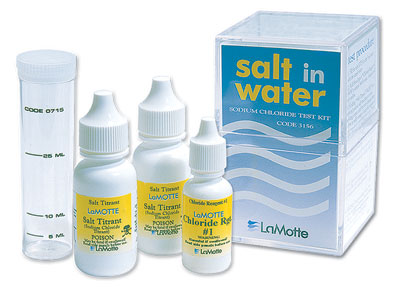
If
your
pool
or
spa
uses
a
salt
chlorine
generator,
testing
the
salt
level
is
very
important,
for
proper
operation.
This
Sodium
Chloride
Test
Kit
is
an
easy-to-use
drop
count
titration
kit.
The
salt
(NaCl)
content
is
measured
by
counting
each
drop
of
titrant,
added
to
the
sample
tube.
The
kit
comes
in a
sturdy,
plastic
case
and
all
necessary
supplies. |
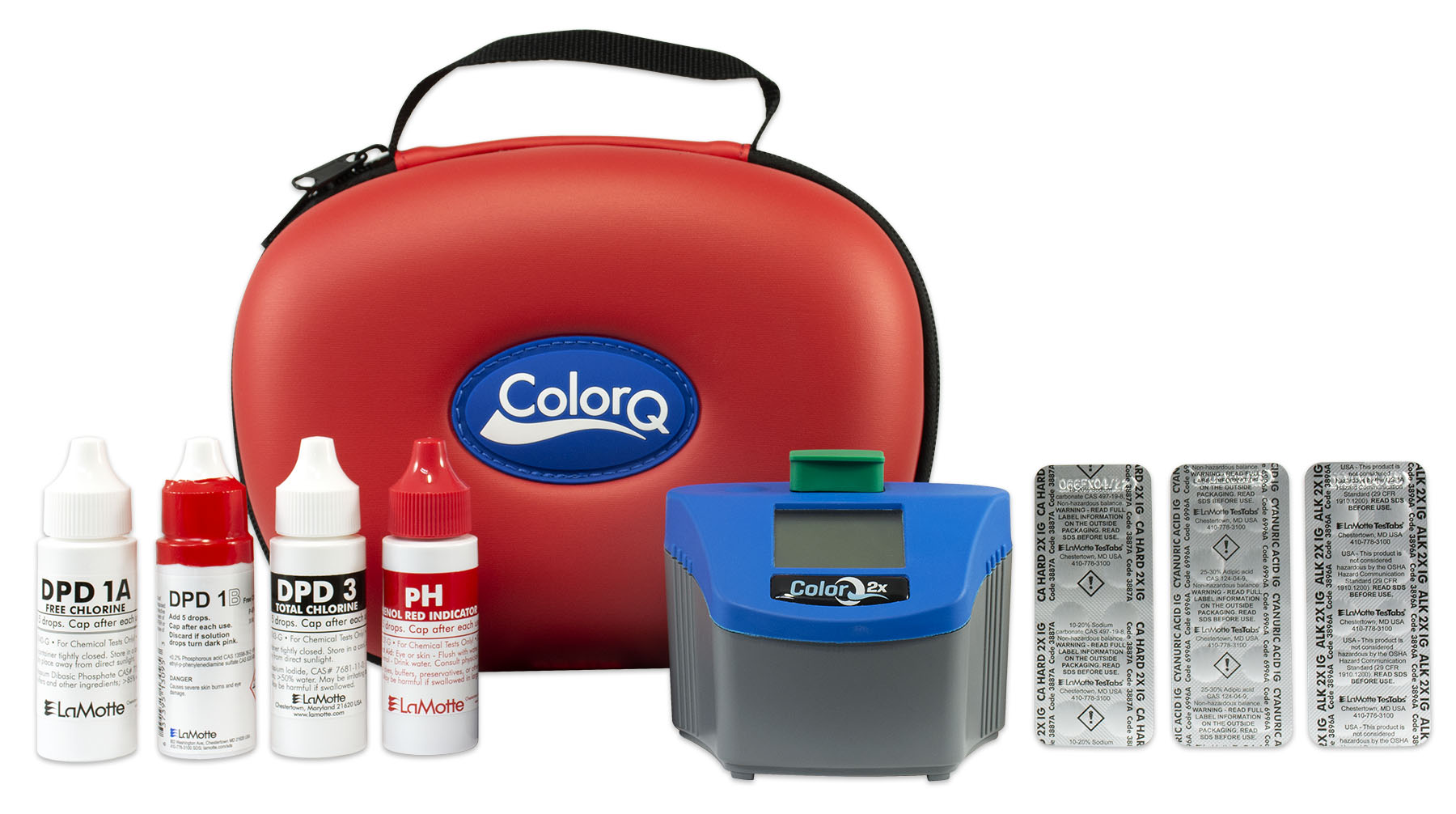
A ColorQ
all-digital
tester will do
all the routine
pool or spa
water tests.
In most cases,
all you need is
the ability to
test for Free
and Total
Chlorine, pH,
Calcium
Hardness, Total
Alkalinity and
Cyanuric acid.
There are a
variety of
models, to suit
your specific
needs.
Easy-to-use.
No more color
matching or
guess-work! Does
not test for
salt. |
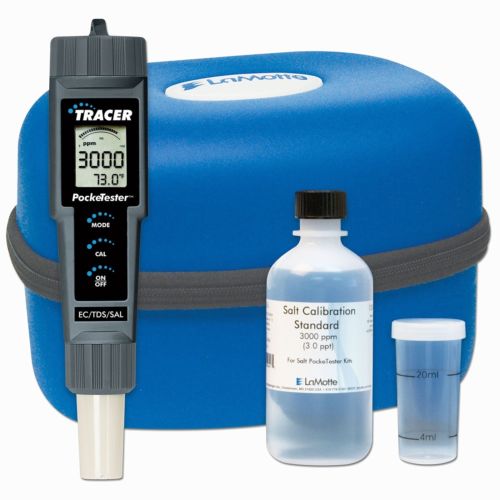
This waterproof test meter
measures salt, TDS and
temperature. The tester’s
probe is dipped into a
sample of pool water and the
results are ready instantly.
This PockeTester measures
the Sodium Chloride level, within a
range of 0 to 9,999 ppm. TDS
is measured from 0 to 9,999
ppm & Temperature from
32.0 to 149°F. |
PRO Salt
System
Pool
and
Spa
Test
Kit |
ColorQ
All-Digital Tester |
All-Digital
PockeTesters |
► Corrosive
Effect On Equipment?
I am getting estimates on installing a
pool and one of the pool builders said a salt generator
is hard on the equipment and would not recommend them but
prefers a Chlorine and Ozone system. What is the impact of
the salt system on the equipment?
Roger S., San Diego, CA, 4/28/2010
What impact? The only problem might occur if two dissimilar
metals were in immediate proximity to one another. After 25
years or more the equipment manufacturers know this and have
designed the equipment accordingly. Some lower quality
stainless steel ladders or rails could be affected. I
suggest that you use 316 stainless steel or even better
would be a ladder and rail made of composite material. It
will be chemically resistant, easy to maintain and won't get
hot to the touch. Use the combination of chlorine and
ozone
and you will have good water quality. But, you will have to
take care of the chlorine level, store chlorine and handle
chlorine. Or you could go with a
salt chlorine generator and
get great water quality, without storing or handling any
chlorine. You will be able to control the level with the
press of a button or the turn of a dial. That could be why
90% of the pools in Australia have salt chlorine generators,
as well as most new inground pools, in the US.
I hope that I have been helpful.
Sincerely. Alan Schuster, 4/28/2010
► Salt
Chlorine Generator And A Solar Cover?
Hello Alan, I have a quick Q? I have a
pool at the moment and balance my pool the conventional way
of adding chorine and checking the readings. Adjusting
again, until correct and repeating this every few days,
depending on usage etc. However I am about to purchase a
salt chlorinator. But, I want to know when I set my machine
to the recommended level in the literature. Do I need to
adjust it because I use a polyethylene bubble cover? I know
my cover saves chemical but the salt chlorinator literature
I have seen says nothing about bubble covers? Any advice?
Paul B., 4/1/2011
The manufacturer's recommendation is just a starting point.
Every pool is different, needing more or less chlorine as
the w ater temperature and season change or usage varies.
Apart from the other pool chemistry parameters, you want to
maintain a free chlorine level of 1-3 PPM, with the total
chlorine being, ideally, less than 0.3 PPM higher. The
cover might help save on chlorine, but it will raise the
water temperature. The higher water temperature will require
more chlorine and the pleasing water temperature could
increase pool usage, as well. Therefore, you need to monitor
the chlorine and vary the settings, as the season
progresses. Expect the pH to rise and require regular
additions of acid. For testing purposes you might consider a
ColorQ PRO 7 digital water analyzer. Salt levels do not vary
on a short term basis, but need to be monitored, at least
once or twice a month, as level that are too high or low can
cause problems. For salt testing a digital salt tester is as
easy as it gets. I hope that this will help get you off on
the right track.
ater temperature and season change or usage varies.
Apart from the other pool chemistry parameters, you want to
maintain a free chlorine level of 1-3 PPM, with the total
chlorine being, ideally, less than 0.3 PPM higher. The
cover might help save on chlorine, but it will raise the
water temperature. The higher water temperature will require
more chlorine and the pleasing water temperature could
increase pool usage, as well. Therefore, you need to monitor
the chlorine and vary the settings, as the season
progresses. Expect the pH to rise and require regular
additions of acid. For testing purposes you might consider a
ColorQ PRO 7 digital water analyzer. Salt levels do not vary
on a short term basis, but need to be monitored, at least
once or twice a month, as level that are too high or low can
cause problems. For salt testing a digital salt tester is as
easy as it gets. I hope that this will help get you off on
the right track.
Sincerely. Alan Schuster, 4/1/2011
► Starting
Up: Stabilizer and Chlorine?
I just ordered a waterproof Tracer
PockeTester, Salt, TDS & pH, from your website, and am
filling and starting up my new saltwater spa for the first
time. In the directions for the chlorine generator, it says
I need to not only add sufficient salt, but also stabilizer
and chlorine. Is this really necessary? I hope to get the
tester soon. Thanks. Have a good Thanksgiving.
Zack L., 11/22/2009
The directions make complete sense. The addition of the
chlorine stabilizer will help the chlorine last longer, by
protecting it from the Sun's UV rays. You're starting off
without any chlorine. Adding some will help prevent algae
growth and make it easier for your salt chlorine generator
to maintain the right level. A level of 1-3 PPM, of free
chlorine, would be ideal. In short, it avoids having to play
catch up. Enjoy the holiday and the pool. Thank you for the
order.
Sincerely. Alan Schuster, 11/23/2009
► Must I Use
Stabilizer?
My question, if the main purpose of
cyanuric acid is to stabilize chlorine. why do I need to add
it if I have a salt water pool that is constantly adding
chlorine thru out the day? From what I have read, cyanuric
acid is one of the things that irritates people, especially
my 5 year old daughter. I switched to a salt water pool to
take the chlorine jug out of the pool guy's hand, so my
blond haired daughter's hair doesn't turn green. So why do I
need cyanuric acid, if chlorine is being introduced to the
pool every day? Thank-You.
Tim in S Florida, 1/29/2008
You might be able to get away without adding stabilizer. In
the summer, your salt chlorine might be hard pressed to
supply the pool's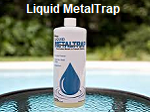 chlorine needs. However, there is a price
to not adding stabilizer. Because you are producing more
chlorine, the salt cell will not last as long. The more
chlorine you produce, the more the pH will require downward
adjustment with acid. Most issues, with cyanuric acid,
involve the high levels, that result from regular use of
stabilizer chlorine. It can reach 200 PPM and higher, if not
monitored. In your case, you merely need to do a one time
addition of 40 PPM. If you have a heater, the green hair is
more likely due to copper, from the use of copper algaecides
or from corrosion of the copper heater core, if present. Add
some quality metal treatment, such as
Liquid METALTRAP and
see if that doesn't eliminate the problem. Because the pH
will always tend to be at the higher end, copper heater
corrosion should not occur. The stabilizer choice is yours.
There is another choice here: add an ozone generator.
Because it also provides oxidation, it will allow you to set
the salt chlorine generator, at a lower setting, extending
the life of the salt cell and making pH control easier. It
is an ideal combination, especially when both units are full
sized for the pool. I hope that this information proves
helpful.
chlorine needs. However, there is a price
to not adding stabilizer. Because you are producing more
chlorine, the salt cell will not last as long. The more
chlorine you produce, the more the pH will require downward
adjustment with acid. Most issues, with cyanuric acid,
involve the high levels, that result from regular use of
stabilizer chlorine. It can reach 200 PPM and higher, if not
monitored. In your case, you merely need to do a one time
addition of 40 PPM. If you have a heater, the green hair is
more likely due to copper, from the use of copper algaecides
or from corrosion of the copper heater core, if present. Add
some quality metal treatment, such as
Liquid METALTRAP and
see if that doesn't eliminate the problem. Because the pH
will always tend to be at the higher end, copper heater
corrosion should not occur. The stabilizer choice is yours.
There is another choice here: add an ozone generator.
Because it also provides oxidation, it will allow you to set
the salt chlorine generator, at a lower setting, extending
the life of the salt cell and making pH control easier. It
is an ideal combination, especially when both units are full
sized for the pool. I hope that this information proves
helpful.
Sincerely. Alan Schuster, 1/30/2008
► Initial
Pool Startup?
Hi Alan. Your site has been MORE THAN
HELPFUL to me in the past few weeks! THANKS YOU SO MUCH for
all of your helpful advice. We are having a salt chlorinator
system installed on our 25,000 gallon pool in two days and I
am so excited! I have learned so much from your site, that I
feel confident in maintaining the salt system with virtually
little effort. My concern is in the establishment of the
system. The pool professional we chose does not know a lot
about salt systems, but he says he is learning. My biggest
question is in initial startup - how much salt to add and
what else needs to be done for the initial startup? Once
again, THANK YOU for hosting your site and answering all
these questions. I will recommend you to all my friends with
pools. Sincerely.
Susan B., Temple, TX, 4/14/2007
Thank you for the kind comments about the website. I can't
provide an exact figure on the salt requirement, as it does
vary according to the
salt chlorine generator manufacturer.
You should check the instruction manual to be sure. It will
require something in the neighborhood of 25 pounds per 1,000
gallons of water. Use non-ionized food grade or water
softener grades of salt. Do not use rock salt or industrial
grades! It is important to have it within a certain range,
so make sure that you use the correct dosage and pool
volume. Test the level to be sure. Thereafter, you need to
add more salt to replace that lost through pump outs, splash
outs and backwashing. Chlorine stabilizer levels of 40-80
PPM are acceptable. The only other thing that I suggest is
the addition of a dose of a quality, metal treatment, such
as phosphate-free Liquid METALTRAP. This can help avoid
discoloration, if metal are present and, at the very least,
will help keep the cell clean. Keep tabs on the pH, as it
can tend to rise. This is basically a chlorine pool without
chlorine to handle or store. Good luck and I'm sure that
you'll enjoy the product and appreciate the difference it
will make. Enjoy the season.
Sincerely. Alan Schuster, 4/15/2007
► Pool
Staining?
We have a 16 x 32 inground pool with a
"SALT" system. We have had to add salt in November and
December and on both occasions once the salt was dispensed
it has left a discolored stain in the area where the salt
was poured. The color is not black but a light brown. The
company where we purchased the pool has been of minimal
help. If you have the slightest bit of information please
let us know as this pool is only 5 months old and I am
trying to save the liner. Thanks.
Nameless, 12/31/2009
The staining that you are describing is not something normal
or inevitable. There are several possibilities: the salt was
of industrial quality and contained trace metals such as
iron, the pool water contained low levels of iron and,
perhaps, the addition of the salt and the resu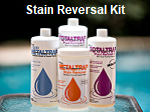 ltant high TDS
caused the iron to precipitate or the salt was not
distributed around the pool and/or was allowed to remain in
prolonged contact, without the benefit of being stirred.
This type of staining could have been caused by the
prussiate of soda in the salt. This is an anti caking agent,
present in some grades of rock salt. In either case, I would
try adding a dose of phosphate-free
Liquid MetalTrap to the pool and try to remove the
stains (most likely iron) by applying acid. To do this take
a white sock with 1/2 pound of pH decreaser powder and drop
it onto the stained area. Leave it in place for a few
minutes and slowly move around with the vacuum pool.
Hopefully the acid will dissolve the stains. You can also
try a similar technique using
METALTRAP Stain Remover. Periodic addition of a dose of Liquid MetalTrap, will help
prevent staining and, in addition, help keep the salt
chlorinator plates free of scale deposits. I hope that this
information will prove helpful. Best wishes for the new
year!
ltant high TDS
caused the iron to precipitate or the salt was not
distributed around the pool and/or was allowed to remain in
prolonged contact, without the benefit of being stirred.
This type of staining could have been caused by the
prussiate of soda in the salt. This is an anti caking agent,
present in some grades of rock salt. In either case, I would
try adding a dose of phosphate-free
Liquid MetalTrap to the pool and try to remove the
stains (most likely iron) by applying acid. To do this take
a white sock with 1/2 pound of pH decreaser powder and drop
it onto the stained area. Leave it in place for a few
minutes and slowly move around with the vacuum pool.
Hopefully the acid will dissolve the stains. You can also
try a similar technique using
METALTRAP Stain Remover. Periodic addition of a dose of Liquid MetalTrap, will help
prevent staining and, in addition, help keep the salt
chlorinator plates free of scale deposits. I hope that this
information will prove helpful. Best wishes for the new
year!
Sincerely. Alan Schuster, 12/31/2009
Editors Note: not all grades of salt contain
prussiate of soda (iron containing anti-caking compound). It
may be present in rock salt. While staining or discoloration
problems aren't inevitable, avoiding salt containing the
additive will help reduce the possibility. In any event,
always spread the salt around the pool perimeter, keep the
filter running, engage the main drain, use the pool vacuum
to promote better bottom circulation and use the pool brush
to stir things up. If a dose of a quality metal treatment is
added a few hours prior to the salt addition, the likelihood
of the problem should be lessened and will afford the
additional benefit of helping to keep the plates scale-free.
Most metal treatments contain organic phosphonic acid, which
can degrade to create a phosphate problem. In addition,
these products lose effect at a pH over 7.8, which is common
with a salt chlorine generator. Liquid MetalTrap is a true
chelating agent and works over a very wide pH range.
► Salt Level
Dropped Suddenly?
We have a mineral/salt unit using
salt. The mineral reading was 2400 and then the next day the
mineral reading fell to 0. We took the unit off and cleaned
it in a diluted muriatic acid bath. Then we reinstalled the
cell but it is still 0. Any ideas?
Mike, 3/27/2005
This mineral reading is just the PPM of salt. It cannot go
from 2400 PPM to 0 PPM overnight. Cleaning the cell plays no
role in being able to test the salt level. Something is
wrong with whatever you are using to
test for salt. I
suggest that you replace the tester, as it is not
functioning properly. There are many, convenient ways to
test for salt. The salt chlorine generator works best when a
proper salt level is maintained. Always use a non-iodized
food or water softener grade of salt. Never use rock salt or
salt containing yellow prussiate. I hope that I have been of
assistance.
Sincerely. Alan Schuster, 3/27/2005
► Losing
Salt?
I have a salt system and I am adding
50 lbs of salt a week to maintain a 3200-3500 level. I have
done a bucket test and no leak is detected, plus my water
bills are low. My pool is an 8500 gallon pool. What may be
the problem? Thank you.
Losing It, 5/28/2005
If the facts in your letter are correct, there are only two
possibilities. #1. The method used to measure the salt level
is incorrect and/or unreliable. #2. You have a leak and are
losing something on the order of 1500-2000 gallons of water
weekly. There are no other possibilities that will account
for the need to replenish the salt weekly. The salt recycles
itself and the only way to lose salt is by pump out,
backwashing or overflow. You should only be requiring about
50 pounds a year, more or less, depending upon your pool
equipment and circumstances. Perhaps, heavy rainfall is
disguising the leak, but it is there! You need to locate the
leak or account for the salt loss. It could be in a pipe,
seam, drain, return fitting, skimmer, cutout, etc. You might
want to give FIX A LEAK
a try. If it works, it will save you a lot of time and
expense.
Otherwise, you might consider calling in a leak detection
professional. I hope that this information will you
understand the problem and help you solve the riddle.
and/or unreliable. #2. You have a leak and are
losing something on the order of 1500-2000 gallons of water
weekly. There are no other possibilities that will account
for the need to replenish the salt weekly. The salt recycles
itself and the only way to lose salt is by pump out,
backwashing or overflow. You should only be requiring about
50 pounds a year, more or less, depending upon your pool
equipment and circumstances. Perhaps, heavy rainfall is
disguising the leak, but it is there! You need to locate the
leak or account for the salt loss. It could be in a pipe,
seam, drain, return fitting, skimmer, cutout, etc. You might
want to give FIX A LEAK
a try. If it works, it will save you a lot of time and
expense.
Otherwise, you might consider calling in a leak detection
professional. I hope that this information will you
understand the problem and help you solve the riddle.
Sincerely. Alan Schuster, 5/29/2005
► Operating A
Salt Chlorine Generator In A Winterized Pool?
Good day. Love Your website! I have
closed my pool for the season and plan on running my filter
4 hours a day, and salt water chlorinator 2 hours per day.
I have the pool covered and live in a climate that does not
freeze. My question "Is it okay to keep the water super
chlorinated during these months for algae growth, or should
I keep the water at the lower summer levels?" Regards.
Philip H., 11/18/2011
Salt chlorine generators do not perform as intended, when the
water temperatures drops below 55-60°F. It may not be
producing enough chlorine, at normal settings. Using
traditional chlorine products, you should keep the chlorine
level at 1-3 PPM. Once a
month, boost it to 5-10 PPM, just to prevent sanitizer
resistant microorganisms, from developing. This will definitely make the
springtime opening easier. I hope that this will be helpful.
Sincerely. Alan Schuster 10/18/2011
► The Effects
Of Lots Of Rain?
I live in the Houston, Texas area with
a 20,000 gallon in ground pool. We are considering changing
to salt chlorination, but have frequent heavy rainfalls that
require dumping several inches of water out of the pool into
the storm drain system to restore the pool level. We can get
4-6 inches of rain in an hour once or twice a year, and get
3 inches or more an hour once a month. Would having to
drain this much water out of the pool this frequently make
it difficult to maintain the salt level required for salt
chlorination? How does one test the salt concentration
after a heavy rainfall and draining? Thanks!
Robert E., Houston, Texas, 5/23/2007
You will have to make allowances, if you pump water to
waste, as that will lower the salt concentration. Each
manufacturer has a given range for optimum performance. Some
units have low salt indicators. Testing salt is easy with a
Tracer Salt
PockeTester. Just dip it in the water. Salt
chlorine generators are a big step forward from ordinary
chlorine. I hope this information proves helpful.
Sincerely. Alan Schuster, 5/23/2007
► The Right
Kind Of Salt?
We are in the process of considering
an in ground pool. Our sales person has told us about the
salt water generators. At this point I do not know what kind
or brand they recommend. Some of the answers you have given
says not to use rock salt and that is what she said was
used. I sure don't want to start out using the wrong kind.
Does she not know what she is talking about? When you refer
to food grade are you referring to table salt? And am I
reading you correctly that it is 20-25 lbs of salt to 1,000
gallons of water? Our pool will be 16 by 30. That sounds
like a lot of salt to me. Is there an therapeutic sides to
using the salt water system? We're excited about getting
started but want to cover all our basis before we make a
decision. Thanks for your help.
Sandra H., 4/24/2005
My recommendation not to use "rock salt" is based on the
fact that this material can contain yellow prussiate of
soda, which is added as an anti-caking agent. You're right
it does take a lot of salt, but not enough to taste. Ocean
water is about 17 times saltier. Given the large quantity,
you do not want to add salt with yellow prussiate of soda
because that can cause iron staining to occur. To make sure
that staining does not occur, it is suggested that
non-iodized food grade or a water softener grade be used.
The small additional cost can save you lots of problems,
with your salt chlorine generator. You were wise to check
into this matter and try to get off on the right foot. Good
luck with the pool. I hope that I have helped in the
decision making.
Sincerely. Alan Schuster, 4/24/2005
► Really
Expensive Salt?
I been reading up on salt chlorinators
and have purchased a mineral/salt unit. They suggest using
their proprietary product as the salt. This is very
expensive at approximately $30 for a 30 lb bag. They suggest
one bag for every 1000 gallons. Do you know anything about
this system and do you know if I can use other salt instead?
Thanks.
M. Fox, 5/11/2010
All salt chlorine generators work on the principle
of electrolytically breaking down salt (sodium chloride)
into chlorine and other byproducts. All salt chlorine
generators are not the same, but so far as I know all,
without exception, require that a salt concentration within
certain ranges be maintained. Again, so far as I know, all
salt chlorine generators can utilize either non-iodized food
grade salt or water softener grade salt. Salt containing
yellow prussiate of soda or rock salt should not be used,
because of the presence of undesirable materials. The modest
price of non-iodized food grade or water softener grades of
salt is one of the factors that make ownership of a salt
chlorine generator attractive and economical. While
different water supplies might require additional additives,
this is best addressed based on a water analysis and the
pool's actual needs. I hope that I have been helpful.
Sincerely. Alan Schuster, 5/11/2010
► Too Much
Salt?
I have a salt
system and I have a reading of 4800 ppm. I would like to
know what a need to lower the salt to 3000 ppm? My pool is
11,144 Gallons. Your help is greatly appreciated. Regards.
Omar G, 5/3/2007
Salt
Chlorine Generators do not require a high salt cutoff or
warning and can operate, with higher levels. However,
the life of the salt-0cell may be shortened. Your concern
about excessively high salt levels greater than 6,000 PPM,
should be directed towards metallic fixtures such as
handrails, ladders, light rings, or heat exchangers. Higher
salt levels will approach the taste threshold of about 3,500
PPM. To lower the level to 3,000 PPM, you need to pump out
about 3,200 gallons of water or drop the level to about
6,966 gallons, taking care not to pump out too much water at
a time, as this might cause problems in high water table
situations. To avoid the possibility of pools popping up or
vinyl liners floating, it may be safest to pump out the
water in smaller increments. In either case, replace the
pumped out water with fresh water. However, if the taste is
not objectionable, the salt level can be left at its current
level. It should dissipate, as time goes by, without any
damage to equipment. I hope that I have been helpful.
Sincerely. Alan Schuster, 5/4/2007
► Taste And
Feel?
I have looked through your site, but
couldn't find an answer to the question of what to expect
with a salt chlorinator regarding water taste and feel. Will
the water be salty at all? Thanks.
Russell F., 4/4/2006
It is there, but not easy to find. You will not be able to
test the salt. It will only be about 1/17th that of ocean
water. Most people agree that the feel of the water is
better and more to their liking. If you don't tell them -
they won't know why the water looks, feels and smells
better! I hope that this is what you were looking to hear.
Sincerely. Alan Schuster, 4/4/2006
► Weekly Salt
Additions?
I have a salt water pool. I read
somewhere suggesting that I could use "regular mill salt" in
substitute of a weekly renewal salt product. What is
"Regular Mill Salt"? Is this the same as Water Softener Salt
pellets? If not, where can I buy this "Regular Mill Salt"?
Thanks.
Meng T., 4/29/2005
I am not familiar with the term "regular mill salt."
However, so far as I know you can use non-ionized food grade
or water softener grades of salt with all salt chlorine
generators. Just do not use rock salt or salt with yellow
prussiate of soda. The salt concentration should be
maintained within the recommended limits, by the addition of
salt, on as needed basis and as determined by the result of
a salt test. Salt can only be lost through overflows, splash
outs and pump outs. It does not get lost through evaporation
and it is recycled after being converted into chlorine.
Weekly additions of salt, especially without testing, can
lead to having too high a concentration and that can damage
the salt cell. I suggest that you test the level at the
start of the season and occasionally, thereafter, and add
salt to adjust the level to within the recommended range. I
hope that I have been helpful.
Sincerely. Alan Schuster, 4/29/2005
► Adding The
Salt?
Is
there a special grade of salt for use with a salt chlorine
generator? I know that I will have to add quite a bit and am
wondering if it can be added all at once? Thanks for the
information.
Lenny R., Sharon, MA, 7/23/2014
It is best to use a non-iodized food grade or water softener
grade of salt. Avoid using "rock salt" or technical grades,
as these may contain unwanted minerals or additives, such as
yellow prussiate of soda (anti-caking agent). While you can
add the salt all at once, you should disperse it around the
pool perimeter. Keep the filter operating, until it is all
dissolved. If there is a main drain, split the water intake
with the skimmers. If there is no main drain, use the pool
vacuum, as a temporary main drain. Use the pool brush,
periodically, to stir up the bottom. Try and avoid allowing
the salt sit in one small area. After everything is
dissolved, adjust the overall water chemistry. Periodically,
test the salt level, as replacement amounts might be
necessary to make up for losses due to backwashing, pump
outs and splash outs. I hope that the information proves
helpful. Enjoy the season.
Sincerely. Alan Schuster, 7/24/2014
► Effect Of
Low Water Temperature?
We have an
salt chlorination
system. We have recently opened the pool for the summer and
the local temperatures have been between 40°F at night and
80°F in the day. The pool water temperature is staying
between 58°F and 67°F. The water looks fine, but when
tested, no chlorine is registering on the test strips. The
chlorinator reading on the Pool Pilot reads at times from
30% to 74%. Do we need to do anything to the pool to insure
we have adequate chlorine in the water. How does water
temperature affect the production of chlorine in a saltwater
system?
H.B., 4/18/2007
Some salt chlorine
generators have an Automatic Temperature Compensation
feature that will regulate the output setting of the Digital
based upon water temperature changes. When water
temperatures decrease, the output % will decrease, to the
point that at 55°F or colder, it will show 1% and will not
allow you to raise it any higher, in order to protect the
cell. As temperatures warm up, the output % will then
increase to maintain the chlorine demand of a warmer pool.
The chlorine lasts longer with cooler weather, therefore the
automatic temperature compensator adjustment is down. Most
other systems rely on the homeowner to adjust the output as
the temperature fluctuates and tends to over-chlorinate when
it gets cold. This is actually good for those systems, as it
will also shut down when it falls below 55-60°F. You have to be
careful that the chlorine level is not too excessive as it
will cause damage to equipment. If you add some chlorine or
shock manually, in order to control algae, try and keep the
level no higher that 1-3 PPM, until the water starts to warm
up. I hope that I have been helpful and enjoy the season.
Sincerely. Alan Schuster, 4/18/2007
► Hard Pool
Water Choice?
I'm having an in-ground pool built in
Cyprus. It measures 8 x 4 x 1.5 metres, approx 11000
gallons. Somebody has suggested a salt water chlorinator and
is pushing to sell one that requires 7000 PPM of salt and is
not self-cleaning. However, the water is very hard and
someone else has suggested an in line brominator. Which
system would be best. The house in Cyprus is a vacation home
and I won't be there all the time, as I reside in the UK.
There are pool maintenance firms who manually maintain
pools. I would appreciate your advice. Kind regards.
Kevin R., UK, 1/28/2005
A salt chlorine generator that requires 4000 - 7000 ppm of
salt and is not self cleaning, is at a distinct disadvantage
in very hard water situations. Salt chlorine generator
systems are available that typically require 2500 - 3500 ppm
of salt, are self cleaning and use less power.
Disadvantages of the high salt levels include being closer
to the taste threshold, higher replenishment costs and
higher potential for corrosion. Non self-cleaning cells will
require periodic manual removal of the cell, for cleaning
purposes, and are less suited for pool automation. An in
line brominator will introduce byproducts, that will build
up over time, and must be considered a potential problem in
very hard water situations. Bromine is more costly to start
with and cannot be protected from degradation by the Sun's
UV rays. My choice would be a salt chlorine generator. I
hope that I have helpful with the decision making.
Sincerely. Alan Schuster, 1/28/2005
►
Above-Ground Concerns?
We recently purchased an above ground
pool late last summer and are thinking of switching over to
a salt generator before this summer season. We asked our
pool dealer where we bought the pool and they said that salt
generators will bleach the liners and rust the metal. They
also stated that in the hot summer months (we live in TX),
that the salt generators will not be able to produce
chlorine fast enough to keep up with the algae production.
Is this true?
Brian L., 2/21/2006
Salt chlorine generators
are far less likely to bleach a liner, than are
chlorine-based chemicals, because the chlorine is produced
at a lower, steady and more consistent rate. In addition,
there is no longer direct contact between the liner and a
slow dissolving chlorine. The salt is in the water and
contained within the liner. The only metal subject to
corrosion will occur, if two dissimilar metals are in
immediate proximity to one another. If the salt chlorine
generator is properly sized, it should meet the needs of the
pool. During periods of high temps and heavy bather use, it
may be necessary to add a quick-dissolving chlorine to
supplement the production. Under these same conditions, it
can be a real challenge to keep a steady, comfortable level
with conventional chlorine. Salt chlorine generators are
commonly used with above ground pools. Using a Solar-Powered
Mineralizer, in addition to a salt chlorine generator, will
provide persistent sanitation, allowing the need to less
chlorine to be produced and making the control of the pH
easier. There are several
salt chlorine generator
units that are especially well suited for above
ground pools, of all sizes. Many require little or no
installation. I hope that I have been
helpful.
Sincerely. Alan Schuster, 2/22/2006
► Chlorine
Control?
I installed the
Model SR Salt Chlorine
Generator yesterday in a 13x25 x48", above ground pool. What
a snap! How does the generator "know" how much water to
supply chlorine to? In other words, if a 10,000 gal and
20,000 gal pool both have the same amount of NaCl in ppm,
why doesn't the 10,000 gal pool end up with twice as much
chlorine in the water? Do you recommend any type of test
strips or kits in a NaCl pool? Thanks.
Herb H., Lake Lotawana, MO, 5/15/2009
It doesn't! That's what water testing is for. There is no
way to avoid it. How much chlorine a pool requires is not
just based on pool size, but on weather conditions and
bather usage. As the season changes, so will the chlorine
requirements, but a salt chlorine generator makes it so much
easier. Two bathers in a pool, require just about as much
chlorine, for treatment of their wastes, in a 10,000 gallon
pool, as in a 20,000 gallon pool. If the free chlorine level
gets too high or low, you may have to adjust the settings or
run the system for longer periods of time. Glad the
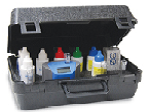
installation went easily. I recommend the
ColorQ digital
water analyzers, as they provide complete chlorine information,
easily and reliably. The question was a good one, as I hope
the season will be.
Sincerely. Alan Schuster, 5/15/2009
► Replacement
Additives?
We have a large inground vinyl liner
pool - about 44,000 gallons. When it was built we installed
a salt chlorinator unit. We run the pump 24/7 and also have
an inground cleaning system which we run daily. The water is
great until it rains and our minerals get out of whack.
However, we have been unhappy with the costs associated with
adding special proprietary chemicals every time it rains due
to a low mineral count. Could we just use salt like you have
described for other units? Is it possible something is wrong
with the cell in the unit?
Kimberley F., 1/12/2005
Your system is a salt chlorine generator, similar in action
to many others on the market, including the inground models
on this website. One product is merely a propriety salt
mixture. You can use non-iodized, food grade or
water
softener grade salt and maintain it at the PPM level
required by your equipment. Salt is usually only added once
or, as needed, to replace that lost by backwashing, pump
outs and splash outs. The other product is a proprietary
mixture that claims to be useful for many purposes. The
bottom line is that if you operate the system properly and
maintain a free chlorine level of 1-3 PPM, about all you
should have to do is control the pH and TA. If your water is
hard or contains metals, adding a calcium or a quality,
phosphate-free, metal treatment, such as
Liquid METALTRAP,
monthly, will help keep the cells and underwater water
surfaces free of scale or stains. After periods of heavy
rainfall, the chlorine level may bottom out. Adding a dose
of shock and/or turning up the dial will restore the proper
level, in most instances. If the unit is producing adequate
chlorine, there would appear to be nothing wrong with it. I
hope that this information proves helpful and a savings to
you. Please tell your friends about the website.
Sincerely. Alan Schuster, 1/12/2005
► While We're
Away?
Would a Salt Water Generator
be advisable for use in a fiberglass pool? Also, as we are
gone for 5 months a year, what problems would this
present with the maintenance of the system? Do all SW
generators need to be acid washed? We plan to cover the
(8.5x18x5ft deep) pool with a 4" thick spa cover, and to
keep the pool at approx. 87-90 degrees. Would this effect
the ability to use the SW generator effectively? Thank you
so much for sharing your knowledge.
Patty in Tucson, AZ, 10/17/2009
There's no reason that a
saltwater chlorinator shouldn't be
used with a fiberglass pool. Many salt chlorine generators
have self cleaning cells, which I assume relates to the
"acid washing" that you are referring to. You should be able
to select a low setting and have it controlled by a timer.
Once the organic matter in the pool is destroyed, very
little chlorine will be required to maintain the pool. I
suggest that you have someone periodically check the water
level, chlorine and pH levels. Otherwise, salt chlorinator
operation is highly automated. Have you given any thought to
covering the pool with an
automatic pool safety cover? It is
much safer than what you are proposing, as this type of
cover can support the weight of a person. It can be
retracted at the press of a button, act as a solar cover,
reduce evaporation, reduce chemical usage and help keep out
debris. I hope that I have been helpful.
Sincerely. Alan Schuster, 10/18/2009
► Yellow Pool
Staining?
I have a in-ground vinyl pool with a
salt chlorine generator I installed at the beginning of the
summer. The water has been clear all season but I have now
(after two weeks of not using the pool) noticed a yellowish
staining in the steps and around the rim (bathtub ring and
below the waterline). It does not scrub off so I do not
think it is algae. I have kept the chlorine levels up so I
would doubt algae could form. This must be some kind of
scaling...How do you get rid of the stain? I bought some
Scale Remover but after looking thru the salt generator
owners manual, it made reference to a "saturation index" and
mentioned that anything over .2 could cause stains. I did
some calculations and determined my Saturation Index to be
0.270. What would try to adjust first? My Alkalinity is 119,
my pH is 7.5, my Calcium is 250 and stabilizer is at 60. My
first thought is to take the Alkalinity down a notch and use
a metal remove to get the Calcium lower; both of these
adjustments should take the Saturation Index down closer to
0.0 Any thoughts or advice? Thanks.
Allan C., 10/10/2009
Scale consists of calcium carbonate deposits and should not
be yellowish in color. Your water chemistry is only very
slightly towards the scaling side, of the optimum range, and
should not be causing the problem. Adding a metal treatment
or calcium treatment will not lower the hardness: it will
complex calcium and allow more to remain in solution without
problems. Lowering the pH and/or the TA will lower the
Saturation Index. This
problem does not seem to have any
direct link to the use of a
salt chlorinator, as it is
common in pools without salt chlorinators. The stains and
discolorations could be the result of iron or other metals.
That being the case, chlorine will not work. Shut off the
filter, put 1/2 pound of pH reducer in a white sock and drop
onto a stained area. Hopefully, as the acid dissolves the
stains will be removed. Afterwards, use a scrub brush to
help expose the surface and repeat as needed. If this
works, but the area is too broad, lower the pH of the entire
pool to about 6.0. Once the stains have been removed, add a
double-triple dose of a quality, phosphate-free metal
treatment, such as Liquid METALTRAP, prior to restoring the
pH. Add at least 1 dose for each 0.5 PM of metals and allow
8 hours to work. In any event, add at least a double
dose. Allow the water to recirculate for 8-12 hours after
the metal treatment has been added and before the pH is
raised. I suggest that you have the pool and tap water
tested for iron, copper and manganese, as it may be
necessary to treat the water monthly or whenever new water
is added. If this does not work, try placing a few vitamin
C tablets on the stain and let dissolve. If this works,
lower the pH to 6.5 and add a chlorine neutralizer to
discharge all chlorine present. Add a dose of
METALTRAP
Stain Remover and allow to circulate overnight. Use the
amount recommended on the package. Do this only if the
vitamin C tablets worked! Depending upon the nature of the
problem, additional product may have to be added. Before
raising the pH and chlorine level, add a double dose of
Liquid METALTRAP metal treatment and wait 1-2 days. As you
raise the pH and chlorine, take notice of the water quality,
as more metal treatment might be necessary. Good luck.
Sincerely. Alan Schuster, 10/10/2009
You were correct about metals in the
pool: I just had the water tested again for copper & iron
and they are reporting the copper level to be 0.17 ppm which
looks to be off the chart high. I need to get my well water
tested as it looks like I'm putting in more metal at each
top-off. Thanks so much for your help on this.
Allan C., 10/11/2009
► Unit For
Above Ground Pools?
I am looking into saltwater
chlorination for above ground pools and would like to obtain
more detailed information on the Mode SR Salt Chlorine
Generator. This item seems to be a cost effective solution
for an above ground pool. As a minimum, what water capacity
can this item handle? The pool I am interested in is a 16’ x
33’ x 52” and is about 20,000 gal. How do you install this
item? It does not appear to be inline with the filter pump.
Does this item require additional accessories or is it stand
alone? Regards.
Ed W., 4/6/2005
The Model SR Salt Chlorine Generator unit, requires minimal
installation and no plumbing. This salt chlorine generator
is designed for above ground pools, up to 20,000 gallons in
water content. Your pool actually contains 17,150 gallons,
according to my calculations. It does not require connection
to a pump. It hangs below the top of the pool, allowing for
water to flow through the cell. All you need to do is plug
it into a 110 volt, GFI protected outlet. It will require
that salt be added to the pool water. Other than that, it is
maintained like any other chlorine pool. I hope that the
information will prove helpful.
Sincerely. Alan Schuster, 4/6/2005
► Is Well
Water A Problem?
I am having a pool installed this fall
and wanting to go with the salt chlorinating system. I
talked to a pool guy that is giving me one bid for the
upcoming pool and he said that the cell would go out faster
than normal because I am on well water not city. Any
comments. Thanks.
Cody C., 10/8/2008
If your well is of potable water quality, it is doubtful
that it can make any measurable difference in the life of
the cell. In either case, chemicals will be added to the
pool to adjust the water to the desired water chemistry. If
your well water contains high level of calcium and/or heavy
metals, it should be treated appropriately. The best way to
treat a pool, such as yours, is with the
METALTRAP Filter.
Simply attach the METALTRAP Filter to the garden hose that you are
using to fill the pool. It will remove iron, copper,
manganese, other heavy metals and fine particulates. By
removing the heavy metals, you virtually eliminate
discoloration and staining issues. Use the METALTRAP Filter on all
new water added and you'll avoid adding metallic ions that
might cause problems. Monthly doses of the
Liquid METALTRAP
product will pick up and lingering heavy metals and will
help keep the salt-cell cleaner. Ask him why it makes a
difference, as I am eager to hear this!
Sincerely. Alan Schuster, 10/8/2008
► Worried
About Landscaping?
Will a salt water pool harm my trees,
plants and fescue grass? Thanks.
David M., 3/13/2005
It is never a good idea to drain any kind of swimming pool
onto landscaped area. However, sometimes there is no
practical choice. Normally the only water drained is that
from backwashing, pump out or winterizing and is done on an
occasional basis. Salt chlorinators require a few 1000 PPM
of salt and this, generally, is well tolerated by the
landscaping, especially if the drainage is good. In areas,
where drainage is very poor and/or rainfall totals are very
low, some effort might be made to minimize and disperse the
discharges. Potassium chloride has been used, in place of
sodium chloride, out of consideration for this problem.
Thirteen pounds of potassium chloride are required for every
10 pounds of sodium chloride. No one has ever written to me
describing the effects of this concern and, therefore, I
surmise that most people should not expect to have a
problem, if some precautions are taken. I hope that I have
been helpful.
Sincerely. Alan Schuster, 3/14/2005
► How Does
Salt Become Chlorine?
Could you possibly explain how the
compound sodium chloride is converted to a Chlorine. I am
interested in seeing how and why it occurs molecularly. I am
a pool repair person and have had the question raised, but
have not been able to give a complete answer. My thanks in
advance.
Rick I., 4/15/2004
Sodium chloride or common table salt is converted
electrolytically, with the use of a salt chlorinator system,
into chlorine and sodium hydroxide. In order for the salt
chlorine generator to function properly, there needs to be a
salt concentration, in the pool water, of approximately
2500-4000 PPM, depending upon the brand and/or model. The
simplified chemical reaction is as follows:
2 NaCl + 4 H2O = 2 NaOH + 2H2 + 2HClO
2 (sodium chloride) + 4 (water) = 2 (sodium hydroxide) + 2
(Hydrogen) + 2 (hypochlorous acid)
In a swimming pool the chlorine forms hypochlorous acid
(HClO), the active germicidal form of chlorine. Electrical
energy is required to initiate the oxidation-reduction
reaction, necessary to covert salt into hypochlorous acid.
The salt chlorine generator provides the means to make this
conversion. I hope that the information will prove helpful.
Sincerely. Alan Schuster, 4/15/2004
► Testing The
Salt Level Of Pool Water?
I have a service route and come across
quite a few salt chlorinator systems. My question is how
important is it to maintain the proper level of salt? How is
it tested? Thanks.
Rich D. Tucson, AZ, 6/21/2007
Very important! Low salt levels can result in low chlorine
production. High salt levels can result in overproduction
and shorten electrode life expectancy. Testing is simple, as
the there are a variety of testers and test strips
available. The newest and, perhaps, the simplest, is the
TRACER PockeTester. Designed for the pool
professional, but inexpensive enough for the caring pool
owner, the Tracer PockeTester measures Sodium Chloride with
a range from 0 to 9,999 ppm; TDS with a range from 0 to
9,999 ppm; Temperature from 32 to 149 F. The tester’s probe
is dipped into a sample of pool water and the results are
ready in seconds. A microprocessor allows for easy push
button switching between TDS and Salt. I hope that the
website has been helpful.
Sincerely. Alan Schuster, 6/21/2007
► Pool Pump
Size Considerations?
I am building a pool in Mexico and am
convinced that a salt-water chlorinator is the way to go,
perhaps combined with an ozonator. I have two questions: 1.
Does salt-water chlorination process have any corrosive or
other detrimental effects on equipment (such as the pool
pumps) over time, and if so, is there anything that can be
done to minimize these effects? 2. I've received various
recommendations concerning the size of the filtering pump I
should use, relative to the size of the pipes (i.e. use 1/2
HP for 1.25" or 1.5" pipes), but I'm wondering how this ties
into the salt-water chlorination processing requirements. My
pool will hold roughly 8,000 gallons and I want to run the
pump as little as possible (for maximum energy
conservation). If I use a larger pump to reduce the number
of hours it runs each day, how will this impact how much
chlorine is generated relative to the amount required? The
bottom line is that I want to make sure I have the
appropriate balance between pump power, pipe size and
chlorine generation for optimum efficiency and lowest
possible maintenance. Any advice you can offer would be
greatly appreciated. Thanks again for providing such useful
and accessible information.
C. B., Mexico, 2/18/2005
Salt chlorinating systems do not normally present a
corrosive situation, unless two dissimilar metals are in
immediate proximity to one another. Salt Chlorination has
become so popular today, that is extremely unlikely that you
will experience problems, using the products in current
production. Too big a pump can reduce chlorine production.
There doesn't seem a need for you to exceed 1 HP, with
1-1/2" pipe. Energy consumption comes down to watts times
hours. You should plan on operating the filter for 6-12
hours a day, depending upon temperature, usage and other
circumstances. Trying to lower the filtering time, to a
conservation-minded, short cycle, will, also, shorten the
time that chlorine and ozone are being produced, and that
operational practice could lead to algae problems and poor
sanitation. Remember, sanitizer is only produced when the
pump is on! The combination of salt chlorine generation and
ozonation should prove very effective. I hope that this
information proves useful.
Sincerely. Alan Schuster, 2/18/2005
► Won't Do
Without One?
I live in Houston. We are starting the
process of getting quotes to build a new pool. My sister in
Chicago has a pool ionizer. I have never seen anything as
easy as this. Every season they put a few bags of salt in
the pool when they and the ionizer makes its own chlorine.
They rarely have to add anything. Is it possible to have
this system in the hot humid weather that we have here in
Houston? I do not want a pool that is not an ionizer. Can
you help me in finding a pool company in our area that will
install this system with maintenance service?
Becky A., 3/6/2007
Not a problem! The product that you are referring to as an
"ionizer" is more correctly described as a
salt chlorine
generator system. That's why some salt is added yearly: in
order to replenish the salt content, after the pool water
level has been restored in the springtime. An ionizer is
something different: it uses copper and silver ions, in
conjunction with shock treatments, to maintain proper water
quality. An ionizer does not make chlorine! A salt chlorine
generator system can produce all of your pool's chlorine
requirements, with a minimum of other chemicals. It is like
having a chlorine manufacturing plant. Chlorine output is
controlled by a setting on a dial and is making adding pool
chlorine the old fashioned way obsolete. It works in the
humidity of Florida and the Arizona desert. Having it
installed in Houston is as simple as going to a
manufacturer's website. Using a dealer locator will help you
find a local company. You'll, also, find a lot of product
information on their website. Good luck with the pool.
Sincerely. Alan Schuster, 3/7/2007
► Controlling
Chlorination?
I was browsing through the information
on mustard algae and came across pool automation. If we get
a chlorine generator, can we use an automation control to
regulate the chlorine level? The website was really helpful.
Thanks for making it available.
Paul, 10/9/2009
A pool automation control can be used for pool accessories:
filters, heaters,
automatic
safety covers, automatic pool vacuums and more. A
salt
chlorine generator is connected electrically
with the same circuit as the filter. When the pump goes on,
the salt chlorine generator is activated. The chlorine level
can be regulated by varying the control setting on the
equipment or by increasing or decreasing the filter
run. There are devices than can control the actual chlorine
level. If you are interested in reducing the time and
effort, a Robotic Pool
Cleaner and a pool automation system
are a good means to accomplish this task. I hope that I have
been helpful.
Sincerely. Alan Schuster, 10/10/2009
► Salt
Chlorinators vs. Ozonators?
Alan, how about ozonators versus salt
chlorine generators? I have been told ozonators kill a wider
range of microorganisms than salt chlorinators. Also, a
friend with a salt chlorinator adds muriatic acid regularly
to kill algae. Your opinions, please.
Ron, 3/22/2010
Ozonators only work while ozone is actually being produced.
There is no residual action. This means that ozone quickly
leaves the water and that can allow for algae growth on the
walls and in the corners. However, It needs a backup sanitizer
to perform properly.
Salt chlorinators are complete
sanitizers and do not require a backup. It allows for easy
control over the chlorine level and all water passing
through the cell is super chlorinated. Having both salt
chlorination and ozonation will allow for the salt
chlorinator to be run at a lower production rate. This, in
turn, will extend the life of the cell and reduce chemical
usage. There is no sensation of salt in the water and little
of the odor normally associated with chlorine. The addition
of muriatic acid has nothing do with algae. It is being
added to lower the pH of the water. I hope that I have been
helpful.
Sincerely. Alan Schuster, 3/22/2010
► A Salt
Chlorinator: is it salt water?
I know that salt is added to the pool
water and it is converted to chlorine, as it passes through
a cell. Does that mean that the pool is now a salt water
pool? Can you taste the salt? I like the idea of the
product, but I don't like salt water swimming. Can you
supply any details? Thanks.
Kenny K, Ft. Lee, NJ, 6/30/2005
Salt is added to the pool water and I believe that a typical
addition would be 20-25 pounds per 1,000 gallons of pool
water. That is far from the salt level of ocean water (about
one-seventeenth) and it is not nearly enough to taste. From
my own experience, there is no sensation of salt water. Not
in feel or taste. I hope that I have been helpful.
Sincerely. Alan Schuster, 6/30/2005
► Good For
The Liner?
I have a vinyl inground pool and am
considering getting a salt chlorinator. I have been told
that it will help maintain the appearance of the liner. Is
someone pulling my chain? How can salt do that? Please
explain.
Robert G., Gainesville, FL, 1/14/2012
No one is pulling your chain! It has nothing to do with the
salt and everything to do with the consistency of the
salt
chlorinator. Salt chlorinating systems are controllable and
avoid big fluctuations of the chlorine level. It is the
presence of high chlorine levels that can cause your liner
to fade. Maintaining a steady 1-3 PPM chlorine level is good
for the pool sanitation and safer for the liner. Manual
addition of chlorine can cause upward spikes in the chlorine
level, resulting in the potential to cause fading. Refer to
the page on "Vinyl Pool Liner Problems." I hope I cleared
things up.
Sincerely. Alan Schuster, 1/14/2012
► Above
Ground Salt Chlorine Generator?
Do you know of some manufacturers of
salt generators for above ground pools. Which one do you
recommend and why? Are they worth the cost?
Kurt W., 4/22/2009
How about three that will cost under $400 and require
little or no installation or plumbing. Two are even
solar-Powered and can function as a mineralizer, as well. These
Salt Chlorine
Generators can be used for pools up to 15.000 to
25,000 gallons in size, depending on the model. No chlorine to handle or store,
fewer problems and better water quality are just some of the
advantages. Previously, cost was the big obstacle. Now it
has become affordable, even for smaller pools. For more
information about the I hope that I have helped you decide
on joining the growing ranks of salt chlorine generator
owners.
Sincerely. Alan Schuster, 4/22/2009
► Hard Water
As A Factor?
Hi Alan. The water in our area is very
"hard". It leaves hard, white build-up on the tile of the
pool. Will a salt chlorination system help eliminate or
significantly reduce the amount of build-up on the tile?
Thanks for your time and expertise.
Kelly R., Claremont, California, 3/25/2004
Good question! Adding a salt chlorinating system will
require that about 2500-4000 PPM, depending upon the
manufacturer's recommendations, of sodium chloride be added
to the pool water. While, this will not increase the
hardness level of the water, it will increase the Total
Dissolved Solids (TDS) of the water; which in turn could
reduce the solubility of some of the minerals in the water.
The good news is that the salt chlorinating system will
reduce the amounts of other chemicals needed to maintain
water quality and will reduce the buildup of chemical
byproducts, that are more likely to cause problems. All you
should need to maintain the pool is an occasional dose of
muriatic acid to lower the pH. Because the water is hard you
might want to add a monthly dose of a calcium sequestering
compound to help prevent scale formation. As a bonus, it
will help keep the salt chlorinating system's electrode
plates clean and free of scale. I hope that I have been
helpful.
Sincerely. Alan Schuster, 3/25/2004
► Salt
Chlorine Generator and UV Sanitizer?
I am a physician who lives here in
Connecticut with my two children, ages 6 and 9, and my wife,
who are all very blonde, and end up with green hair after a
few short weeks of swimming. I have a chronic shoulder
injury that requires that I swim in 90 degree pool water. My
in-ground pool is 18x42, is heated by a propane heater, and
it has an automatic pool cover. I am looking into an
electronic chlorine generator and combining it with a UV
sanitizer. I ruled out ozone generators because of the
automatic cover, which covers the pool most of the day, as I
am afraid of the accumulation of gas that my family may
breathe in. What do you think of the combination of salt
generator and UV sanitizer, considering that the pool is 90
degrees from June through September? I look forward to your
reply.
Bill, CT, 4/25/2005
First let's discuss the green hair. At about the time I was
transitioning from life as a cosmetic chemist to a specialty
pool chemicals manufacturer, an article about "green hair"
was published in the Journal of the Society of Cosmetic
Chemists. It attributed the problem to the presence of
copper from copper sulfate, natural sources and corrosion of
copper components, as opposed to the use chelated copper
algaecides. You have a heater and you probably use trichlor
tablets in a feeder. Trichlor is acidic and if the water
remains in an acidic state for prolonged periods of time,
copper corrosion will follow. You should have the water
tested for copper. Whether it shows up or not, add a double
dose of a quality metal chelating agent, such as
Liquid MetalTrap. Not only might it help
prevent more green hair, but it will help keep the
salt
chlorine generator cell free of scale deposits. You can use
a salt chlorine generator without a UV sanitizer. You cannot
use a UV sanitizer without chlorine, bromine or ozone. UV is
not a persistent sanitizer, is not an oxidizer and has no
residual effect. Chlorine is all of those things and more.
The advantages of combining the two sanitizers is that you
should be able to lower the chlorine level, while assuring
that the return flow is free of viable microorganisms. I see
this combination as ideally suited for a high bather load
and high temperature situation. You must have a sanitizer,
like chlorine, present in order to destroy microbial growth
on the underwater surfaces. Once you have a salt chlorine
generator installed, the pH of the pool water will tend to
remain high. Acid conditions will be a thing of the past and
so should copper corrosion. Some of the negatives about
chlorine will also to things of the past: there will be less
odor, less irritation and more consistent chlorine levels.
If it ever comes to pass that you need a new heater, I
suggest that you consider an heat pump.
It will be less expensive to operate than propane, cleaner
and there are models that do not use copper heat exchangers. I hope that this
information proves helpful.
Sincerely. Alan Schuster, 4/25/2005
► Bromine
Generation?
I have been using bromine tablets in
my pool for 9 years and really love everything about it
except the cost and the 50# containers. I recently inquired
about a salt bromine generator and the individual at the
pool store stated that I can add bromine salt to a pool with
a typical chlorine generator and that would work fine (I
know that the chemistry is very similar but she wasn't very
convincing). In addition one manufacturer's brochure did not
state anything particular about such a conversion. Any
thoughts? Thanks for any information that you can provide.
Fred L., 7/1/2003
If you add approximately 10-25 PPM of sodium bromide to a
pool, that is being maintained on the typical pool chlorine
product, all of the chlorine will convert the bromides to
bromine. The downside is that it cannot be stabilized or
protected against the Sun's UV rays and can result in higher
usage rates. Before adding sodium bromide, to a salt
chlorinating system, check with the unit's manufacturer, as
to their recommendations. It is possible that the bromides
will have an adverse effect upon the life of the cell and
could require a complete draining. It is, also, possible
that sodium bromate could be formed and that may create
adverse health considerations. A
salt chlorinating system
is capable of supplying all of the pool's sanitizing needs,
without the addition of sodium bromide, and will avoid many
of the odor problems associated with the usage of
traditional chlorine swimming pool products.
Generating bromine will force the need to produce more
chlorine, because the bromine is more apt to be destroyed,
by the Sun's UV rays. Chlorine can be protected, but
bromine cannot. I hope that I was more convincing. Enjoy the season.
Sincerely. Alan Schuster, 7/2/2003
►
Eliminating Previous Use Of Bromine?
I have a 16x32 inground vinyl liner
sport pool and was using bromine last year. I am switching
to a salt water chlorinator and have been told many
different things about whether I need to drain the pool
completely or not to get the bromine out before the switch.
The last suggestion was to drain the pool as much as safely
possible (just above the sidewall bottom depth) and then to
add chlorine neutralizer (or some other chemical to remove
the bromine). Do you think this will work? Does this
chemical really eliminate the bromine like they say? I
really don't want to drain the pool completely to avoid
liner problems. Thanks.
Don, 5/10/2005
Whoever suggested that you add a chlorine neutralizer to get
rid of the bromine really doesn't understand what needs to
be done. Chlorine neutralizer will eliminate bromine, by
converting it to bromide ions. However, adding chlorine will
cause the bromide ions to form bromine again. You have to
eliminate the bromide ions and, in that regard, chlorine
neutralizer is useless. The salt chlorinator cell might be
adversely affected by the presence of bromide ions. The only
way to totally eliminate them is to replace water. I suggest
that you contact the manufacturer and find out their
suggestions for dealing with this issue. It might not be
necessary to remove all of the bromide ions, but you need to
obtain this information. The presence of bromides will
increase the need to produce more chlorine and could shorten
the life of the salt cell. Good luck and I hope that I have
been helpful.
Sincerely. Alan Schuster, 5/10/2005
► Keeping It
Bromine?
I have never owned a pool before and
have just moved into a house with a 20k gallon pool. I think
the pool and equipment are between 10 and 15 years old.
I had the pool opened professionally, had the water tested
and added 200 pounds of granular salt from the pool store.
All indications on the unit are normal, but after a week the chlorine levels
are almost non-existent (free chlorine .17 and total
chlorine .2). Everything else (Alkalinity (90), pH (7.35),
Calcium Increaser (113), and Chlorine Stabilizer (80))are in
the normal range. I then found out that the previous owner
had converted from a chlorine to bromine system at some
point. Not sure where to go to from here. I understand that
I am supposed to add bromine. If so, how much, is there a
special type, was adding the salt a mistake or was there a
special type of salt that should be used. Appreciate any
information. Thanks for the help.
Kevin M., 6/11/2006
Salt chlorine generators are designed as a
chlorine generator, but can be operated as a bromine
generator with the addition of sodium chlorine and sodium
bromide. However, because bromine cannot be protected from
the Sun's UV rays with stabilizer, the salt cell output will
have to be higher and this will shorten the cell life. At
pool opening time it is common for the pool to have a high
demand for chlorine or bromine. I suggest that you keep
adding granular chlorine, until the free chlorine is 1-3
PPM. In reality, the chlorine (hypochlorous acid) will
convert to bromine (hypobromous acid). When testing as
bromine, the level should be 3-5 PPM. Hopefully, at that
point, the unit will be able to continue to meet the
demands of the pool. To maintain the pool on bromine, after
adding the normal salt amount, add 2-4 lbs of sodium
bromide. Thereafter, add 2-4 lbs of sodium bromide, for
every 50 lbs of sodium chloride (salt) added. Bromine does
afford some advantages: less odor and irritation, more
flexibility with the pH and better performance against
certain types of microorganisms. Good luck with the pool.
Sincerely. Alan Schuster, 6/12/2006
► Too Much
Chlorine?
We just bought a house with a pool
that has an salt chlorine generator. The previous owner
replaced the cell recently, but didn’t adjust the chlorine
production, thus the chlorine level is really high. We’ve
turn off the generator for now, but I wondered if there was
any other way to lower the chlorine. Please let me know.
Ellen S., 11/19/2006
Shutting off the salt chlorination system was the right
first step. Without having been provided with specific
details and not knowing where you are located, there are
several options. If the pool is not vinyl, you can safely
allow the chlorine levels to drop by themselves. Make sure
that the filter is operated for normal periods of time. If
the pool is vinyl or you would like to quickly get the level
down to a more comfortable level, you can add a chlorine
neutralizer product. Most pool dealers carry the item. It is
used to reverse the effects of massive over chlorination.
Use as directed and once chlorine level has been optimized,
you should resume normal chlorination. I hope that I have
been helpful.
Sincerely. Alan Schuster, 11/19/2006
► Corrosive
Concerns?
Hello, I would greatly appreciate your
opinion on salt water pools. I am installing a pool this
summer and I can't make up my mind about going with a
saltwater chlorinator. I have some apprehensions mainly
because of possible corrosion damage. Have there been many
problems with salt chlorinators and are they low
maintenance. At the end of the day I guess the question I
have is, if you were installing a pool would it be salt
water. Regards.
John M., 4/1/2005
I have had years of experience with a
saltwater chlorinator
on my pools - both in New York and Florida. Corrosion was
never a problem, unless there were different metals in close
proximity to one another. I did have some trouble with the
underwater lights and had to have the metal bolts replaced.
Other than this there were no other corrosion problems. It
is a low maintenance item and greatly reduces chemical
handling. Imagine being able to control the chlorine level
with a simple turn of a dial. Yes, I would do it all over
again! Good luck with your choice.
Sincerely. Alan Schuster, 4/1/2005
► Stabilizing
The Chlorine?
I am thinking of changing my pool over
to a saltwater system. I was wondering which techniques are
the best for stabilizing the pool when you have a saltwater
system, or does a saltwater system stabilize itself? Thank
you.
Anthony W. 1/4/2005
With a salt chlorine generator, all you need to do is add an
initial dose to stabilizer to bring the level up to 40-60
PPM. Thereafter, more stabilizer is needed only to replace
that lost through pump outs, backwashing and splash out. The
overall water chemistry should be maintained in the usual
manner. Because salt chlorinators destroy chloramines so
effectively, you will find the swimming conditions more
pleasant and easier to maintain. I hope that I have been
helpful.
Sincerely. Alan Schuster, 1/4/2007
► From
Chlorine To A Salt Chlorinator?
I am changing my pool to a salt
chlorine generator type and I was wondering if I need to do
anything to the chemical chlorine already in the water
solution, before adding the salt and starting-up the
generator. Thanks.
Richard, 3/22/2007
You might want to check the stabilizer level. If too high,
above 100 PPM, you might want to replace some water before
adding the salt. A range of 40-60 PPM should be adequate, to
help protect the chlorine against the Sun's UV rays and
allow the salt chlorine generator to operate more
efficiently. Otherwise, the water chemistry should be
maintained, as before. I hope that this information is
helpful.
Sincerely. Alan Schuster. 3/23/2007
►
Superchlorination Advice?
Please help me! I recently drained
my NEW pool after being sold chemicals at the pool store
that made it look like 2% milk. Here is my problem. It is a
25,000 gallon saltwater chlorinator system. I added 750 lbs
of salt, stabilizer, and acid to get it fired up for the
first time...it has been superchlorinating for 30 continuous
running hours so far. After the initial 30 hours, I have it
set to run 7 hours a day. The pool store said I needed to
superchlorinate every day for the first seven days. I am
worried about doing this being that after the first 30 hours
I have a 3 ppm free chlorine reading, 3 ppm total, 7.8 pH,
and 180 alkalinity. My limited pool knowledge tells me to
set the chlorinator to its normal low setting, due to it
being in its acceptable range already and stop
superchlorinating. Unless there is a specific advantage to
going all week for startup, wouldn't this make the free
chlorine reading skyrocket, if I kept superchlorinating?
Should I only adjust the pH and TA with muriatic acid and
turn down the chlorinator. My 4 in 1 kit tells me to add
1.15 quarts of acid to bring pH down, and the same kit says
add 12 quarts of acid to bring down TA. Which should I do?
Have I given the pool enough time to get an accurate
reading? I am hesitant to go the national pool store that
has been helping me due to prior weak advice. Thank you for
your help.
Tom, Scottsdale, AZ, 4/1/2010
If your water is clear and there are no signs of algae on
the walls, there is absolutely no reason for you to continue
to operate the saltwater chlorinator system at a
superchlorination setting. Your free chlorine level is at
the high side of optimum and the combined chlorine is zero
-- meaning there probably is no algae problems. You are
correct, in surmising, that continuing superchlorination
will only cause the free chlorine readings to become
unacceptably high. Operate the equipment to maintain a free
chlorine level of 1-3 PPM. I suggest that you control only
the pH and keep it within 7.2-7.8. So long as you are not
experiencing cloudy water, due to the combination of high
calcium hardness levels and high total alkalinity, there is
no compelling reason to have to lower the TA. Perhaps there
was a misunderstanding in the advice that was given, but
clearly it was inappropriate. I hope that I have simplified
things. Enjoy the pool.
Sincerely. Alan Schuster, 4/1/2010
► Potassium
In Place Of Sodium?
Will a salt system function the same
if I use potassium salt?
Mandy W., 11/24/2009
It seems that it is only recently that I received the first
email on this topic. Potassium chloride (KCl) can be used in
place of sodium chloride (NaCl), as the chloride ion source,
with salt chlorinating systems. However, the appropriateness
of its use should be checked with the manufacturer of the
salt chlorinating product. It cannot be used, as a salt
substitute, on a pound for pound basis. For each 10 pounds
of sodium chloride required, 13 pounds of potassium chloride
will be needed. Periodically the water should be tested for
chloride content and adjusted to the level recommended by
the manufacturer. One of the reasons given for using
potassium chloride is to avoid possible damage to landscaped
areas, due to the sodium content. However, too much
potassium, added to the soil, would also be a problem. I hope that this
information proves helpful. Enjoy the holidays.
Sincerely. Alan Schuster, 11/24/2009
► Scale
Deposits On Salt Cell?
I believe you may be able to help me
with my question. What is the chemical make up of the scale
that accumulates on the plates of a salt water pool
chlorinator used in a back yard swimming pool? Thanks for
any help you can give.
Al E, 4/16/2007
The scale consists of calcium carbonate, in virtually all
cases. A self cleaning unit should help avoid the problem.
Otherwise, the cell needs to be cleaned, according to the
manufacturers, instructions. Using a mildly acidic Cleaner
or vinegar can help avoid and control the buildup. I hope that this
information proves useful.
Sincerely. Alan Schuster, 4/16/2007
► Plates Need
Cleaning?
Alan. My chlorinator is only
developing a minimum of chlorine. I have tested and added
salt, checked the fuse cleaned all the strainers and filters
and checked the impellor of the pump for blockages. Flow
level and circulation are good. Pulled the cell apart and
found that 50% have the deposit of salt on them while the
other 50% are bright clean. These are alternate to the dirty
ones. Pulled the control box apart and have found no obvious
burnt out wire etc. Where and what do I look for next.
Regards.
Steve, Australia, 10/27/2008
The plates with the debris (probably calcium carbonate) are
the negatively charged ones. There are two possibilities.
The unit is either intended to be cleaned manually or, if it
has a polarity reversing feature, it has a defect in this
circuitry. I suggest that you refer to the owner's manual or
consult with the dealer, as to which possibility is most
likely. I hope that this information will prove helpful.
Sincerely. Alan Schuster, 10/27/2008
► Winterizing
With A Salt Chlorinator?
We are putting a pool in this summer
and would like to put in an in-line, plumbed-in, salt water chlorinator. Our
builder does not have much experience installing them in our
area (Burlington, Ontario) and is worried about how they
will stand the test of time in our climate. What are the
negative effects of a salt water pool in the Ontario
winters.
T. S., Burlington, Ontario, Canada, 2/23/2009
First let me set something straight. You will not have a
salt water pool. You will have a pool, to which some salt
has been added - an amount far less than real salt water. A
salt chlorination system should be winterized, along with
the entire pool. The cell should be removed and the lines
blown-out and capped. The controller can be removed and,
along with the cell, stored indoors for the winter. No other
special considerations are required. Enjoy the pool!
Sincerely. Alan Schuster, 2/23/2009
► Yellow
Prussiate Of Soda?
My pool has just been completed. It's
a plaster pool filled with city water. I have a salt
generator. I bought the salt from a pool store, just to
realize that it contains yellow prussiate of soda. I m
wondering what are the consequence on the plaster, the salt
generator and other and if I should replace all the water?
Thank you for your time.
Kassi, Watkins Glen, NY 8/31/2005
In some instances this can be a serious problem and for that
reason I urge people to use only non-iodized food grade or
water softener grades. Never use rock salt or industrial
grades! In your case, I suggest that you add a double dose
of a quality, phosphate-free, metal chelating agent, such as
Liquid MetalTrap, ASAP. It should help prevent
discoloration and as an additional benefit will help keep
the salt cell plates free of scale. Your water is soft and
should not present a major problem, as it probably does not
contain heavy metals. If your water had been hard, with
metals present, this would have been adding fuel to the
fire. Evidently this pool dealer has not experienced
problems because of your local water quality. Next time you
need to add salt, I would use a better grade.
Sincerely. Alan Schuster, 8/31/2005
► Improper
Bonding (Grounding)?
I install pools in Michigan and just
started installing salt/chlorine generators this year. Some
of my customers are getting shocks from the pool and decking
or hand rails, sometime only from one side of the pool. It
seems to be a bonding issue with the coping? How do they
bond a pool, say in Florida, where they have used these
longer than we have? Any Info or contacts would be greatly
appreciated. Thanks.
Steve, Michigan, 9/21/2006
In Florida, the rebar is bonded before pouring the concrete
deck and pool form, as are the light niche, ladders and
handrails. You can try turning off devices from the main
circuit breaker to see what may be causing the electrical
shock. If you get to the point that all the devices are
turned off and you still feel a shock, it may be the utility
company's problem on the main grid. Ground is often mixed
with the neutral and the result is a shock. Regarding salt
systems, there should be a bonding lug on the base of the
control unit. Make sure this is wired to the main bonding
wire (commonly connected on the pump's motor housing too).
I suggest that you consider consulting a licensed expert, to
help determine a cause. I
hope that this information helps.
Sincerely. Alan Schuster, 9/22/2006
► Polarity
Reversal?
Hello Alan, I find your website very
informative. I have a saltwater chlorinator solid cell. I
see that the new cells these days are now self cleaning
through reverse polarity action. Will I damage my current
cell if I reverse the polarity to self clean myself?
Appreciate your time and look forward to your reply.
Regards.
Lance W., Australia, 1/10/2005
A good question: one that I had to seek some expert advice
on. This will not work because the plates are not bi-polar.
Each plate, in a manual system, is either positive or
negative. What it will do is damage the cell. That is why
each side has a different size plug, so you can’t hook it up
incorrectly. Chalk it up to progress, but the newer units
with polarity-reversing features are clearly better. Still
any salt chlorinator is better than adding chlorine the old
fashioned way! I hope that I have been helpful.
Sincerely. Alan Schuster, 1/10/2005
► Salt
Chlorinator And An In-Line Feeder?
We recently ordered an inground pool
kit which came with a standard in-line chlorinator. We also
purchased a salt chlorinator. Can both be installed and if
so, in what order? Regards.
Tracy P., 2/18/2004
If you have a salt chlorinator you should not need the
in-line chlorinator, as it will serve no purpose. The salt
chlorinator should provide all of the pool's chlorine
requirements. If more chlorine is quickly needed because of
visible algae, heavy bather usage, heavy rainfall, the
in-line chlorinator will still not be useful, inasmuch as
what will be needed is a quick-dissolving shock. I suppose
that it can be installed as a backup. However, it doesn't
appear to me that placement is an issue. To be on the safe
side and not to void any warranty, check with the salt
chlorinator manufacturer. I hope that I have been helpful.
Enjoy the pool!
Sincerely. Alan Schuster, 2/18/2004
► Not
Completely Vertical?
We have just bought and installed a
salt chlorinator which states the salt cell plates should
sit vertical inside the salt cell plastic housing. However,
when trying to ensure this it meant the plastic threaded end
of the salt cell was not quite tightly screwed in place and
thus it leaked water when the unit was switched on. If I
tighten the salt cell screw and thus cure any water leakage
I notice that the plates no longer sit quite vertical and
are approximately 20 degrees from perpendicular. Also, they
vibrate when water passes through them. Please could you
advise if any of this is supposed to happen. Regards
Gwyn W., Australia, 1/7/2008
The function of the "must sit vertical" is for the GAS TRAP
to work properly. Most Australian units use a gas trap,
rather than a flow switch, used in American Engineered
units, to detect if there is sufficient flow or not. If not,
the gases produced from the cell will form an air gap that
disconnects, the conductivity of electricity from a cell
blade to another electrode sensor. Once it sees this "open
circuit" condition, it will shut off power to the cell. With
the cell not exactly vertical, you would have to determine,
if it's off center enough to affect this gas trap
protection. The problem, with the gas trap protection, is
that it is accumulating hydrogen gas, which can explode
under the "wrong" conditions. I suggest that you contact the
manufacturer of the salt system to see, if 20 degrees off,
is acceptable. It is obvious that to operate properly, the
salt cell must be securely screwed into the fittings.
In-line salt chlorine generators utilize a flow detector
and can be installed in horizontal to vertical positions,
unless otherwise specified by the manufacturer. I hope that
this information is helpful.
Sincerely. Alan Schuster, 1/8/2008
►
Zeolite
and A Salt Chlorine Generator?
We have looked up a zeolite product
and are considering using it in our sand filter. We couldn't
find anything that said if it was OK to use the zeolite with
a salt system. When we went to a pool product store, they
didn't really know about the salt system. Before we invest
in the this product, we would like to be sure it
can be used in all sand filters and with the salt system.
I'm sure I have been backwashing too often, and will not do
that anymore. I always felt that if I got the filtered
particles out, they for sure wouldn't recirculate back into
the pool. The pool is looking better already, but the sand
should be replaced sometime soon. Thanks again for all your
help!
Judy W., 6/18/2006
Good question and a surprise answer! Yes, you can use
a zeolite, to replace the sand, and a
salt chlorine generator, together. In
fact, it makes
it better! Zeolite has to be periodically
regenerated with a salt solution. If you have a salt
chlorine generator, it never has to be done. Enjoy the
summer.
Sincerely. Alan Schuster, 6/19/2006
|
Visit The Website Stores . . . for
better informed shopping!!! |
|
|
Shipping is FREE* . . . within
the Continental U.S.
A $9.99
handling charge will apply
to Continental U.S. Orders,
under $75.00. Orders
outside of the Continental
U.S. may require some
additional charge, based on
quantity and destination.
Most products can be
shipped World-Wide. International
and orders outside of
Continental U.S. - see
comments on the ordering
pages. |
|
|
Major
Credit Cards and PayPal are accepted. |
|
▲
Return To Top Of Page
▲
Aqualab Systems, LLC does not
make any warranty or
representation, either expressed
or implied, regarding the
accuracy or completeness of the
information provided by this
website; nor does Aqualab
Systems., LLC. assume any
liability of any kind whatsoever
related to, or resulting from,
any use or reliance on this
information. The content of this
website should not be used, if
it is conflict with any
applicable federal, state or
local regulations or guidelines.
© Aqualab Systems, LLC. All
rights reserved