| |
|
Scroll
down to browse through some archived SWIMMING POOL
questions and answers. Please click the Pool
Problems Link, on top of every page, to access a complete
listing of Pool Problem subjects, an alphabetized
Website Table of Contents, Pool Equipment Information,
About Alan Biographic Material and a Pool Glossary. Use
the other links to access additional subject
information. More information about some new and unique
products, for pools and spas, can be found by visiting
The Website Store.
You'll never know what you'll find and that's always
fun. Be better prepared and avoid costly problems!
|
|
 |
Shipping is FREE* . . . within
the Continental U.S.
A $9.99
handling charge will apply
to Continental U.S. Orders,
under $75.00. Orders
outside of the Continental
U.S. may require some
additional charge, based on
quantity and destination.
Most products can be
shipped World-Wide. International
and orders outside of
Continental U.S. - see
comments on the ordering
pages. |
|
 |

Major
Credit Cards and PayPal are accepted. |
|
On-line
shopping since 2002 - Safe and Secure!!! |
|
Managing the Cyanuric Acid-Chlorine
Stabilizer level, of pool
water!!! |
|
Cyanuric
acid is used to stabilize/condition the
chlorine and protect against the
damaging effects, of the Sun's UV rays. A
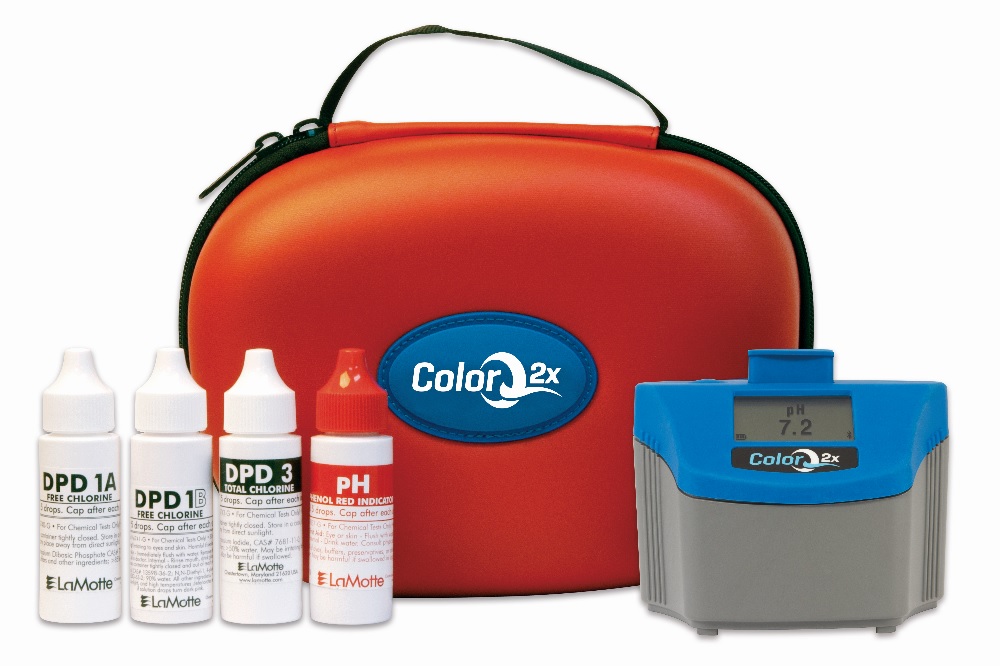
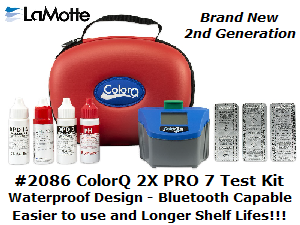
ColorQ 2X is a 2nd generation,
Bluetooth, Waterproof, all-digital tester,
that can
measure all the common test factors. There is a model, for every sanitizing
need.
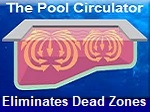
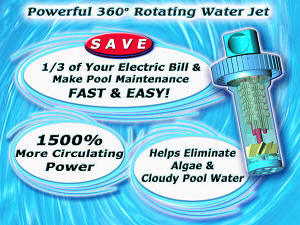
The Circulator is a
replacement return jet fitting,
that dramatically improves
circulation, by creating a
spiral return flow. Better
circulation helps sanitizers
work more effectively. The
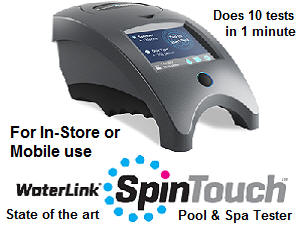
WaterLink SpinTouch Labs
are the ultimate tester, doing
up to 10 different water test
factors, in just 1 minute. |
|
ColorQ All-Digital Water Testers |
Circulation Boosting Return Jet
Fittings |
WaterLink SpinTouch Labs |
 |
 |
 |
|
Product and Ordering Information |
Product and Ordering Information |
Product and Ordering Information |
If you have a pool or spa water
testing need, we should have the
product.
►
Scroll down to read through some
Question & Answer information.
◄ |
|
Sanitizing is a must, for proper
pool water management.
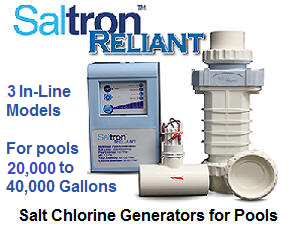
Salt Chlorine generators
are a better way to utilize
chlorine, producing more
controllable results. They
eliminate the need to handle,
measure or store chlorine
products, while reducing buildup
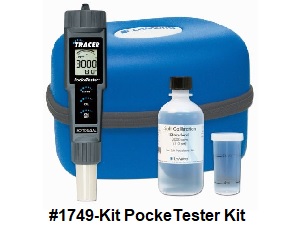
problems. An
Electronic
PockeTester Kit is a
convenient way to monitor the
salt level, as well the overall
water chemistry. |
|
Salt Chlorine Generators - 3 models |
Testing The Salt Level |
Salt Chlorinator - Needs No
Installation |
 |
 |
|
|
Salt
chlorine generators are
affordable and versatile.
Three models of In-Line salt
chlorine generators treat all
types of pools, up to 40,000
gallons. This is the easy
and better way to chlorinate any
type of pool. Easy to use,
providing better control and
results. Just dial-up the
chlorine level, to meet the
changing seasonal requirements.
Eliminates the build-up of
cyanuric acid or calcium
hardness. No need to shock with
products containing calcium
hypochlorite, as you can simply
dial up the controller and put
it in shock mode. Better
water quality and better
results, while reducing the
presence of odorous and less
effective forms of combined
chlorine. This is a better
way to do chlorine. |
If
you have a salt chlorine generator, it
is important to make sure the salt level
is in the right range, for proper
performance. PockeTester meters, are suitable for
professional or home use and were
designed for the quality-minded user.
The tester’s sensor probe is dipped into
a sample of pool or spa water and the
results are ready instantly. Tracer PockeTesters are designed with
replaceable sensors, so that more than
one test factor can be performed.
Standard PockeTesters have replaceable sensors, but
each performs only a single test factor.
Tests: Salt,
Total Dissolved Solids (TDS), pH, Water
Temp, Oxidation Reduction
Potential (ORP) and Total Chlorine. |
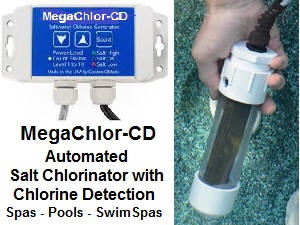
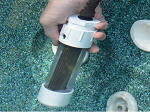
The Model
MegaChlor-CD salt chlorine
generator, is a self-contained
purification system, utilizing a
natural process to generate pure
chlorine. This unit is "smart
enough", to only produce
chlorine, when it is actually
needed. Requires no plumbing and treats all types of
above ground and inground pools up to
20,000 gallons. Full of features. Just hook it up and add
the salt. It's that easy. Traditional
stabilized chlorine usage causes
the cyanuric acid level to rise
too high, over time. With
a salt chlorine generator, this
buildup problem is eliminated
and frequent water replacement
can be a thing of the past.
This is a better way to do chlorine.
Choice of 2 models. |
|
Product and Ordering Information |
Product and Ordering Information |
Product and Ordering Information |
|
If you have a pool or spa water testing
need, we should have the product.
►
Scroll down to read through some
Question & Answer information.
◄
|
|
How to properly use
chlorine stabilizer (cyanuric acid) in swimming pools? |
Chlorine
stabilizer or conditioner (cyanuric acid) is
used, in outdoor chlorine-maintained swimming
pools, as a means of helping to protect the
chlorine from being destroyed by the Sun's
ultra-violet rays. This helps the chlorine last
longer and reduces consumption. The level of
cyanuric acid is easily determined by a simple
chemical test. In northern areas, a range of
20-40 PPM is considered ideal. In sunbelt areas,
a level of 40-50 PPM, is recommended for pools
not utilizing a stabilized form of chlorine.
Over the past few years, the industry has come
to recognize some of the negative aspects of cyanuric acid
build-up. Yes, cyanuric acid can help protect
chlorine, from being destroyed, by the Sun's UV rays.
Cyanuric acid levels, over 50 PPM, have been shown to lessen
the effectiveness of chlorine and increase the likelihood of
negative consequences. The regular use of stabilized
chlorine, dichlor or trichlor, will result in a relatively
rapid build-up of cyanuric acid, resulting in a decrease in
sanitizer effectiveness and overall water quality. If you
want to use chlorine and avoid the negative effects of a
rising cyanuric acid level, chlorine can used in another
entirely different and better way: a
salt
chlorine generator uses ordinary salt and
converts it into chlorine. This eliminates the build-up
problems, associated with rising levels of cyanuric acid,
and the need to handle, store or measure chlorine products.
Salt chlorine generators can used as a backup sanitizer or
oxidizer or in conjunction, with an
Ultraviolet Sterilizer or ozonator, to improve
sanitizing and reduce chlorine consumption. Levels between
50-150 PPM are above the ideal and are considered to be a
potential to serious problem,
requiring that higher free chlorine levels be
maintained. Every time a stabilized
chlorine is added, some cyanuric acid is
contributed to the water. When using a
stabilized chlorine, for routine sanitizing, it
is best not to use sodium dichlor as a shock
treatment, as that only speeds the rise in the
cyanuric acid content. Research has shown that
pools with elevated cyanuric acid levels are more prone to
algae problems and must maintain higher, than normal, levels
of free chlorine, in order to control algae and microbial
growth. These higher levels require water replacement,
in order to restore chlorine effectiveness. The use of
stabilized chlorine, in any form, will inevitably lead to a
cyanuric acid level, that is too high to maintain adequate
sanitizing effectiveness. Stabilized chlorine should
not be used in indoor pools and use in spas is not
necessarily the best option. Liquid chlorine, lithium
hypochlorite, calcium hypochlorite or potassium hypochlorite
are alternatives. The best and most effective means of
lowering the cyanuric acid level is to replace
water. The use of a salt
chlorine generator is a better way to utilize chlorine,
while still benefiting, from the protective effects of
cyanuric acid, at low levels. If problems arise, refer to the
Pool Problems Page, as
a source of problem-solving information, broken down into
various categories. Scroll down the page and click on the linked
keywords,
catch phrases
or images, in the archived answers below, to access additional information, on that topic or product.
Do you know what's in
your water? If you're having problems, with high
chlorine usage, sanitation or water clarity, testing allows
you to better understand the chemistry and determine the
cause of the problem. Once understood, you can select
the best treatment option. Understanding the nature
of the problem, should be step one. For
information about our full selection of testing options,
visit our Test
Equipment Store.
 |
Join our E-Letter Mailing List.
You'll receive 1-3 E-Letters a
month, featuring helpful pool
and spa advice, new product
information and sale
announcements. All we
require is your e-mail address
and you can opt out anytime you
wish.
Your information
will never be shared or sold. |
|
▼
Helpful,
Problem-Solving Information, in a question and
answer format.
▼ |
►
Why Is The Cyanuric Acid Still Too High?
I had a dealer
run a series of tests and the cyanuric acid tested out at
150 PPM Too high. I learned, from your website,
that the level became too high, because of my long term use
of 3" trichlor tablets. I knew that I would have to
replace 1/2 of the water and did not want to have to keep
doing this, because of the trichlor tablets. So. I
decided to go with a
SmarterSpa Salt
Chlorine Generator, that I saw, on your site.
Now, I have a salt water pool and there should be no more
problems, with cyanuric acid buildups. I had the
cyanuric retested and expected to see a reading of about 75
PPM. Instead, I was told it was 105 PPM. That
doesn't make sense, unless one of the tests was wrong.
Do you have an explanation? Loving the convenience of
the salt chlorine generator. Thank you. level became too high, because of my long term use
of 3" trichlor tablets. I knew that I would have to
replace 1/2 of the water and did not want to have to keep
doing this, because of the trichlor tablets. So. I
decided to go with a
SmarterSpa Salt
Chlorine Generator, that I saw, on your site.
Now, I have a salt water pool and there should be no more
problems, with cyanuric acid buildups. I had the
cyanuric retested and expected to see a reading of about 75
PPM. Instead, I was told it was 105 PPM. That
doesn't make sense, unless one of the tests was wrong.
Do you have an explanation? Loving the convenience of
the salt chlorine generator. Thank you.
Brenda T.,
Lakeland, FL, 5/14/2021
Of all the
common tests, cyanuric acid is the least reliable and
reproducible. Most testers only read to 150 PPM,
maximum. So ge tting
a reading of 150 PPM, does not preclude the probability,
that the true reading was in the neighborhood of 210 PPM.
That would explain why the level only dropped to 105 PPM,
after half the water was replaced. For your pool, 50
PPM is good, as a maximum, based on the latest thinking.
Higher levels will mean that you will have to maintain a
higher free chlorine level, in order to assure proper
sanitation. Instead of 1-3 PPM of free chlorine, you
might need 2-4 PPM. It would be in your long term
interest to drop the level closer to 50 PPM, as it should help the salt cell last longer. LaMotte has come
out with a new
Cyanuric
Acid Test Strip, that measures from 0-500 PPM.
This is something that a dealer should have available and
should use to retest all readings over 100 PPM. I hope
that this information is helpful. tting
a reading of 150 PPM, does not preclude the probability,
that the true reading was in the neighborhood of 210 PPM.
That would explain why the level only dropped to 105 PPM,
after half the water was replaced. For your pool, 50
PPM is good, as a maximum, based on the latest thinking.
Higher levels will mean that you will have to maintain a
higher free chlorine level, in order to assure proper
sanitation. Instead of 1-3 PPM of free chlorine, you
might need 2-4 PPM. It would be in your long term
interest to drop the level closer to 50 PPM, as it should help the salt cell last longer. LaMotte has come
out with a new
Cyanuric
Acid Test Strip, that measures from 0-500 PPM.
This is something that a dealer should have available and
should use to retest all readings over 100 PPM. I hope
that this information is helpful.
Sincerely.
Alan Schuster, 5/14/2021
►
How Much Is Too
Much?
What is the acceptable level of
cyanuric acid in a swimming pool? Someone came out to do a
water test and said that my level was 250 PPM, and that I
should drain the pool. They said I should not use tablet
chlorine - only liquid chlorine or my pool would be ruined
in 3-5 years. Is this correct?
P. G., 2/10/2018
Ruined?? Not sure about that. A range of
20-40 PPM is considered ideal. There is no question that 250 PPM is
much too high. Such levels can interfere with the
effectiveness of the chlorine and require you to maintain a
much
higher Free Chlorine level, in order to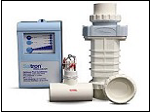 maintain adequate
sanitation. Not knowing where you are located makes my
answer more difficult. High levels can lead to other water
quality issues in hard water areas. They are telling you not
to use chlorine in tablet form because it will add more
cyanuric acid to the water. Liquid chlorine does not contain
cyanuric acid. I'm not sure about "ruining your pool." I
hesitate to tell anyone - especially if I do not know the
type of pool or construction to drain a pool. If it is a
vinyl pool, completely draining the pool can risk structural
damage or liner shrinkage. If the pool is masonry, it should
be able to be drained. However, I would double check with
the builder. If you don't want to or can't drain the pool
completely, another option would be to pump out some water
every week - perhaps, up to a foot below the skimmer. This
will drop the cyanuric acid level in increments. Once the
level is down, I suggest that you use supplement the
chlorine tablets with a weekly dose of liquid chlorine, as a
means of keeping the cyanuric acid level from rising too
quickly. An alternative to liquid chlorine, that avoids the
buildup problems, is a
salt chlorine generator. I hope that
this
recommendation works out for you. maintain adequate
sanitation. Not knowing where you are located makes my
answer more difficult. High levels can lead to other water
quality issues in hard water areas. They are telling you not
to use chlorine in tablet form because it will add more
cyanuric acid to the water. Liquid chlorine does not contain
cyanuric acid. I'm not sure about "ruining your pool." I
hesitate to tell anyone - especially if I do not know the
type of pool or construction to drain a pool. If it is a
vinyl pool, completely draining the pool can risk structural
damage or liner shrinkage. If the pool is masonry, it should
be able to be drained. However, I would double check with
the builder. If you don't want to or can't drain the pool
completely, another option would be to pump out some water
every week - perhaps, up to a foot below the skimmer. This
will drop the cyanuric acid level in increments. Once the
level is down, I suggest that you use supplement the
chlorine tablets with a weekly dose of liquid chlorine, as a
means of keeping the cyanuric acid level from rising too
quickly. An alternative to liquid chlorine, that avoids the
buildup problems, is a
salt chlorine generator. I hope that
this
recommendation works out for you.
Sincerely. Alan Schuster, 2/10/2018
► The Need To
Add More?
How often should I add chlorine
stabilizer?
Bob V., 8/7/2019
 Cyanuric acid is usually tested at the start of the season
and is added, if necessary. Most residential pools, using a
stabilized chlorine, will rarely have to add additional;
product, unless large amounts of water have been lost or
displaced. Pools that are maintained on chlorine, but are
not using a stabilized chlorine, may have to replenish the
stabilizer level from time to time, if water is lost due to
backwashing, leaks or overflow. The test is simple and could
help reduce chlorine consumption. To better assure proper
overall pool water chemistry, visit a pool store that has a
very reliable, professional lab such as a
WaterLink SpinTouch Lab,
rather than a less accurate test kit or strip reader. I hope the information
proves useful. Cyanuric acid is usually tested at the start of the season
and is added, if necessary. Most residential pools, using a
stabilized chlorine, will rarely have to add additional;
product, unless large amounts of water have been lost or
displaced. Pools that are maintained on chlorine, but are
not using a stabilized chlorine, may have to replenish the
stabilizer level from time to time, if water is lost due to
backwashing, leaks or overflow. The test is simple and could
help reduce chlorine consumption. To better assure proper
overall pool water chemistry, visit a pool store that has a
very reliable, professional lab such as a
WaterLink SpinTouch Lab,
rather than a less accurate test kit or strip reader. I hope the information
proves useful.
Sincerely. Alan Schuster, 8/7/2019
► Too Much
Chlorine Stabilizer?
My pool water was tested and I was
told that the stabilizer level was 200 PPM. I was told that
the only way to lower the level was to replace some of the
water. Is there a chemical that I can add that will lower
the level, without removing water? What happens if I don't
lower the stabilizer level? Thank you.
Austin U., Deptford, NJ, 6/24/2017
Firstly, there is no chemical that you can reliably add to the water
that will remove the stabilizer and lower the level. Such a
chemical was marketed, years ago, but proved to be a
disaster for the pool owner. Secondly, replacing water is
the only effective means of lowering the stabilizer level.
Thirdly, if you don't lower the level you will be forced to
maintain higher levels of chlorine, in order to provide
adequate sanitation. Incidentally, the safest way to lower
the water, without potentially damaging the pool, is to
lower the water to the winterizing level. Do this weekly,
until the level drops below 100 PPM. Testing for Chlorine
Stabilizer will help you keep track of the progress. A level
of 150 PPM is considered too high and is
interfering with the effectiveness of the chlorine. Most
State Department of Health guidelines limit cyanuric acid
levels to below 100 ppm. There is also a move for some
states to limit it to 50 ppm, and for some, 0 ppm (New York
State). The primary purpose behind this is the fear of
Cryptosporidium and E-Coli contamination, affecting
swimmers. Basically, cyanuric acid hinders the speed at
which the chlorine can react and kill germs and viruses. The
lower the Cyanuric acid, the quicker chlorine reacts.
Therefore, the lowering the cyanuric acid level is,
theoretically, increasing the "efficacy" of the chlorine. A
salt chlorine generator is a highly effective way to
maintain a chlorine pool, without contributing unwanted
byproducts, such as excessive levels of cyanuric acid or
increases in the calcium hardness, to the point of scaling
or cloudy water. Most pool testers only test to 100-150 PPM.
A reading of 150 PPM could actually mean the reading could
be 300 or more. A NEW
Insta-Test
Cyanuric Acid Strip measures up to 500 PPM, in a
instant. I hope that I have been helpful.
Sincerely. Alan Schuster, 6/24/2017
► Chlorine
Stabilizer Content in Tablets?
How much chlorine stabilizer is
present in the chlorine pucks?
Bob B., Marietta, GA, 6/12/2018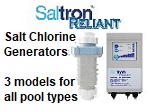
About 1/2 the weight of the tablet, ends up as cyanuric
acid, after the tablet has dissolved. The same applies to
dichlor. That is why the cyanuric acid slowly rises, over
time, forcing you to replace water, after 50 PPM is
reached, based on the latest thinking on what is an optimum
cyanuric acid level. Higher levels of CYA make chlorine less
effective and force you to maintain much than free chlorine
levels, than the typical 1-3 PPM free
chlorine range. Using a
salt chlorine generator, for your
chlorine needs, completely avoids this problem. Adding an
ozonator will help you use
less chlorine and slow up the rise of the CYA. I hope that
this information will prove helpful.
Sincerely. Alan
Schuster, 6/12/2018
► Will It Go
Away?
I found your website through LaMotte
Company, whose strips I use religiously. I live in Maryland,
have a black plaster pool, around 7 years old, use DE
filter, and stabilized granular and stick chlorine. This
summer we had an unusually hot spell lasting for about 10
days that coincided with an outbreak of green algae, which
I’ve never had before. I seem to be using unusually high
levels of chlorine as well to ward off the algae, but the
chlorine seems to be wearing off more quickly than usual.
I’ve had a couple of water tests done at different stores
with some varying results. However, I did get similar
readings for cyanuric acid (140-150ppm) and
stabilizer-adjusted total alkalinity (55-61ppm). Hardness is
a little on the low end (200-260ppm), pH is 7.2-7.3.
Chlorine readings are as expected low. One test said I had
0.83 ppm iron, the other did not detect it. Read your website
about cyanuric acid and have concluded I should try to lower
the 150 reading. I plan to winterize in about a month (with
a professional). My question for you is – does cyanuric acid
dissipate over a period of time? If I don’t replace any of
the water now before winterizing, will it “go away” over the
winter. We usually reopen early April. Your suggestions
would be welcome. Thank you.
Bruce V., Maryland, 9/21/2006
Cyanuric acid will not go away. It can be lowered, only by
replacement of water. You should lower it to under 50 PPM.
High levels will make chlorine less effective, but you will
still get a reading. Your problem could be not enough
chlorine is being added, for the way your pool is being
used. Your hardness is not low and you should not allow it
to rise higher, by using calcium hypochlorite. I would not
recommend dichlor either, as it will cause the cyanuric acid
level to rise. To supplement the trichlor, you should use
liquid chlorine or lithium hypochlorite, as neither will add
to a buildup problem. The iron should be treated by a double
dose of a metal treatment. As long as you are using
chlorine, why not make it easier? A
salt chlorine generator
will do just that and avoid chemical buildup problems. I
hope that this information is helpful.
Sincerely. Alan Schuster, 9/21/2006
► Test
Contradiction?
Hi, you answered a question for me a
few weeks ago about our cloudy water after opening, and
after giving it time our water looks great. Now I have two
problems. After shocking the pool in the evening, we are
able to maintain a free chlorine reading of about 4 ppm
overnight. I go home at lunch and bring some water back to
work with me to test, and verify that the free and total
chlorine are about 4.1 and 4.5. But, by the time I get home
in the evening the chlorine has dropped to nothing. We have
a chlorinator that we keep tri-chlor tablets in but for some
reason it doesn't seem to be working. We even added some
tablets to our skimmer basket (this is not our normal
practice) just to make sure it wasn't the chlorinator. In
past seasons, if we loaded our chlorinator up, even at a low
setting, it would over chlorinate the pool big time. So we
would always keep about two tablets in and this would last 3
or 4 days, even in hot weather. It's still cool (temp is
about 65) so why are the tablets not working? Is it time to
load the chlorinator up? So every time our chlorine drops to
zero, we shock again, and the same thing happens. Our pH is
now dropping below acceptable range too. The other question
is our stabilizer level. When using the drop turbidity test,
results indicate that level is too high and we have been
able to get it down to 100, with partial water changes.
However, if I test with test strips, they indicate that
there is no stabilizer. It doesn't change color at all. All
other parameters on the test strip are very close to what I
get with a kit, or here at work. If there really was not
stabilizer, this would explain the chlorine not lasting
right? But I thought the drop turbidity test was most
accurate. We have a 24' x 52" above ground pool. Thanks.
Shannon Y., Frankfort, KY, 4/15/2010
The most likely reason that the chlorine levels would drop
like that, is if there are algae and bacteria growing on the underwater surfaces. If that is the case, you might not
notice it, but the walls would be slimy. You need to shock
the pool. Once this material is destroyed, the trichlor
tablets will be better able to keep up, but their use will
cause the cyanuric acid level to rise, over time. Trichlor is acidic.
The best way to avoid rising cyanuric acid level s is too
avoid the use of all stabilized chlorine products. A
salt chlorine
generator is a much better way to chlorinate a pool,
while avoiding the buildup of both cyanuric acid and calcium
hardness. You need to add soda ash on a regular, as needed, basis.
Have the pool and tap water tested for phosphates and
nitrates. You may not be able anything about the
nitrates. If present, you positively should do something
about the phosphates. These vital nutrients fuel algae
growth. That would explain the rapid decline in chlorine
levels. Your test strips are not correct. You are using
trichlor and, therefore, zero cyanuric acid is not possible.
You want the level to be under 100 PPM. Otherwise, chlorine
is less efficient. Even then, there would still be a
reading. All test strips are not the same. I suggest that
you try using the
LaMotte Insta-Test product. With all test
strips, take care not to handle with wet fingers and store
in a cool, dark and dry place. I hope that this information
will help.
underwater surfaces. If that is the case, you might not
notice it, but the walls would be slimy. You need to shock
the pool. Once this material is destroyed, the trichlor
tablets will be better able to keep up, but their use will
cause the cyanuric acid level to rise, over time. Trichlor is acidic.
The best way to avoid rising cyanuric acid level s is too
avoid the use of all stabilized chlorine products. A
salt chlorine
generator is a much better way to chlorinate a pool,
while avoiding the buildup of both cyanuric acid and calcium
hardness. You need to add soda ash on a regular, as needed, basis.
Have the pool and tap water tested for phosphates and
nitrates. You may not be able anything about the
nitrates. If present, you positively should do something
about the phosphates. These vital nutrients fuel algae
growth. That would explain the rapid decline in chlorine
levels. Your test strips are not correct. You are using
trichlor and, therefore, zero cyanuric acid is not possible.
You want the level to be under 100 PPM. Otherwise, chlorine
is less efficient. Even then, there would still be a
reading. All test strips are not the same. I suggest that
you try using the
LaMotte Insta-Test product. With all test
strips, take care not to handle with wet fingers and store
in a cool, dark and dry place. I hope that this information
will help.
Sincerely. Alan Schuster, 4/15/2010
► Stabilized
Difficulties?
I am having a problem keep chlorine in
my pool. This problem happened once before and I was told
the cyanuric acid level was high. We drained the pool about
2/3 and started to use unstabilized chlorine tablets in our
feeder. This corrected the problem. The new problem I
encountered was that the unstabilized chlorine tablets turn
to mush in the feeder. I can only put one in at a time or it
clogs the feeder. I started using stabilized chlorine again
and my acid level is back up. Do you have any suggestions on
how to keep chlorine in my pool with out using the
unstabilized chlorine tablets. (a floater is not an option
with my pool type) I have a fiberglass 6000 gallon pool and
live in the Florida Keys where the sun is very intense.
Thank you.
Mary Schick, Florida Keys, 4/5/2015
High levels of cyanuric acid does not prevent you from
maintaining a chlorine level. However, levels over 150 PPM
can make chlorine less effective and can be remedied by
replacing some of the water. The only product that you can
use in an enclosed chlorine feeder are stabilized trichlor
tablets. You can't use an unstabilized product, as it will
disintegrate, release chlorine too quickly and possibly
present an explosive hazard. You are unable to maintain a
proper level because the feeder is not releasing chlorine at
a fast enough rate to satisfy the needs of the pool.
Sometimes, especially during hot weather and periods of
heavy bather demand, you may have to supplement the feeder
with shock treatments. Always try and keep the feeder
relatively full and do not allow all the tablets to
dissolve. As long as you use stabilized chlorine, you will
have to replace water periodically, in order to lower the
CYA level. If the cyanuric acid level is allowed to go over
50 PPM, you will have to maintain increasingly higher levels
of free chlorine, in order to maintain proper sanitation. A much better way to add chlorine would be with a
salt chlorine generator. I hope that this information proves
helpful.
Sincerely. Alan Schuster, 4/5/2015
► Do I Still
Need Chlorine Stabilizer?
If my chlorine level stays on the high
side would I still need to add stabilizer?
Scott T., 5/6/2013
Cyanuric acid helps chlorine last longer, by
protecting it from the Sun's UV rays. 50 PPM
is considered a reasonable maximum, as higher levels
will reduce chlorine efficacy and force you to
maintain even higher chlorine levels. It all depends on what the cyanuric acid level is:
40-50 PPM is frequently suggested. If your chlorine is
staying on the high side, it is because you are adding more
chlorine than is necessary for your pool, under current
conditions. CYA levels above 50 PPM should be considered too high and
should be reduced by water replacement. A
salt
chlorine generator is a better way to utilize
chlorine and while help you avoid the
ever-increasing CYA levels, that could with the use
of any stabilized chlorine product. I hope that I have
been helpful.
Sincerely. Alan Schuster, 5/6/2013
► What
Chlorine Stabilizer Does?
I have a new pool surface (aggregate)
that is now 4 weeks old. All the startup chemicals were put
in but I now have a green pool which is really and I mean
really hard to brush off the new surface. I was informed
that I had not stabilizer in the pool as of yet so I bought
that, with a heavy duty bacteria, algae treatment which I
put in last night. I followed all the directions with the
amount and brushing, but this morning the walls still have
quite a bit on them. Is the stabilizer that important, even
to have in with the algae reducer? Thanks.
Bruce C., 4/4/2007
Stabilizer helps make the chlorine last longer and that
makes it important. Unless you get the free chlorine level
elevated, you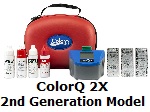 will not solve the problem. Algaecides and
stabilizer are not enough. I suggest that you add the liquid
chlorine or quick dissolving shock, about a pound/gallon per
5,000 gallons, until the free chlorine level is over 5 PPM.
Don't drag it out! The longer it takes, the more product
will be required. Keep it there until the problem is under
control. You have green water because the sanitizer level
was inadequate and algae took hold. Check the overall
water chemistry as well, as it can be affected by the new
finish. Have the water tested for phosphates and nitrates,
as their presence could promote algae growth and increase
chlorine usage. Make sure that you are testing for FREE
CHLORINE. A product, such as the
ColorQ 2X Digital
Water Analyzers,
provides the right kind of information and is ideal for this
purpose. Easy to use too! I hope this explanation is helpful. will not solve the problem. Algaecides and
stabilizer are not enough. I suggest that you add the liquid
chlorine or quick dissolving shock, about a pound/gallon per
5,000 gallons, until the free chlorine level is over 5 PPM.
Don't drag it out! The longer it takes, the more product
will be required. Keep it there until the problem is under
control. You have green water because the sanitizer level
was inadequate and algae took hold. Check the overall
water chemistry as well, as it can be affected by the new
finish. Have the water tested for phosphates and nitrates,
as their presence could promote algae growth and increase
chlorine usage. Make sure that you are testing for FREE
CHLORINE. A product, such as the
ColorQ 2X Digital
Water Analyzers,
provides the right kind of information and is ideal for this
purpose. Easy to use too! I hope this explanation is helpful.
Sincerely. Alan Schuster, 4/5/2007
► Extreme
High Cyanuric Acid Level?
A question concerning Chlorine and
Cyanuric acid. Many pool maintainers here use large doses of
chlorine to solve any and all problems. They come to us when
they experience difficulties. We have recently measured very
high levels of Cyanuric acid in a number of pools, in excess
of 600ppm. The question is about measurement of chlorine
levels in the presence of a high level of cyanuric acid,
(over 200ppm). As the acid locks the chlorine in, can the
chlorine measurement we take be reliable? We have
photometric and titration systems. Yours sincerely,
Paul C., 2/15/2016
Chlorine doesn't solve everything, as you know. Adding
stabilized shock can make a bad situation worse. It is not
necessarily a case of extreme high levels of CYA interfering
with the test results - the high CYA levels will interfere
with the action of chlorine and make it necessary to
maintain higher than normal levels. As the CYA increases,
chlorine becomes less effective. Unfortunately, the pool
owner does not take this into consideration. At 600 PPM,
there is no doubt that the level needs to be lowered. This
can only be done by a major water replacement. I would guess
that the pool is in the southwest or Florida and that
trichlor has been used, for a long time. In addition, dichlor
may have been used a shock. My belief is that if trichlor is
used, dichlor should never be used. Instead, calcium or
lithium hypochlorites, liquid chlorine or potassium
monopersulfate should be used as a shock or to supplement
the trichlor during peak bathing periods. However, if you continue to
use a stabilized, you will, once again, end up with a cyanuric acid level
that is too high. The latest industry thinking is that
pools are best served, when the cyanuric acid level is under
50 PPM. If you want to use chlorine, then a
salt chlorine
generator is definitely the best option, as it adds no
unwanted byproducts, such as cyanuric acid. I hope that I have
been helpful.
Sincerely. Alan Schuster, 2/16/2016
► How To
Lower Cyanuric Acid Levels?
On opening my 26000 gal. in-ground
vinyl lined pool the water tested 130 ppm of cyanuric acid,
390 ppm calcium hardness, scaling/saturation index 0.40,
alkalinity 170. I have an automatic chlorinator, solar
mineralizer, a cartridge filter and heater. What procedures
should I follow to get rid of this problem? What problems
will be caused by this? Our pool store recommended draining
half the pool. But, since we can't afford to buy that much
water we are taking it down a little at a time and adding
fresh water at about four inches down and four inches up.
How many times do we need to do this? How low does the
cyanuric level have to be before we can start using our
chlorinator, mineral purifier and heater? Thank you for your
time.
Susan D., 4/19/2018
High cyanuric acid levels just make the chlorine less
effective and, in turn, requires that higher levels be
maintained. You can use everything right
now. Replacing 4 inches at a time, means about a 5%
reduction. You'll be there forever. I suggest doing it about
12 inches below the skimmer, at a time. In the long run, you
will require less water to get the level down. Try and get
the level under 50 PPM. Do not use dichlor, as a shock, as
it will only cause the CYA level to rise quicker. You should
seriously consider switching to a
salt chlorine
generator, which will eliminate the buildup of cyanuric
acid, while providing more control and better results. I hope that I have been helpful.
Sincerely. Alan Schuster. 4/19/2018
► Stabilizer
And A Salt Chlorinator?
I'm having an inground pool installed
with a salt chlorinator. The dealer recommended that I use
chlorine stabilizer to reduce the workload on the salt
chlorinator. Is this a good idea? Is it effective? Is it a
recommended practice? Could it in anyway interact with the
chlorinator in a wrong way? Thanks in advance.
Marc, Quebec, Canada, 5/11/2006,
Yes!!! Yes!!! Yes!!! No!!!
If you don't add 20-40 PPM, the
salt chlorine generator will
have to produce more chlorine and that will shorten the life
of the cell. Add it! I hope that this information proves
helpful and enjoy the pool.
Sincerely. Alan Schuster, 5/11/2006
► Is There An
Alternative Sanitizer?
I do not like lots of chemicals
"stuck" in my pool and this product stays forever. Is there
an alternative stabilizer for salt water pools?
Stuck, 4/9/2007
Most of what dissolves in a pool remains forever or until
you replace the water. Would you rather add it unnecessarily
every month? There is no alternative. If you don't add it,
the chlorine will dissipate quicker and that will result in
having to make the salt chlorine generator produce more
chlorine. That in turn, causes the pH to rise faster and it
will require a new cell on an accelerated basis. Add the
chemical. You only need about 50 PPM. Most pools, using
stabilized chlorine, end up with much higher amounts. I hope
this information is helpful.
Sincerely. Alan Schuster. 4/9/2007
► Stabilizer
And Total Alkalinity?
I have been in the pool/spa business
for about 4 years and have become a little confused about
the relationship between conditioner (cyanuric acid) and
total alkalinity. The more sophisticated chemical testing
software programs we use to analysis water all make a 30%
adjustment for cyanuric acid, in the total alkalinity
readings. But, few if any body every talks about it on the
many informational web sites out there, including yours. Can
you give me a detailed understanding of this relationship,
and if it should really be taken into consideration when
testing for TA?
Stan C., 12/14/2009
Good question!!! The total alkalinity test measures the
presence of all materials, dissolved in the water, that are
more alkaline than a pH of approximately 4.5. In swimming
pool water this includes not only the carbonates and
bicarbonates, but silicates, phosphates and cyanurates as
well. Cyanuric acid is a weak acid and in swimming pool
water forms various cyanurates, which are weakly alkaline.
Typically, other than the carbonates and bicarbonates, only
the cyanurates are present in a high concentration.
Chlorides and sulfates do not have a significant effect upon
the pH or TA. Inasmuch as the TA test picks up all of the
alkaline materials, it does not distinguish between
carbonates/bicarbonates and cyanurates. The purpose, of the
carbonates and bicarbonates, is to create a buffer that will
help stabilize the pH in the 7.2-7.8 range and they are
ideally suited for this purpose. Cyanurates, on the other
hand, will register on the TA test, but are not chemically
well-suited to act as a pH buffer in the 7.2-7.8 range. High
levels of cyanuric acid will inflate the true
carbonate/bicarbonate total alkalinity test readings and,
perhaps, give a false impression of properly buffered water.
To eliminate this error, 30% of the cyanuric acid reading
should be deducted from the total alkalinity reading, in
order to approximate the true carbonate/bicarbonate
alkalinity. The important thing is to consider the ability
of the pool to maintain a stable pH, without the need for
frequent pH adjustment. In hard water situations and in
areas with high TDS, it may be preferable to keep a lower
carbonate/bicarbonate TA because of the possibility of
scaling and cloudy water conditions. I hope that I was able
to explain the theory behind the chemistry.
Sincerely. Alan Schuster, 12/16/2009
► Can I Add
Chlorine Stabilizer?
I have been using liquid chlorine for
sanitizing and as a shock. I know its a pain to lug home
those containers and I really don't like the acid, but it is
cheaper. If I add chlorine stabilizer will it help? Is it
worth doing? Living in Paradise!
Steve T., Delray Beach, FL, 5/12/2008
Chlorine stabilizer can be used in any outdoor,
chlorine-maintained pool. It will help reduce the chlorine
consumption and help make the chlorine last longer. That
means you will have to lug home fewer containers and have
more time to enjoy Paradise. It will help and it is worth
it. Have a happy!
Sincerely. Alan Schuster, 5/13/2008
► Avoiding
Too Much Stabilizer?
First, let me thank you again for the
help you provided last spring. Last year and now this I am
getting high cyanuric acid level readings (approx. 100 ppm).
Last summer I pumped the pool down 12-18 inches and refilled
several times with some minor improvement; looks like the
same routine this year. My question is, would it be a good
idea to use unstabilized chlorine until I get this back to a
normal level? Is there a better way to drop the cyanuric
acid level other than water replacement? Thanks in advance
for your help.
Bill P., 4/7/2005
Water replacement is the only way to lower the stabilizer
level. You can use an unstabilized chlorine and it will
benefit from the stabilizer already present in the water.
You may have to give up some convenience. You might continue
using trichlor or dichlor at a lower level, by using a
non-stabilized shock to supplement the chlorine readings.
You will be using less stabilized product and have a slower
rate of buildup. Or you might consider a
salt chlorine
generator. You will give this product some thought, sooner
or later, as standard chlorine treatment is declining. Have
fun and enjoy the season.
Sincerely. Alan Schuster, 4/7/2005
►
Adding Stabilizer To The Skimmer?
Hi Alan. Well you are a wealth of
knowledge. Thank you for your website answers. I did not see
the following question and apologize if it is there and I
missed it. We are to add stabilizer to our newly refilled
pool. I need clarification on instructions. When they say
pour directly into skimmer, is that with the basket in
place? The stabilizer does not seem to dissolve much at all
in the bucket of water. How slowly is "slowly add"? We are
to add 4 pounds and the little I put in just seems to sit in
the basket. Thank you.
Becky B., Edgewater, Florida., 3/13/2009
If you would have poured all of the stabilizer into the
skimmer, most likely it would have clogged the lines. It is
slow dissolving and will not dissolve in a bucket of water.
It helps to have a lot of water flowing over the material to
get it to dissolve even slowly. Remove the basket and slowly
pour in no more than 8 ounces. Once it all disappears, wait
a few minutes and repeat, until it is all added. I hope that
I have been helpful.
Sincerely. Alan Schuster, 3/13/2009
|
Visit The Website Stores . . . for
better informed shopping!!! |
|
|
Shipping is FREE* . . . within
the Continental U.S.
A $9.99
handling charge will apply
to Continental U.S. Orders,
under $75.00. Orders
outside of the Continental
U.S. may require some
additional charge, based on
quantity and destination.
Most products can be
shipped World-Wide. International
and orders outside of
Continental U.S. - see
comments on the ordering
pages. |
|
|
Major
Credit Cards and PayPal are accepted. |
|
▲
Return To Top Of Page
▲
Aqualab Systems, LLC does not
make any warranty or
representation, either expressed
or implied, regarding the
accuracy or completeness of the
information provided by this
website; nor does Aqualab
Systems., LLC. assume any
liability of any kind whatsoever
related to, or resulting from,
any use or reliance on this
information. The content of this
website should not be used, if
it is conflict with any
applicable federal, state or
local regulations or guidelines.
© Aqualab Systems, LLC. All
rights reserved
|
|