| |
|
Scroll
down to browse through some archived SPA and Hot Tub
questions and answers. Please click the Spa
Problems
Link, on top of every page, to access a complete listing
of Spa and Hot Tub Problem subjects, an alphabetized
Website Table of Contents, Spa and Hot Tub Equipment
Information, About Alan Biographic Material and a Spa
and Hot Tub Glossary. Use
the other links to access additional subject
information. More information about some new and unique
products, for Spas and Hot Tubs, can be found by visiting
The Website Store.
You'll never know what you'll find and that's always
fun. Be better prepared and avoid costly problems!
|
|
 |
Shipping is FREE* . . . within
the Continental U.S.
A $9.99
handling charge will apply
to Continental U.S. Orders,
under $75.00. Orders
outside of the Continental
U.S. may require some
additional charge, based on
quantity and destination.
Most products can be
shipped World-Wide. International
and orders outside of
Continental U.S. - see
comments on the ordering
pages. |
|
 |

Major
Credit Cards and PayPal are accepted. |
|
On-line
shopping since 2002 - Safe and Secure!!! |
|
Managing the Calcium Hardness, of spa
water!!! |
|
Calcium
Hardness is an important component of
spa water chemistry and should be
monitored on a monthly or as-needed
basis.
A
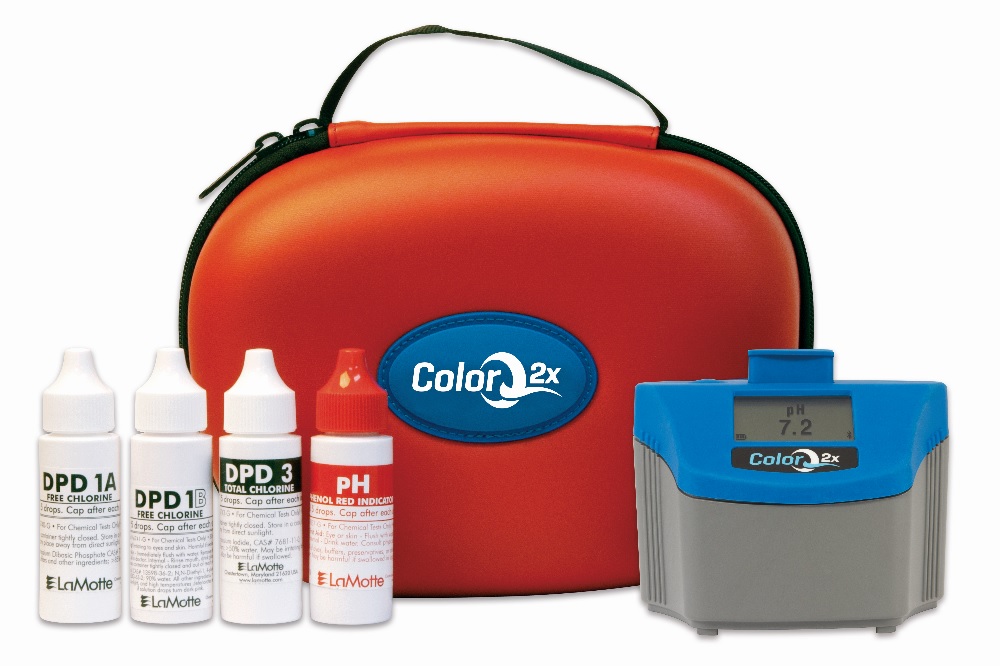
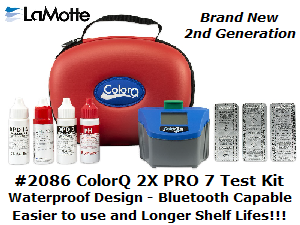
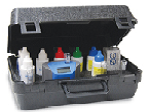
ColorQ 2X is a 2nd generation,
Bluetooth, Waterproof, all-digital tester,
that can
measure all the common test factors. There is a model, for every sanitizing
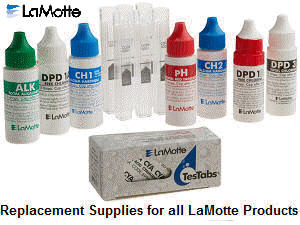
need. Reliable water testing helps
solve and avoid problems and requires
fresh
Test
Kit Replacements.
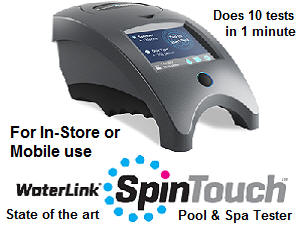
The
WaterLink SpinTouch Labs are the
ultimate tester, doing up to 10
different water test factors, in just 1
minute. |
|
|
If you have a pool or spa water
testing need, we should have the
product.
►
Scroll down to read through some
Question & Answer information.
◄
|
|
How to manage calcium
hardness levels!!! |
How to manage calcium
hardness levels in spas, swim spas and hot tubs? Calcium is a
naturally occurring mineral that is frequently
found in high concentrations: such water is
called "hard" water. Calcium hardness is one of
the important spa and hot tub water chemistry
parameters and its control is important to help
assure proper water quality. Calcium problems do
not normally impart a color to the spa water, as
does the presence of metals such as iron and
copper. The preferred range for spas and hot
tubs is 80-200 PPM. Low levels of calcium can
lead to possible corrosive water conditions.
Chemicals are available to raise the calcium
hardness, as might be necessary. High calcium
hardness levels, especially above 400 PPM, can
lead to possible water clarity problems and
scaling conditions. Various chelating or
sequestering Mineral Treatment Products are
available to help deal with the problems
associated with high calcium hardness levels.
Spa or hot tub calcium hardness levels can be
determined by a simple water analysis. This is
especially important with well water, as other
problematic minerals might be present and could
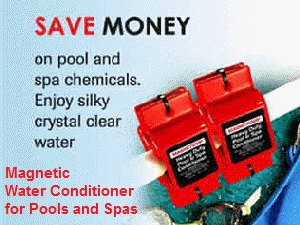
require treatment. Spa Water Magnetizers, also
known as Magnetic Water Conditioners have been
reported to help reduce and eliminate scale
formation, by inducing a positive electrical
charge in the water passing through the return
lines. If problems arise, refer to the
Spa Problems Page, as a
source of problem-solving information, broken down into
various categories. Scroll down the page and click on the linked
keywords,
catch phrases
or images, in the archived answers below, to access additional information, on that topic or product.
Do you know what's in
your water? If you're having problems, with hard
or soft water, testing allows you to better understand the
chemistry and determine the cause of the problem. Once
understood, you can select the best treatment option, such
as the addition of a Magnetic
Water Conditioner.
Understanding the nature of the problem, should be step
one. For information about our full selection of
testing options, visit our
Test Equipment Store.
 |
Join our E-Letter Mailing List.
You'll receive 1-3 E-Letters a
month, featuring helpful pool
and spa advice, new product
information and sale
announcements. All we
require is your e-mail address
and you can opt out anytime you
wish.
Your information
will never be shared or sold. |
|
▼
Helpful,
Problem-Solving Information, in a question and
answer format.
▼ |
► Using Softened
Water In A Spa?
I am planning to purchase a hot tub in
the near future and would like to fill it with softened
water. Does that present any special problems? The dealer
seems to think that I shouldn't use softened water. Thanks
for your help.
Brian R., Troy, NY, 11/13/2020
If your household water is of such poor quality, as to
require a water softener, you are better off using softened
water and avoiding the possibility of mineral problems. You
can easily add chemicals to adjust the pH, calcium hardness
and total alkalinity of the softened water and, by doing so,
avoid any possible corrosion problems. The balancing of the
pH, hardness and total alkalinity, of the softened water,
should completely eliminate any objections from the hot tub
manufacturer or the dealer. Water softeners do not always
remove heavy metals, such as iron. If you use the
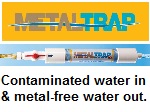
METALTRAP
Filter to treat all water added to the spa, you will
avoid the possibility of metals causing staining and
discoloration. A single METALTRAP can be used to refill a
typical spa, 20 times or more. If this
website was helpful, in answering your question, please
consider joining our
E-Letter Mailing List. I hope that
this
recommendation works out for you.
Sincerely. Alan
Schuster, 11/14/2020
► Starting
Soft - Ending Cloudy?
Hi, Alan. Thank you for this question
service. I have SPA and live in high alkaline area. Our water
is from a small private water company. The TA is 240. Total
hardness of about 250. I start with soft water and add CaCO3
to raise hardness. Our well water starts out at 400 total
hardness. I'm in the pH TA YoYo. I'm using sodium
bi-sulfate and sodium carbonate. I am using a lot of
Potassium Peroxymonosulfate to control the cloudy water. Is
there something to raise pH without raising TA? What would
you recommend? Thanks.
Greg C., 10/10/2018
I agree that you are better off using softened water, under
your circumstances. If you are really using calcium
carbonate (CaCO3) you're using the wrong chemical. You
should be using calcium chloride (CaCl2)! Calcium carbonate
is not soluble and is probably responsible for the cloudy
water. Calcium chloride is water spa dealers should be
offering to raise the hardness level. I suggest that you
empty and clean out the spa. Refill and enough calcium
chloride product to boost the level to about 200 PPM. Add
enough TA booster, sodium bicarbonate, to boost the TA to
about 100. At this point, you should have an acceptable pH.
If not add a small amount of pH Increaser. In the future,
you should not require pH Reducer. Raising the pH will
always raise the TA, which is why you try and keep the
parameters within a range and not at a specific number. Good
luck and I hope that I have been helpful.
Sincerely.
Alan Schuster, 10/11/2019
► Gritty Spa
Surfaces?
I have had my spa (400 gallons) for
over a year now. I changed the water for the third time two
weeks ago. I adjusted the water (pH, Hardness, Alkalinity,
etc) and did not go in it until last night. The entire
bottom and sides of the spa had a sandy, gritty residue. It
was like sitting on sandpaper. I cannot determine what has
caused this or how to remove. The water is crystal clear and
I can see no real color to the grit. I scrubbed the bottom
and with the jets running, the gritty residue just returned
within minutes. Please help!
Ken R., 12/3/2012

What you are describing could be due to high calcium
hardness, combined with high pH and/or TA. The gritty
deposits are, in all likelihood, calcium carbonate. Adding a
calcium hardness treatment and controlling the pH and TA,
should improve the situation. If you enter the test results
into the formula found on the Langelier Index Page, it will
help determine the scaling tendencies of the spa water. To
better assure proper overall spa water chemistry, visit a
pool/spa store that has a very reliable, professional lab
such as a WaterLink
SpinTouch Lab or Pinpoint system, rather than a less
accurate test kit or strip reader. I
hope that this information will help solve the problem.
Sincerely. Alan Schuster, 12/3/2012
► Low Spa
Water Calcium Hardness?
The water in my area is soft. Do I
have to adjust the hardness of the spa water? Thank you.
Pawtucket, RI, 10/3/2012
If you make sure that the pH and total alkalinity are always
optimum, the soft water may not be a big problem. However,
soft water can add to the corrosiveness of the water and
this can lead to damage of underwater metal surfaces. In
addition, the soft water will support higher levels of
foaming. Foam must, at least occasionally, be totally
eliminated for good spa water sanitizing. To raise the
calcium hardness, test for calcium hardness and use a Spa
Formula calcium hardness increaser, as directed. This is not
an expensive proposition and is worth doing, especially, if
the water is very soft. I hope that I have been helpful.
Enjoy the spa.
Sincerely. Alan Schuster, 10/3/2012
► Suffering
With Scale?
We live in a hard water area. I've had
problems with my spa due to scale forming. Besides the scale
deposits, I've had white flakes shooting out of the returns.
Any suggestions?
J. H., Mesa, AZ, 5/6/2018
You could fill you spa with soft water, that is if you have
one. Some manufacturers recommend against using soften
water, but if you adjust all of the spa water chemistry
parameters - especially the calcium hardness, pH and total
alkalinity - to within normal suggested ranges, there should
be no problems. You could add a calcium sequestering agent
and try to keep the pH closer to 7.2 and the TA, if
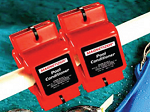
possible, within 80-120 PPM. A spa water magnetizer or
magnetic water conditioner is another possibility. This
strap-on device has been reported to help reduce spa calcium
scaling problems, as well as improve some other spa water
parameters. There are models to treat pools or an entire
house. I hope that I have given you some options. Good
luck.
Sincerely. Alan Schuster, 5/6/2018
►
Questionable Hardness Level?
We are having a hard time getting are
levels balanced we have only had the spa for a couple of
weeks now and are at a loss! Our dealer hasn't been much
help. We are using a 6 way strip that is telling us the
level of hardness is at 1000 ppm or greater. We have a
softener that we used to fill the spa and still it is high.
Is there any way of bringing this down and what damage can
this cause? We are using a starter kit and we are also
trying to bring down the pH (8.4) and Alkalinity (180). I
have dosed the tub 3 times with 3 TBS of the pH down and
still it is high. The tub is 357 gallons. Also the strips
say that the stabilizer is Ok at 50. What is this? Is this
the sanitation level? If not how do I check the sanitation?
Sorry for all the problems. We feel like idiots and I
actually did well in chemistry. Hope you can help make
sense for us! Thanks.
Heather, 9/28/2006
If you filled the spa with softened water and I would have
advised you to that, it should not be 1000 PPM. If you use
softened water, you should have added enough calcium
hardness to raise the hardness level to 200 PPM. I suggest
that you have a dealer confirm this reading and make sure
that your softener is working properly. High calcium
hardness can lead to scaling problems and cloudy water
problems. Adding a regular dose of a scale treatment or a
Magnetic Water Conditioner
can help. When the calcium hardness is high, it becomes even
more important to maintain a proper pH and a total
alkalinity close to 100 PPM. High TA and hardness are going
to make it more likely that you will have to add more pH
down, than might have been suggested on the product label.
Keep adding it until the pH drops into the 7.2-7.6 range.
That will lower the TA, as well. The stabilizer is not
really relevant, if the spa is covered most of the time,
which is almost always the case. Assuming that you are using
chlorine, the proper level for adequate sanitation is 1-3
PPM of free chlorine. In the interest of providing better
sanitation, with less effort and chemical usage, you might
consider adding an ozonator and
a Mineral Sanitizer. It will make for better bathing
conditions. I hope that I have been helpful. Enjoy the spa.
Sincerely. Alan Schuster/ 9/29/2006
► Spa Heater
Scaling?
I've had problems with calcium flakes
in the bottom of my hot tub and have already replaced the
heating element because of severe calcium buildup. The pH,
alkalinity and bromine levels are always within normal
parameters. The calcium level is consistently low and dealer
says I should be adding calcium which I have been doing.
What I don't understand is why I should be adding calcium
when I have what seems to be too much calcium. I've already
had one repair and am concerned about causing further
damage. The dealer seems to be as mystified as me.
Bruce F., Toronto, Canada, 4/29/2005
This doesn't add up! Any spa that has exhibited problems
with calcium scaling should not be adding calcium hardness
booster. Even if it was added, it is not something that is
added more than once, unless water was removed. It is either
not calcium hardness that caused the problem, the chemical
added was not calcium hardness booster, the pH and TA
fluctuated wildly or there was a testing error. I suggest
that you start at the beginning. Have both the spa and tap
water tested for calcium hardness. Even better might be
total hardness. To verify the test results, have another
local dealer test similar samples. If you truly have
maintained the pH at 7.2-7.6 and the total alkalinity at
80-120 PPM, there is absolutely no need to have a calcium
hardness level above 200 PPM. NONE! Sometimes, in the
interest of keeping the pH more stable, pH Buffer products
are added. There products should not be used when the
calcium hardness is 200 PPM or more, as they can cause
precipitation and cloudy water. Without the specific test
results it is difficult to pinpoint the source of the
problem. Feel free to get back to me with the test results
and as much other relevant information as possible. I hope
that I have been of some assistance.
Sincerely. Alan Schuster, 4/29/2005
► Adding
Calcium: Liquid Or Granular?
What is the difference between using
Liquid Calcium or Granular Calcium? Does Liquid calcium
cause cloudy water when you put more than a few ounces in at
a time? Granular does and you have to make sure you rinse
the filters when the full dosage has been added. Any opinion
on this? Anxiously awaiting your answer. Sincerely.
Denise G., 10/31/2007
Either way it is the same chemical and the same problems can
happen. The liquid product is simply calcium chlorine
dissolved in water. It is a convenience item and is easier
to measure, when used in a spa. I suggest keeping the level
at 150 -250 PPM. High pH and/or TA can add to cloudiness
problems. I hope this information is helpful.
Sincerely. Alan Schuster, 10/31/2007
► Adding
Epsom Salts?
I just purchased a small used spa. I
was wondering if I can use Epsom salts in the spa with the
chlorine chemicals and also if adding a few drops of
essential oils will hurt the spa or it's components in any
way. Thank you.
Susan B., Prescott, AZ, 5/30/2009
Epsom salt are magnesium sulfate. Magnesium is a component
of total hardness. Your water is already hard enough
(Arizona), possibly even too hard. Adding magnesium sulfate
will only increase the hardness and could, possibly, lead to
scale formation and cloudy water. So the answer is no!
Fragrance items are used in spas. However, these products
are specifically formulated to be used in a chlorine
environment. Essential oils can react with chlorine and form
undesirable byproducts or do absolutely no harm. There's no
way for me to be sure. I would not suggest that you add any
essential oils to the spa, unless specially labeled, as
being formulated for use in spas.. I am sorry that it might not be
want you wanted to hear, but it is better to be safe than
sorry. Enjoy the spa.
Sincerely. Alan Schuster,
5/31/2009
► White
Stuff?
I have found what looks like white
flakes on the spa floor. This has happened a few times. Any
ideas about the source? Thank you.
Kelly N., Scottsdale, AZ, 12/13/2009
The likelihood is that the white material is calcium scale
that has flaked off the heater or underwater plumbing, due
to the turbulent water action. Judging from your Arizona
location, it is a good bet that your water is quite high in
calcium hardness. In order to avoid calcium scale deposits,
that could lead to a loss of heater efficiency and water
clarity, try keeping the pH closer to 7.2 and the total
alkalinity in the 80-120 PPM range. These steps can help
reduce the scaling tendencies of the water. The addition of
a quality Spa Mineral Treatment, on a monthly basis or upon
the addition of makeup water, will help avoid or reduce
scale formation. The addition of a
Magnetic Water
Conditioner can help control the problems caused by high
calcium hardness and is simple to install. I hope that I
have been of assistance.
Sincerely. Alan Schuster, 12/13/2009
► Sandpaper
Texture?
A few weeks ago I replenished the
bromine tablets in our spa. For some reason they had gotten
crushed, but I went ahead and used the powder. Two days
later when we got in the spa, all of the underwater surfaces
had a sandpaper texture. I tried draining the tub half-way
and adding fresh water to see if the "stuff" would
redissolve, but it didn't work. We know we will need to
drain the spa, but how do we get the stuff off without
damaging the surface? It is adhered to every surface. We use
well water that we know is very hard. Thank you.
Carol R., Eagle Point, OR, 3/26/2008
This has nothing to do with the tablets and everything to do
with the high calcium hardness. If using softened water is
an option, I would do it. You can always add chemicals to
make the softened water right for spa use. You can use
acidic cleaner or scale removers to clean
the surface. If
you drop the pH to about 6.0, the scale will come off
easier. However, make sure that there is no bromine present
or copper corrosion can occur in the heater. Three factors
contribute to scaling conditions: high calcium hardness
(usually over 400 PPM), high pH (usually over 7.8) and total
alkalinity (usually over 200 PPM). All three together make
it even worse. You can lower the pH and TA with acid. The
calcium hardness might be controlled, but not necessarily
lowered, by adding a calcium sequestering agent. I suggest
that you test the water for pH, TA and calcium hardness. The
Langelier Index will tell you if the water is scale forming
and provide insight to help improve the situation. A
Magnetic Water Conditioner can help control the problems
caused by high calcium hardness and is simple to install. I
hope that this information proves helpful.
Sincerely. Alan Schuster, 3/25/2008
► Feels Like
Sandpaper?
I have a film on the inside of my spa
that feels like sandpaper. It comes off with a scrubby pad.
What is the problem? Thank you.
Sue, 8/17/2010
It sounds like calcium scale: a deposit of calcium carbonate
on the underwater surfaces. The cause is high levels of
calcium hardness, usually over 400 PPM, coupled with high pH
and/or total alkalinity. A spa water analysis will confirm
this possibility. A simple way to help deal with this
problem is by adding a Magnetic Water Conditioner. Refer to
the page on Langelier or Saturation Index for some more
information on dealing with this problem. You should adjust
the water chemistry as possible and add some scale
treatments. I hope that this information will prove helpful.
Sincerely. Alan Schuster, 8/18/2010
► Soft Water
Foaming?
We have a new 500 gal spa. Our new
home has very soft water (hardness 85) and this seams to be
a problem. I have kept a handle on the chemicals (bromine)
but seams that after 3 week of very little use (2hrs) the
water is clear but when the jets are turned on the water
turns white and foams. I noticed that after I used an
algaecide it began to do this but I only added very little.
I add calcium to boost the hardness level and wonder if it
needs other minerals. I have contacted several places but no
one has the answer or if the lack of chemicals in the water
is the problem. It has become a pain....almost ready to sell
it. HELP
Nancy H., 8/8/2016
Spa water that is soft is more likely to foam. Raise the
hardness to about 200 PPM, by adding a calcium hardness
booster. Antifoam can be used to help control the foaming.
Algaecides are not normally used in spas. If the product you
added contains dimethyl benzyl ammonium chloride or
something close, it should not be added again. This type of
algaecide will cause foaming, even in a pool. An aerated spa
makes it much worse. With proper sanitation, there is no
need to add an algaecide. I hope that this information will
prove helpful.
Sincerely. Alan Schuster, 8/8/2016
|
Visit The Website Stores . . . for
better informed shopping!!! |
|
|
Shipping is FREE* . . . within
the Continental U.S.
A $9.99
handling charge will apply
to Continental U.S. Orders,
under $75.00. Orders
outside of the Continental
U.S. may require some
additional charge, based on
quantity and destination.
Most products can be
shipped World-Wide. International
and orders outside of
Continental U.S. - see
comments on the ordering
pages. |
|
|
Major
Credit Cards and PayPal are accepted. |
|
▲
Return To Top Of Page
▲
Aqualab Systems, LLC does not
make any warranty or
representation, either expressed
or implied, regarding the
accuracy or completeness of the
information provided by this
website; nor does Aqualab
Systems., LLC. assume any
liability of any kind whatsoever
related to, or resulting from,
any use or reliance on this
information. The content of this
website should not be used, if
it is conflict with any
applicable federal, state or
local regulations or guidelines.
© Aqualab Systems, LLC. All
rights reserved
|
|