Cart
Sub-Total: $0.00
Alan, great web site! Keep up the good work. My problem is with recurring green algae in my filter. I have a 14,000 gallon above ground, sand filter, a timer, a chlorinator and very good city supplied water. I had this problem at the end of last season, and it came back mid-season this year requiring me to change the sand in the filter it was so bad. The water prior to the problem was perfect, and when I open the pool it’s always crystal clear. I routinely check pH, chlorine, and alkalinity. My chlorine is easy, the chlorinate and timer keep that right where I want it. The pH tends to drop after rain or heavy use, so I add soda ash when needed to boost it back to 7.4-7.6. Alkalinity usually runs a bit high, up to 180. Normally this is all it takes. Then the water started to slowly get cloudy despite my efforts to keep it clean. Over a period of two weeks it went from just noticeable, to almost cannot see the bottom. Based on an hunch I opened the filter and sure enough the sand had so much green algae that several washings with clean tap wouldn’t clean it (in a wheel barrow, stirring with a rake). So I changed out the sand, added shock and algae preventative, and now it’s crystal clear. When I back-washed, naturally the sight glass was quite green for about 90 seconds, then went clear.
My question is why is this happening and how do I prevent it? Should I add shock and /or algaecide down the filter basket as a preventative? I admit I don’t shock the water often because my chlorine always looks so good. I think I should shock more often, agreed? Will the algae the filter picked up contaminate the filter again?
Answer: 07/20/2017There’s nothing in your letter that jumps out and says fix me! There is always algae present in the filter and in the environs of the pool. When conditions are right, the algae will grow. There are two bits of information missing from your letter and that can be the clue to 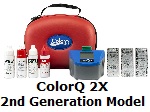 the problem. You did not state how you are testing for chlorine or if you are testing for Free Chlorine. If you are using OTO, you may be giving yourself a false sense of security. OTO measures total chlorine and is not the germicidal form of chlorine. You should be testing for Free Chlorine, which is the active and algae-controlling form of chlorine. Keep the level at 1-3 PPM. The total chlorine reading should not be more that 1 PPM higher. If it is you should shock to break down the combined chlorine. You also failed to mention the chlorine stabilizer level. If your level is higher that 150 PPM, it can reduce the effectiveness of the chlorine. If that is the case, you should exchange a foot or two of water, weekly, until a more suitable level has been reached. The right pool water tester can spare you a lot of problems. The ColorQ PRO 7 is an all-digital tester than eliminates the guesswork and all the color-matching. It would be my first choice. You might want to consider adding algaecide on a regular basis. My first choice would be a polymer formula. It can help with both the algae and the filtration. Sand filter can be very inefficient. You can boost efficiency, by replacing the sand with a zeolite sand replacement media. I hope that I have been helpful. Good luck and enjoy the summer.
I have a problem with what looks like a blue-green algae bloom in my pool. It is a vinyl, inground. I use a built-in chlorinator, with big tablets. I have had algae and green water problems before – I think it is because of the kids and you know what. Shocking usually does the trick. I haven’t been using algaecides. Should I and which would you suggest? Thanks much.
Answer: 07/11/2020In dealing with the blue-green algae, almost any algaecide can be used. It is not resistant to treatment. My choice would be a Chelated Copper Algaecide: it is effective, cost-efficient, does not foam and because it is chelated (stabilized) it should not cause staining. Just make sure that you use it as directed by the label, don’t add more, as most people do. Tell the kids that you bought a new product that detects the presence of urine – only problem is that the product doesn’t exist. Algaecide alone will not be enough, to prevent a recurrence, of the problem. You need better and more reliable sanitation and a salt chlorine generator is just about the best way to accomplish that. You can dial up the chlorine output, based on usage and the seasons. You will not longer have to store, measure or handle chlorine products and you’ll avoid the relentless buildup of cyanuric acid. Hope that I’ve helped. Enjoy the summer.
This is our first year of pool ownership. The pool is an 18′ round, above ground pool. We seem to have developed some algae on one side of the pool and the water has a green tint. I use a chlorine floating feeder, with 3″ tablets and have been very careful about the pH, alkalinity and stabilizer. I clean the cartridge filter weekly and run it for 8 hours a day. What went wrong? Please help because I won’t let the kids in the water.
Answer: 07/14/2019You have the most common type of swimming pool algae: the type that causes green water problems. It does sound like you are taking good care of the pool. Still, bad things can happen to good pools! This is really not that bad, just an inconvenience. Algae is always present in swimming pool water. If the conditions are right, it will begin to grow, resulting in visible signs of algae or problems with green water. That means, if the chlorine level has bottomed out because there wasn’t enough in the water or the demands of the bathers was just too high, algae can start to grow. From your letter, I cannot determine the actual cause, but I can make an educated, insightful guess. The chlorine floater may not always be able to supply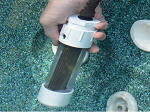 all the chlorine that the pool requires, because the tablets are slow dissolving. Floaters are popular with above ground pools, but are not necessarily the best way to add chlorine. It may be necessary to supplement the chlorine floater, by the addition of a quick dissolving product: sodium dichlor, liquid chlorine, lithium hypochlorite, non-chlorine, shock, etc. Or, you might consider a salt chlorine generator, instead of the floater or additions of shock. It will provide better control and can be used to give the chlorine a quick boost during those periods of high bather usage: like when all the kids are in the water for hours at a time. You are in control, by selecting the level of chlorine output, Test the water for Free Chlorine, several times a day, to gauge the requirements of your pool, during these periods of peak activity. I suggest that you use an algaecide to help prevent the growth of algae. To get rid of the algae, add 2 pounds of shock, per 5000 gallons of water. Circulate continuously. Test the water for Free Chlorine and keep the level at 2-3 PPM or higher, until the algae is gone. Thereafter, resume normal chlorination and filtration. Because the algae formed on one side of the pool, try and direct more water to that area. Swimming can resume, when normal chlorine levels return. Most above ground pools do not have main drains and this can result in poor water circulation on the bottom and in the corners. Adding a robotic pool cleaner will not only help keep the pool clean, it will improve water circulation and reduce the possibility of algae growth. I hope that this information will help to get the kids back into the water. Glad to be of assistance.
Do I want to add an algaecide while I’m shocking the pool to get rid of green water? I have received differing opinions.
Answer: 03/20/2015Sounds like a pool opening? The problem of green pool water is usually cause by the growth of algae. If this is the case, make sure that you vacuum out any debris, as soon as possible. It will help reduce the amount of shock needed to clear up the water. Always allow each chemical to dissolve in turn. Never mix different chemicals together. Algaecides are commonly added before or after shocking. To get rid of the algae it is important to maintain a Free Chlorine reading of at least 1-3 PPM, after an overnight period. It may be necessary to add more than 1 dose of shocking, depending upon the condition of the pool. Test the water a few hours after addition and add more shock, if required. The best product would be a 60% polymer algaecide, which is non-staining and non-foaming. I hope that I have been helpful.
Every year I seem to get problems with green algae growing, in the corners of the deep end. My chlorine levels test out OK and the water chemistry is good. I don’t like to use algaecides, because of past foaming problems. Any good suggestions? Thanks
Answer: 03/25/2025Your free chlorine level and overall chemistry might be alright, but it would seem that the water circulation is not up to par. Algae will start to growThe Circulator for all types of pools. first, in areas that are stagnant or with poor circulation. Pointing return jets towards the problem areas will help, but you’ll lose skimming action. Installing The Pool Circulator, which is as simple as replacing the existing return fittings, will create a spiraling return flow. This will vastly improve circulation and eliminate the dead zones, that promote algae growth. Adding a salt chlorine generator will help you maintain a more consistent free chlorine level, which might have to be maintained at 2-4 PPM, as opposed to 1-3 PPM, to better control this problem. Adding a robotic pool cleaner will improve circulation, by traversing the whole pool and acting as a moving main drain. The important thing is to improve circulation, so that the sanitizers can be delivered throughout the pool.
If this website was helpful, in answering your question, please consider joining our E-Letter Mailing List. You’ll receive 1-2 E-Letters a month, with helpful information, new product updates, suggestions and sale announcements. I hope that this recommendation works out for you.