| |
|
Scroll
down to browse through some archived SPA and Hot Tub
questions and answers. Please click the Spa
Problems
Link, on top of every page, to access a complete listing
of Spa and Hot Tub Problem subjects, an alphabetized
Website Table of Contents, Spa and Hot Tub Equipment
Information, About Alan Biographic Material and a Spa
and Hot Tub Glossary. Use
the other links to access additional subject
information. More information about some new and unique
products, for Spas and Hot Tubs, can be found by visiting
The Website Store.
You'll never know what you'll find and that's always
fun. Be better prepared and avoid costly problems!
|
|
 |
Shipping is FREE* . . . within
the Continental U.S.
A $9.99
handling charge will apply
to Continental U.S. Orders,
under $75.00. Orders
outside of the Continental
U.S. may require some
additional charge, based on
quantity and destination.
Most products can be
shipped World-Wide. International
and orders outside of
Continental U.S. - see
comments on the ordering
pages. |
|
 |

Major
Credit Cards and PayPal are accepted. |
|
On-line
shopping since 2002 - Safe and Secure!!! |
|
Testing Spa and Swim-Spa Water Chemistry!!! |
|
Testing
water is an integral part of pool and
spa water management. Reliable and
accurate results are important, in order
to maintain proper water chemistry. The
water balancing or chemistry affects
every aspect of spa management.
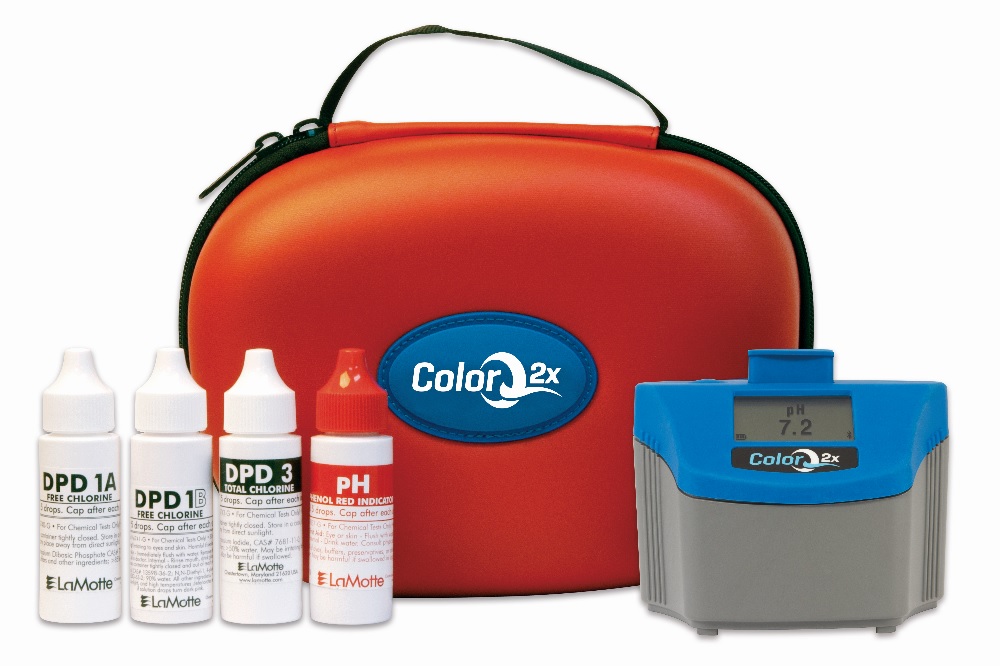
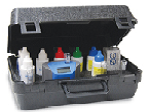
A
ColorQ,
All-Digital Water Tester
can perform all of the common pool water
tests, while eliminating the
color-matching and guesswork. There is a
model, for every pool testing need. The
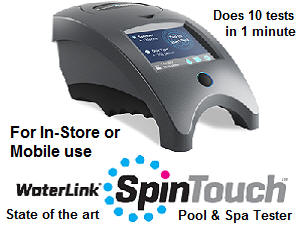
WaterLink
SpinTouch Labs are the
ultimate pool and spa testers, performing
up to 10 different water test factors,
in just 1 minute. They were voted
product of the year. An
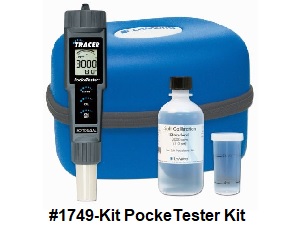
Electronic
PockeTester Kit tests for
salt and TDS, as well as other test
factors. Simply Dip and Read. |
|
ColorQ All-Digital Water Testers |
WaterLink SpinTouch Labs |
Electronic Salt PockeTesters |
 |
 |
 |
|
Product and Ordering Information |
Product and Ordering Information |
Product and Ordering Information |
If you have a pool or spa water
testing need, we should have the
product.
►
Scroll down to read through some
Question & Answer information.
◄
|
|
A
lot of variables affect the
clarity and quality of the spa
or swim-spa water. Filters
require reasonable maintenance
and cleaning, on a seasonal or
as-needed basis. If you
have a cartridge filter,
The Blaster Automatic Filter Cartridge
Cleaner will make that chore
much easier. Fine
particles can pass through many
filters.
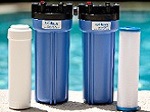
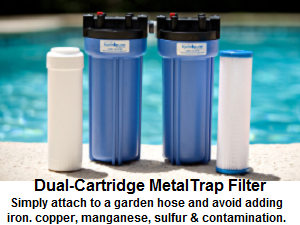
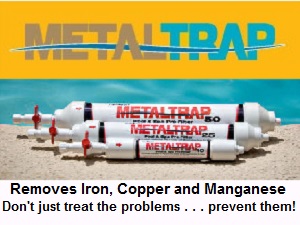
The
MetalTrap Dual-Cartridge Filters,
available in 3-sizes, can keep
more dissolved metals and
sediments out of the pool, by
simply attaching it the garden
hose, used to all new water.
Some water sources contain heavy metals,
which can lead to discoloration and
staining problems. Attaching a
MetalTrap Filter, to the garden
hose, will remove dissolved heavy
metals, avoiding some potential staining
problems. |
|
Automatic Filter Cartridge
Cleaner |
Dual-Cartridge MetalTrap Filter |
Removes Heavy Metals, from
the water |
 |
 |
 |
|
Product
and Ordering Information |
Product
and Ordering Information |
Product
and Ordering Information |
|
If you have a pool or spa water
testing need, we should have the
product.
►
Scroll down to read through some
Question & Answer information.
◄
|
|
How to control a spa's pH and Total
Alkalinity? |
The topics of
pH and total alkalinity are inter-related and
are key parameters (factors) in the overall pool
water chemistry. pH is the relative acidity or
alkalinity of the water. The pH scale goes from
0 (most acidic) to 14 (most alkaline) A pH of
7.0 is neutral. Ideally, spas and hot tubs
should be maintained in the 7.2-7.8 range for a
variety of considerations: sanitizer
effectiveness, bather comfort, corrosion, cloudy
water and scaling. Total alkalinity is a
measurement of the total quantity of alkaline
materials present in the water. Low TA allows
for rapid pH fluctuations, makes pH control more
difficult and can contribute to corrosion. High
TA makes pH adjustment more difficult and can be
a contributing factor in cloudy water and
scaling. A TA range of 80-120 PPM is considered
optimum. Higher TA readings may not be a
problem, so long as the water is clear and the
is no sign of scaling. Control of the spa or hot
tub water chemistry is necessary to assure
optimum pool water quality. If problems
arise, refer to the
Spa Problems
Page, as a source of problem-solving
information, broken down into various
categories. Scroll down the page and click on the linked
keywords,
catch phrases
or images, in the archived answers below, to access additional information, on that topic or product.
 |
Join our E-Letter Mailing List.
You'll receive 1-3 E-Letters a
month, featuring helpful pool
and spa advice, new product
information and sale
announcements. All we
require is your e-mail address
and you can opt out anytime you
wish.
Your information
will never be shared or sold. |
|
▼
Helpful,
Problem-Solving Information, in a question and
answer format.
▼ |
►
pH Is Off The Chart And TA Is Dropping?
Hi Alan, what a great website! I hope
you can help me with my query.
I have a 2000 liter spa pool that I keep at 38.5 degrees
Celsius. I have a returning problem with the pH, which comes
back even after I cleaned the spa, the filter, the spa and
the filter, and after a few water changes I’m convinced my
spa is haunted!
Every day, I stabilise the pH to about 7.2-7.4, and TA to
120-130. I sanitise the spa with a floating dispenser of
bromine/chlorine mix (BCDMH). I test with chemicals, not the
strips. Every day, whether we have used the spa or not, when
I test again, the pH is off the charts high and TA has
dropped, but usually only by about 20 ppm. It’s relatively
easy to stabilise, but the next day I’ve got to do it all
over again. This is not a set-up problem, I’ve persisted for
a month and I still have to stabilise every day. I have
bought a new filter, and this didn’t fix it. I changed to a
chloride/bromine free sanitiser and this didn’t solve it. My
local spa shop has no idea what could be happening. I hope
you can give me some ideas, because I’m at wits end!
Thank you.
Reneke V. 1/11/2018
Interesting!!! Bromine tablets are acidic, so the pH and TA
always trending down. pH and TA move in the same direction.
The pH should not be going up, while the TA drops. The
problem is the testing. I have no doubt, that is what you
think you are seeing. Bromine will react with the pH test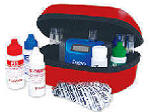 solution (phenol red) and produce a reddish-purple color,
which is mistaken to mean a pH that is off the high end of
the scale. This color has nothing, whatsoever, to do with
the actual pH. The phenol red solution does not contain
enough chlorine/bromine neutralizer, so that the bromine is
eliminated, before it reacts with the phenol red. Some
testing products utilize a separate chlorine neutralizer
solution. Use a drop of two of this, before adding the
phenol red solution. I suspect that the pH will show up as
decidedly acidic. If the bromine level is very high,
something simple can occur. Try using another brand of
tester. It would appear that the one you are using, was not
properly formulated, for use with bromine. In the meanwhile,
the low pH conditions are corroding the copper in the
heater. Have the water tested for copper, to prove the
point. If very high over 1 PPM, I suggest draining the spa
and starting with a clean slate or properly treating the
copper. Once the pH is raised, staining and discoloration
can result, as well as green hair and fingernails.
Your spelling of certain words suggests that you are writing
from Australia, New Zealand or South Africa. A tester, such as the
ColorQ
all-digital photometer, does not seem to have this type
of problem.
I hope that I
have been helpful. If so, please tell your friends
about the website. Best wishes for the New
Year.
solution (phenol red) and produce a reddish-purple color,
which is mistaken to mean a pH that is off the high end of
the scale. This color has nothing, whatsoever, to do with
the actual pH. The phenol red solution does not contain
enough chlorine/bromine neutralizer, so that the bromine is
eliminated, before it reacts with the phenol red. Some
testing products utilize a separate chlorine neutralizer
solution. Use a drop of two of this, before adding the
phenol red solution. I suspect that the pH will show up as
decidedly acidic. If the bromine level is very high,
something simple can occur. Try using another brand of
tester. It would appear that the one you are using, was not
properly formulated, for use with bromine. In the meanwhile,
the low pH conditions are corroding the copper in the
heater. Have the water tested for copper, to prove the
point. If very high over 1 PPM, I suggest draining the spa
and starting with a clean slate or properly treating the
copper. Once the pH is raised, staining and discoloration
can result, as well as green hair and fingernails.
Your spelling of certain words suggests that you are writing
from Australia, New Zealand or South Africa. A tester, such as the
ColorQ
all-digital photometer, does not seem to have this type
of problem.
I hope that I
have been helpful. If so, please tell your friends
about the website. Best wishes for the New
Year.
Sincerely. Alan Schuster. 1/12/2018
►
pH and Temperature?
Hi Alan ,
just a quick question, we have just got a small 3-4
person spa and was just wondering if when u check the pH
in the spa does it need to be turned on and heated or
can it be done when it is turned off and cold?
Thanks for your Time.
Danielle,
11/29/2017
Temperature can affect pH, to a slight extent, but
it is not relevant. The pH needs to be optimized, at
all times, in order to avoid corrosion, make
sanitizers work better and for bather comfort.
Sooner to get it in range the better. A proper
TA will make pH control easier and more stable and
should be a regular daily test. Calcium hardness can
lead to corrosion and excess foaming, if too low and
cloudy water and scaling, if too high. Test weekly,
unless there are problems. Sanitizer levels should
be tested daily. Even better would be to test before
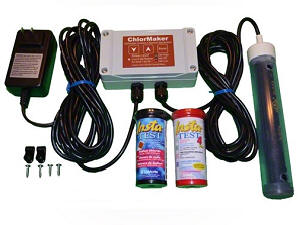
and after each spa use and adjust accordingly. We feature several, affordable models of spa
salt chlorine generators, which can make maintaining
a proper chlorine level easier. No chlorine to
handle, measure or store.
Sincerely. Alan Schuster, 11/30/2017
► High Spa pH?
It seems that the pH of my spa is
always too high. After, I switched from chlorine to bromine,
it started to happen. Can that have anything to do with the
problem? The water is nice and clear, but the pH definitely
seems to be very high. I keep adding a pH reducer, but
nothing seems to be happening. I need some help.
Robert O., Silver Springs, MD, 2/24/2013
The problem can very well be related to the bromine.
However, the fault lies, not with the bromine, but with the
chemicals used to test the pH. Bromine can react with phenol
red (chemical used to test for pH) and cause a purplish-red
color that makes it appear that the pH is very high. In
fact, the formation of this color has nothing to do with the
actual pH. The problem lies in the fact that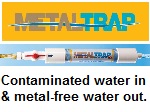 the phenol red
solution may not have had enough neutralizer (to prevent
bromine from reacting with phenol red) in its formulation.
This leads to false high pH readings. I assume that the
bromine, that you are referring to, is a solid form of the
product. In this case, you are using a bromine source that
is acidic in nature and that should preclude the need for
you to ever have to add acid reducers. Spas maintained, in
this manner, will require pH increasers and total alkalinity
increasers - never acids. I suggest that you bring in a
water sample into a local spa professional for confirmation.
If confirmed, you need to use a Test Kit that is formulated
to work with Bromine or add a drop of chlorine neutralizer
(available in most pool and spa stores) to the test vial,
just prior to adding the phenol red solution. Now that we
have established why the pH can actually be very low, we
must take another step. The low pH could have caused
corrosion of the heater. In order to avoid discoloration or
staining, I suggest that you add a double or triple dose of
a Quality Spa Mineral Treatment, such as phosphate-free
Liquid METALTRAP, prior to raising the pH and total
alkalinity. I hope that I have been helpful. Good luck and
enjoy the spa. the phenol red
solution may not have had enough neutralizer (to prevent
bromine from reacting with phenol red) in its formulation.
This leads to false high pH readings. I assume that the
bromine, that you are referring to, is a solid form of the
product. In this case, you are using a bromine source that
is acidic in nature and that should preclude the need for
you to ever have to add acid reducers. Spas maintained, in
this manner, will require pH increasers and total alkalinity
increasers - never acids. I suggest that you bring in a
water sample into a local spa professional for confirmation.
If confirmed, you need to use a Test Kit that is formulated
to work with Bromine or add a drop of chlorine neutralizer
(available in most pool and spa stores) to the test vial,
just prior to adding the phenol red solution. Now that we
have established why the pH can actually be very low, we
must take another step. The low pH could have caused
corrosion of the heater. In order to avoid discoloration or
staining, I suggest that you add a double or triple dose of
a Quality Spa Mineral Treatment, such as phosphate-free
Liquid METALTRAP, prior to raising the pH and total
alkalinity. I hope that I have been helpful. Good luck and
enjoy the spa.
Sincerely. Alan Schuster, 2/24/2013
► Stubborn
Spa pH?
What a great web page! Maybe you can
help us. We have a new spa, to which we added a liquid pH
buffer, at
start up. We had the water tested yesterday: pH 7.0,
Alkalinity 220 ppm, Hardness 20 ppm. Unfortunately, no one
seems to be able to help us. High Alkalinity according to
the maker of the Liquid pH Buffer is normal and should be
ignored. However, bringing the pH up now is proving
difficult. Is this a drain the tub and start again
situation? We are concerned that high alkalinity, may cause
problems, on the flip side, also low pH. Hardness we can fix
with calcium chloride, I assume? Thank you so much for your
help!
Matthew & Julie C., 1/5/2014
There is no compelling reason to maintain the TA in the
80-120 PPM, so long as the water is clear, there are no
signs of scaling and the pH is in range. In your case, the
pH is too low. The pH Buffering product that you added will
make it harder to raise the pH. The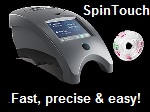 good news is that once
the pH has been adjusted, it will tend to remain there for
longer periods of time. Your hardness is curiously low, as
most testers have difficulty measuring a very low reading.
The pH Buffering product should not be used in hard water
areas. If you increase the hardness, you may cause the water
to become cloudy. Normally low hardness brings the issue of
corrosiveness. However, in you case, the high TA and a
correct pH should reduce this possibility. However, there
are other benefits to consider, such as reduced foaming, at
higher levels of calcium hardness. If you choose to raise
the hardness, I suggest that you keep it at approximately
150-200 PPM. Under no circumstances go over 250 PPM. To
better assure proper overall spa water chemistry, visit a
pool or spa store that has a very reliable, professional lab
such as a WaterLink
SpinTouch Lab, rather than a less
accurate test kit or strip reader. I
hope that I have answered all the questions. Enjoy the spa. good news is that once
the pH has been adjusted, it will tend to remain there for
longer periods of time. Your hardness is curiously low, as
most testers have difficulty measuring a very low reading.
The pH Buffering product should not be used in hard water
areas. If you increase the hardness, you may cause the water
to become cloudy. Normally low hardness brings the issue of
corrosiveness. However, in you case, the high TA and a
correct pH should reduce this possibility. However, there
are other benefits to consider, such as reduced foaming, at
higher levels of calcium hardness. If you choose to raise
the hardness, I suggest that you keep it at approximately
150-200 PPM. Under no circumstances go over 250 PPM. To
better assure proper overall spa water chemistry, visit a
pool or spa store that has a very reliable, professional lab
such as a WaterLink
SpinTouch Lab, rather than a less
accurate test kit or strip reader. I
hope that I have answered all the questions. Enjoy the spa.
Sincerely. Alan Schuster, 1/5/2014
► What To Use
For Lowering The pH?
Is there any difference between this
product made for spas versus pools? Obviously, I can buy a
gallon of pH down for about the same price as a quart made
for spas specifically. Isn’t it just sodium bisulfate?
R.T., Florida, 2/11/2009
Maybe!!! I don't know what every company puts inside the
bottles. Liquid products to lower a pool's pH are usually
straight muriatic acid, unless labeled otherwise. Liquid Spa
products, for the same purpose are most likely diluted
muriatic acid or possibly a solution of sodium bisulfate.
Having been in the chemical manufacturing business, I would
not choose to manufacture or package the latter. Muriatic
acid is harder to measure and handle, than a dry, granular
material, especially when dealing with the small amounts
required for a spa. My choice would be sodium bisulfate
granular, added by using a plastic cap or small scoop. Add
small amounts, remembering that you can always add more, but
you can't take out. I hope that I have been helpful.
Sincerely. Alan Schuster, 2/12/2009
► High Total
Alkalinity (TA)?
My pH is good and the spa water looks
great, but my TA is too high. Every time I try and lower the
TA to below 120 PPM, the pH ends up too low. Raising the pH
ends up raising the TA. It is like a roller coaster ride!.
Any help would be appreciated.
Brett R., Danville, IL, 12/7/2012
It is more important to maintain a proper pH, than it is to
maintain a TA of 80-120 PPM. Minerals that occur naturally,
in your water, might be contributing to this phenomenon.
There is no compelling reason for you to have to lower the
TA: your pH is good and the water is clear. Stop worrying
about the TA, unless there are signs of cloudiness, the
appearance of calcium scale or other water chemistry
problems. Work on maintaining a proper pH! Leave the
worrying to those with very low TA, that are unable to keep
the pH from bouncing. Enjoy the spa experience.
Sincerely. Alan Schuster, 12/7/2012
► High pH and
TA?
Hi Alan, first off....great website
that seems to be helpful without an agenda. My question has
to do with high T/A and pH. I have high T/A of just under
400 and pH of around 8. This is after adding a half cup of
baking soda to the water as I thought T/A would be low and
pH low due to some faulty pH test strips. I would like to
add some muriatic acid to bring all in line, but don't know
how much for a 450 US gal tub. Also would like to know how
long I should wait after adding that baking soda and also
should I keep the circ pump going or full jets when adding?
Thank you in advance.
Darren, 4/21/2010

First of all, you do not have to add any baking soda. That
is for raising the TA and it is already too high. You need
to add acid. Usually the pH reducing chemical for spas is
sodium bisulfate. It is just easier and more pleasant to
use. The end result is the same, with either one. It will
lower the pH and the TA. Just use the filter on recirculate.
Add the sodium bisulfate (pH Reducer), 4 ounces at a time,
until the pH is 7.2-7.6. At that point stop! If the TA is
too high, there is no need to do anything, so long as the
water is clear and there is no sign of scaling. If by
chance, the TA is too low, add some baking soda (TA
Increaser). Remember, you can always add more - you can't
take out. Not all test strips are the same. I suggest that
you try the LaMotte
Insta-Test Strips, as I have not
received any negative feedback. I hope that this information
proves helpful.
Sincerely. Alan Schuster, 4/21/2010
► pH and TA
Not Controlled?
I have a commercial spa that is being
controlled by an auto controller. We are using liquid
chlorine as a sanitizer and carbon dioxide as a pH
controller. Our source water has a pH of 7.2, TA of 95 and
CH of 120. The operator finds that the TA tends to creep up
after a few days and she is forced to lower it with acid. Is
there a correlation between either the sodium chloride or
the carbon dioxide and this creeping affect? If so can you
recommend a solution to this situation. Note this tub is
completely drain every four to five days based on it current
bather load. Regards.
Richard D., 9/11/2007
Liquid chlorine has a high pH and you are being forced to
lower the pH. Your choice of carbon dioxide will be
effective, at lowering the pH. The byproduct of the carbon
dioxide gas and the alkaline materials in the liquid
chlorine are bicarbonates. This forms the basis of total
alkalinity. So long as the pH is correct, I would not be
concerned with the TA, if the water remains clear and there
is no sign of scaling. With the relatively low calcium
hardness, a higher TA will actually make the water less
corrosive. Otherwise, keep the pH closer to 7.2 and the TA
will become lower. pH is always the more important
parameter. I hope this information helps resolve the matter.
Sincerely. Alan Schuster, 9/11/2007
► pH Is Off
The Charts?
Dear Alan, your website is great. Have
learnt a lot but have not found my answer. We have got a new
spa and although we have followed the instructions on how to
fill a new pool our pH and TA is totally out. The pH is over
8 and the TA over 220 PPM. What chemicals should be added when
filling the spa? Ours is a 1,000 litre spa and we use
chlorine. Thank you in advance.
Cynthia P., New Zealand, 4/26/2005
Adding pH reducing chemical will drop both the pH and TA. I
suggest you add 120 grams (4 oz.), at a time, every 15
minutes, until the pH is 7.2-7.6. It will probably take
several additions. You can always add more chemicals -- you
can't take out! Once the pH is in range, test the TA. If the
TA is over 120 PPM, there is no compelling reason for you to
have to lower it further, so long as the water is clear,
there are no signs of scaling and the pH is 7.2-7.6. If the
TA is under 80 PPM, add some TA booster, about 120 grams (4
oz.), until the level rises above 80 PPM. pH is always more
important than total alkalinity. I hope that this
information helps get you off on the right track. Enjoy the
spa.
Sincerely, Alan Schuster, 4/27/2005
► Falling Spa
pH?
I test my pool and spa chemicals daily
as I work for a hotel. My problem is I have to adjust the pH
in the spa quite often. All the other chemicals tend to stay
within range. So far all the pH adjustments have been to
raise the pH and the amounts of soda ash I add have all been
guesswork. What I need to know is if there is a formula to
determine the proper amount of chemical to add for proper pH
adjustment. I have been to your website and think it is
great. I hope you can help me with this. Sincerely.
Randy, Jekyll Island, Georgia, 5/11/2004
There's no simple, fool proof formula. The amount of
chemical required to raise the pH is dependent upon the
water volume, total alkalinity, additions of acidic
chemicals such as bromine tablets, the absorption of carbon
dioxide and the bather usage and frequency. No two spas
would be alike. Apparently, you are using a sanitizer or
system that lowers the pH. It is more or less inevitable
that the pH will drop. I suggest that you keep a log, as a
means of better determining the corrective treatment for
your spa. I hope that I have been of help.
Sincerely. Alan Schuster, 5/11/2004
► Household
TA Reducer and Increaser?
What household substance can be used
to increase or decrease total alkalinity in my hot tub?
David W., 5/30/2015
None to lower the TA! Sodium bisulfate (pH reducer) is
normally used to lower the pH and/or the total alkalinity.
It is not a household chemical and is a strongly acidic
chemical, in a granular form. Muriatic acid could be used,
but given the small volume of water in a spa, it is too
strong to handle easily and conveniently. Acidic materials
like vinegar are too weak and should not be used. Baking
soda (sodium bicarbonate) is the chemical used to raise the
total alkalinity of spa water. I hope that this information
proves useful.
Sincerely. Alan Schuster, 5/2/31/2015
► Constant
High pH?
The pH seems to be in the high 8 all
the time and total alkalinity seems to be low around 50 at
least that’s how many drops it takes to turn red from green.
My tub is 1000 gal, temp 104, calcium hypochlorite is
the chlorine and reads 5 PPM free chlorine. The water is
clear all the time I do get lots of foam as well. Got any
ideas?
Leonard B., 11/14/2006
Calcium hypochlorite is a poor choice as a sanitizer, in
your situation. It has a very high pH and will cause the pH
to remain high, i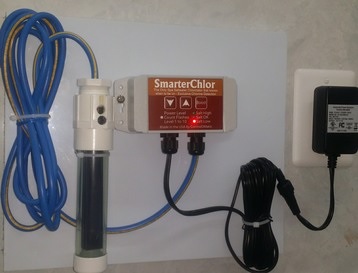 f adjustments are not made. High pH makes
chlorine less effective and makes formation of foam causing
soaps more likely. Try adding a spa formula antifoam. Adding
a periodic dose of an enzyme can help destroy the body oils
that lead to the formation of soaps. The addition of an
ozonator is something that
you might consider, as it will make maintenance easier and
produce higher quality water. It will reduce the chemical
consumption. You consider adding a mineral sanitizer, as well. This
combination works
well together. All you should need is a very low level of
chlorine or bromine, as it will act as confirmation that
proper conditions are being maintained. If you want to use
chlorine, a salt
chlorine generator is the easier and better way to use
chlorine, providing consistent results and more control. Your water testing
might be improved and simplified by using LaMotte Insta-Test
strips. I hope that this information will prove helpful. f adjustments are not made. High pH makes
chlorine less effective and makes formation of foam causing
soaps more likely. Try adding a spa formula antifoam. Adding
a periodic dose of an enzyme can help destroy the body oils
that lead to the formation of soaps. The addition of an
ozonator is something that
you might consider, as it will make maintenance easier and
produce higher quality water. It will reduce the chemical
consumption. You consider adding a mineral sanitizer, as well. This
combination works
well together. All you should need is a very low level of
chlorine or bromine, as it will act as confirmation that
proper conditions are being maintained. If you want to use
chlorine, a salt
chlorine generator is the easier and better way to use
chlorine, providing consistent results and more control. Your water testing
might be improved and simplified by using LaMotte Insta-Test
strips. I hope that this information will prove helpful.
Sincerely, Alan Schuster, 11/15/2006
► Corrosion
Problems?
I had been treating my hot tub
regularly, however all of a sudden the water became very
corrosive and the handle used to pull yourself up and out of
the tub corroded and the rust fell down into the water. Now
I have the rust ring all around the water line, the filter
has turned brown, and the handle is corroded through with
many pin holes in it. I drained the tub and the stains are
extremely hard to remove. Also can the handle be replaced,
so it doesn’t continue to cause problems? Where did I go
wrong and how can I rectify the situation to get my tub back
useable? Thank you for your assistance.
Larry W., 1/27/2008
Acidic conditions will lead to corrosion of metal parts and,
possibly, the heater. It sounds like the pH was too low! Try
using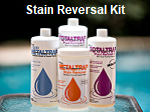 METALTRAP Stain Remover. in a sock and
scrub the stains. Refill and add a dose of phosphate-free,
Liquid METALTRAP. I suspect you were using bromine tablets
and neglecting to monitor the pH. Adding an
ozonator is something
that you would be wise to consider, as it will make
maintenance easier and produce higher quality water. It will
reduce the chemical consumption. You might add a
mineral sanitizer,
as well, since it will provide additional, persistent
sanitizing. The combination of the two compliment each together. All you should need is a lower level
of chlorine or bromine, as it will act as confirmation that
proper conditions are being maintained. The addition of a
salt chlorine
generator will provide a complete sanitizing system and
help you avoid corrosive low pH conditions. Replace the handle
with plastic or stainless steel. An assortment of corrosion
resistant composite rails, are now available. Keep the pH at
7.2-7.8, the TA at about 120 PPM and the calcium hardness at
about 200 PPM. I hope that I have been helpful.
METALTRAP Stain Remover. in a sock and
scrub the stains. Refill and add a dose of phosphate-free,
Liquid METALTRAP. I suspect you were using bromine tablets
and neglecting to monitor the pH. Adding an
ozonator is something
that you would be wise to consider, as it will make
maintenance easier and produce higher quality water. It will
reduce the chemical consumption. You might add a
mineral sanitizer,
as well, since it will provide additional, persistent
sanitizing. The combination of the two compliment each together. All you should need is a lower level
of chlorine or bromine, as it will act as confirmation that
proper conditions are being maintained. The addition of a
salt chlorine
generator will provide a complete sanitizing system and
help you avoid corrosive low pH conditions. Replace the handle
with plastic or stainless steel. An assortment of corrosion
resistant composite rails, are now available. Keep the pH at
7.2-7.8, the TA at about 120 PPM and the calcium hardness at
about 200 PPM. I hope that I have been helpful.
Sincerely. Alan Schuster, 1/28/2008
► Baking Soda
To Raise The pH?
Hi Alan. I'm glad I bookmarked your
website. Hope you had a happy and healthy New Year. Have a
question for you. Can I raise the pH in my hot tub by adding
baking soda? Thank you for a reply.
Regina, 1/15/2005
Baking soda (sodium bicarbonate) is typically used to raise
the total alkalinity of the water. If the pH is low, it will
move the pH upwards towards 7.8. In doing this, it will,
also, raise the TA of the water. Sodium carbonate is
normally used to raise the pH, as it is more efficient than
sodium bicarbonate in raising the pH. The answer to your
question is maybe! It all depends on the actual pH and TA.
If the pH is close to optimum and the TA is on the low side,
sodium bicarbonate might do it all. If the pH is low and the
TA is optimum, it will require more sodium bicarbonate and
can end up raising the TA too much. I hope that I have been
helpful.
Sincerely. Alan Schuster, 1/15/2005
► Low Spa pH?
I have adjusted the total alkalinity
of the spa to about 100 and the pH is good. Still within a
week or so, the pH is too low. The only chemicals I use are
bromine tablets in a floater. The spa has an Ozonator and is
only used a few times a week. What can I do?
Barbara K., Virginia Beach, VA, 4/12/2004
Spa water does have a natural tendency to drop in pH. What
you are describing seems to be quite normal. The absorption
of carbon dioxide and the effects of bathers tend to lower
the pH. The bromine in your floater will lower the pH. All
this results in a slowly falling pH. If your TA wasn't 100
PPM, it would happen much more quickly. I suggest that you
test the pH, at least every other day and adjust, as
required. Enjoy the spa.
Sincerely. Alan Schuster, 4/12/2004
► Low
Alkalinity (TA)?
My total alkalinity readings are
around 50 PPM and the pH of the water is 6.9. How should I
treat the spa water? Thanks in advance.
Adam D., Dover DE, 2/4/2014
In all likelihood, adjusting the total alkalinity (TA) will
also raise the pH and bring it into the ideal range. Use a
Spa Formula Total Alkalinity Product and follow the
directions. It is important to avoid low TA, as this can
lead to low pH readings and pH fluctuations. The combination
of low pH and TA, in your spa, can lead to corrosive
conditions and could damage underwater metal surfaces and
the spa heater. Testing the water on a regular basis is
important! I hope that I have been of help.
Sincerely. Alan Schuster, 2/4/2014
► Falling
Total Alkalinity?
Alan. The last 6 months I have been
having a problem with the alkalinity dropping to 20 PPM.
This will happen in 24-36 hours. Our pH is 7.2 and chlorine
is 0.5. We bring the levels where they need to be and with 2
days the levels drop. We have an automatic controller
unit that keeps the liquid chlorine and pH balanced. We can
not maintain our Alkalinity level. Our spa is approx. 500
gallons. Do you have any suggestions?
Noreen W., Ogden, UT, 10/23/2010
The low TA may contribute to the corrosiveness of the water
and how it effects metal parts. You might want to adjust the
controller to maintain the pH closer to 7.6. The addition of
sodium bicarbonate will raise the TA, with only a slight
raising of the pH. One-half a pound should raise the TA
approximately 50 PPM. Bathers, wastes and aeration tend to
lower the pH and the TA over time, making the adjustment of
the TA somewhat dependent upon usage. If your spa water has
a calcium hardness below 300 PPM, you might be able to add a
pH buffering product. These are liquid products, based upon
potassium phosphate, and will help stabilize the pH and the
TA, in the ideal range. However, it is not suitable for use
in hard water situations, as it will lead to cloudy water. I
hope that this information proves helpful.
Sincerely. Alan Schuster, 10/23/2010
► Rising Spa
pH?
Thank you for helping me. I have a
Mineral Sanitizer (silver ion?), and an ozone
generator that runs 24 hours/day. When I filled the spa
about 10 days ago I added sodium bicarbonate to bring TA up
to 80 - 120, sodium bisulfate to bring pH back to 7.4, and
lithium hypochlorite. Since then I only add sodium bisulfate
and dichlor as needed to maintain pH and free
chlorine. Testing with both spa test strips and a swimming
pool (OTO/phenol red/TA titration) test kit give the same
results. The spa is covered 23+ hours per day. I did add a
small amount of defoamer once and a small amount of
clarifier once, but the pH problem existed both before and
after those chemicals.
R. C., 5/1/2008
The defoamer and the clarifier have no appreciable effect on
the pH. Ozone is pH neutral and the mineral
sanitizer, that you are using, should have no significant
effect on the pH. Dichlor is essentially neutral. The
lithium shock has a very high pH. It appears that you are
using relatively soft water, inasmuch as you had to raise
the total alkalinity. I suggest that you keep the pH at
7.2-7.6. If the pH is too low, add sodium bicarbonate to
raise the pH. This will also raise the TA. The higher TA
will help stabilize the pH more effectively. A higher TA is
not a problem, so long as the calcium hardness is not over
200 PPM and the water remains clear. Dissolved carbon
dioxide is acidic. As you add sodium bisulfate, you are
converting some of the dissolved carbonates and bicarbonates
into carbon dioxide. As this gasses off, the pH will drop.
Maintaining a higher TA should solve the problem. The OTO
test kit does not measure Free Chlorine, as can the
Test
Strips. I hope that I have been helpful.
Sincerely. Alan Schuster, 5/1/2008
► Waiting
Time After Adding Chemical?
Hi Alan, I've finally had enough time
to really read your site and the archives and it is the most
useful source of information I have found. Although I
haven't finished my starters kit, I will keep your
advertisers in mind because I want to see your useful
website last. May I ask two more questions, or actually one
with parts A and B? When you add chemicals to raise or lower
the pH in a spa, how long should you wait to get an accurate
retesting? And how long after adding is it ok to use the
spa? Thanks again.
Marilyn R., 6/13/2004
Spas have excellent agitation and chemicals dissolve quickly
because of that and the water temperature. Allowing about 10
minutes for small amounts of chemicals to dissolve and
disperse is reasonable. If correcting the pH, you can use it
as soon as you confirm the test readings are acceptable. The
only exception would be if the sanitizer level had bottomed
out. If this happens, allow 30 minutes of proper sanitizer
levels before using the spa, in order to allow sufficient
time for the sanitizer to act on the microorganism
populations. Thanks for the encouragement. Enjoy the spa.
Sincerely. Alan Schuster, 6/13/2004
► The Color
Purple?
I use bromine in my spa, along with an
ozonator and a mineral sanitizer. Occasionally, when I do a pH
test, I get a purple color that looks like the pH is much
too high. I know that it couldn't have risen that quickly.
What am I doing something wrong?
Austin T., Boca Raton, FL, 1/4/2006
Bromine is present in the water and, if the concentration is
very high, it could interfere with the pH test. Under these
conditions this purple color has
nothing to do with the actual pH. To avoid this problem, add
a drop of chlorine neutralizer test solution (sodium
thiosulfate) to the sample before testing. It will discharge
or lower the bromine level. Some pH testers are better able
to perform properly, in the presence of bromine. With a
mineral sanitizer all you should
require is 1-3 PPM of bromine and because you have an
ozonator, it will require very little in the way of bromine
product. I hope this helps explain the problem.
Sincerely. Alan Schuster, 1/5/2006
► Not
Supported By The Facts?
I’ve got a 400 gallon hot tub that I
keep at 98°F. I continually have a problem with high pH. I
add acid and the TA decreases, but the pH does not move.
I’m having issues with scale formation and cloudy water.
The hardness is actually low, per my test results. I do know
it’s not bacteria. The Bromine level is high - @ 20ppm, so
much for the in-line spa mineralizer that supposed to automatically
keep the level between 1-2 ppm (with ozonator) and I have
shocked the water twice. Adding any more acid at this
point will drop the TA below 80. We are on a community well
and have had issues with high metal concentrations. I use a
chelating agent when I first fill the tub to precipitate
metals and filter them out. Any thoughts?
Jeff., 4/12/2007
Your test results and the status of the spa water do not
necessarily follow. Inasmuch as you are using bromine,
possibly it is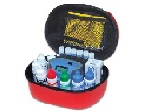 causing a false high pH reading. Bromine
should be lowering the pH. Have the pH and TA test results
verified by a dealer. For testing purposes, I suggest the
LaMotte Insta-Test strips as they provide the right kind of
information, especially when the bromine level is high.
Even better would be a
ColorQ PRO 7
Digital Water Analyzer, which eliminates all
color-matching and guesswork. Scale formation is unlikely to occur, unless the calcium
hardness is high, even if the pH is too high. pH is always
more important the TA. Always! Sometimes the natural
minerals, present in the source water, don't make this easy.
I suggest that you lower the pH to 7.2-7.8 and see how
difficult it is to keep it there. If there is no problem
keeping the pH within this range, I would not be concerned
about the TA. Otherwise, if the calcium hardness level is
under 250 PPM, I would add a pH buffer product. This product
is usually a liquid and will help stabilize the pH. I hope
that this information helps to clarify the problem. causing a false high pH reading. Bromine
should be lowering the pH. Have the pH and TA test results
verified by a dealer. For testing purposes, I suggest the
LaMotte Insta-Test strips as they provide the right kind of
information, especially when the bromine level is high.
Even better would be a
ColorQ PRO 7
Digital Water Analyzer, which eliminates all
color-matching and guesswork. Scale formation is unlikely to occur, unless the calcium
hardness is high, even if the pH is too high. pH is always
more important the TA. Always! Sometimes the natural
minerals, present in the source water, don't make this easy.
I suggest that you lower the pH to 7.2-7.8 and see how
difficult it is to keep it there. If there is no problem
keeping the pH within this range, I would not be concerned
about the TA. Otherwise, if the calcium hardness level is
under 250 PPM, I would add a pH buffer product. This product
is usually a liquid and will help stabilize the pH. I hope
that this information helps to clarify the problem.
Sincerely. Alan Schuster, 4/12/2007
► Stabilizing
The Spa pH?
The last time I picked up spa
chemicals I noticed a liquid product that is used to buffer
the pH and make it more stable. The product advised against
being used in hard water areas. I believe that my water is
soft. Should I be concerned about using the product.
Greg. L., Setauket, NY, 12/3/2006
This type of product can cause precipitation and cloudiness
if used in hard water areas. These products should not be
used if the Calcium Hardness Test is above 300 PPM. Even at
levels between 200-300 PPM, precipitation and clarity
problems can result, depending upon the pH and the total
alkalinity. Personally, I suggest that such a product, not
be used, if the calcium hardness of the spa water is above
200 PPM. You should be able to adequately stabilize the pH
by maintaining a total alkalinity of 80-120 PPM. However,
these pH Buffer Products can work very well in soft water
areas and can reduce the frequency of pH adjustments. I hope
that I have been helpful.
Sincerely. Alan Schuster, 12/3/2006
|
Visit The Website Stores . . . for
better informed shopping!!! |
|
|
Shipping is FREE* . . . within
the Continental U.S.
A $9.99
handling charge will apply
to Continental U.S. Orders,
under $75.00. Orders
outside of the Continental
U.S. may require some
additional charge, based on
quantity and destination.
Most products can be
shipped World-Wide. International
and orders outside of
Continental U.S. - see
comments on the ordering
pages. |
|
|
Major
Credit Cards and PayPal are accepted. |
|
▲
Return To Top Of Page
▲
Aqualab Systems, LLC does not
make any warranty or
representation, either expressed
or implied, regarding the
accuracy or completeness of the
information provided by this
website; nor does Aqualab
Systems., LLC. assume any
liability of any kind whatsoever
related to, or resulting from,
any use or reliance on this
information. The content of this
website should not be used, if
it is conflict with any
applicable federal, state or
local regulations or guidelines.
© Aqualab Systems, LLC. All
rights reserved
|
|