| |
|
Ultra Polymers, Inc.
Instructions and Limited Warranty
Information
Manufactured by Ultra Polymers, Inc.
Ultra Poly One Coat Hybrid Epoxy Coating
Return to
Ultra Polymers, Inc Preview Page
Return to the Ultra
Poly One Coat Store
INSTRUCTIONS
Ultra Poly One Coat
● TOOLS ● |
 |
-
Ultra Poly One Coat.
-
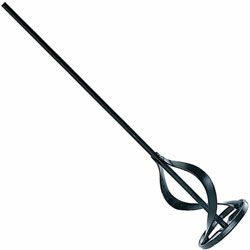
Heavy mixing drill,
with a mixing blade, such as pictured on the left.
-
Citric-based cleaner *such as Ultra
Poly CITRIC or brands such as ZEP or ORANGE GLO (Home
Depot and elsewhere).
-
High Pressure Power Washer (3,000 psi
or higher).
-
Spatula or other scraping tool.
-
Large mix bucket.
-
Acetone and measuring container.
-
Disposable rags (for cleanup).
-
Rollers and 3/8” nap roller covers;
brushes.
-
Drop cloth.
-
Aggregate (provided
for use in creating non-slip
areas).
-
Gloves.
|
|
● SURFACE PREPARATION ● |
|
Please read all surface preparation instructions before
proceeding. Good surface preparation is the key to a
long-lasting, attractive finish.
The goal of surface preparation is to ensure that all
dirt, oils, debris and loose (or potentially loose)
materials are removed completely.
The pool MUST be thoroughly cleaned, and all oils and
debris must be removed completely. A citric-based
cleaner is recommended, Such as ZEP Citrus Cleaner.
Thorough cleaning may require more than one complete
wash. A THOROUGH RINSE IS MANDATORY. Give special
attention to waterline, benches and steps.
Muriatic acid or trisodium phosphate (TSP) cleaning is
NOT recommended. DO NOT use this method of surface
preparation when using Ultra Poly One Coat.
Acid washing prior to coating application is NOT
recommended. The instructions call for a
citric-based cleaner and pressure washing to be used.
A thorough high-pressure (3,500 psi or higher) water
blast of the project area MUST be completed, after a
thorough cleaning is completed. The goal of the
high-pressure water blast is to aggressively prepare the
surface. Less than 3,000 psi is not adequate. Higher
pressure than 3,500 psi is acceptable. Sandblasting is
acceptable, but still requires citric-based cleaners to
be used after completion to remove any oils that may
have been embedded in the process.
Some surfaces may benefit from more aggressive surface
preparation such as sandblasting. That decision is left
to the discretion of the pool professional. Ultra Poly
One Coat is not intended to be used for pool repair and
should only be applied to intact surfaces. Surfaces that
cannot withstand the surface preparation as required may
not be suitable for coating.
When coating a previously coated pool, it is
important to remove any coating that is not completely
intact. It is best to completely remove failing
chlorinated rubber coatings. After surface preparation
is completed, check any remaining coating to determine
if dried edges have lifted and the surface requires more
preparation. Pressure wash, scrape, blast or grind if
necessary.
Small areas where the chlorinated rubber or other
coating remains fully intact after aggressive high
pressure water blasting and scraping if necessary may be
coated with Ultra Poly One Coat.
Ultra Poly One Coat is designed for application to dry
surfaces and must remain moisture-free for a minimum of
24 hours.
The surface to be coated should be dry – free of any
puddles or visually obvious moisture. An overnight
moisture test is not required. NOTE: A quick test for
dryness: Put a paper towel on the surface and step on it
for a minute. If the towel remains dry, the surface is
dry enough for coating. You may need to evaluate more
than one area of the pool.
Any leaks must be fixed before the coating process may
proceed. All water management and structural problems
must be solved before coating can be applied. Coating
cannot be applied to wet areas.
Concrete or fiberglass or other structural components
must be sound. Ultra Poly One Coat is intended to create
a smooth, durable coating on concrete, plaster, metal
and fiberglass. Crumbling, rusted, pitted or compromised
substrates are not suitable for coating.
Small gouges, chips, cracks or other voids can be filled
with Ultra Poly One Coat. Ultra Poly One Coat is
self-leveling, and will thoroughly cure even at
thicknesses of greater than one inch on a horizontal
surface. Repairs made with materials other than Ultra
Poly One Coat, such as repairs made on vertical surfaces
or larger areas, can be coated with Ultra Poly One Coat
as soon as they are cured/dry according to
manufacturer’s instructions.
Ultra Poly One Coat is not recommended for coating over
silicone or silicone-based materials. It is not
recommended for concrete with silicone fillers or
fiber-filled concrete. Specialty or composite concrete
surfaces may interfere with the adhesion of the coating
and result in delamination.
Fiberglass may be coated with Ultra Poly One Coat after
the following surface preparation: Thorough cleaning and
pressure washing to remove oils and other residue. We
recommend a citric based cleaner.
A light sanding to create a profile for optimum adhesion
is recommended, but do not expose fiberglass fibers.
Metal surfaces may be coated with Ultra Poly One Coat.
All rust must be removed completely. The surface must be
THOROUGHLY cleaned and free from all oils or
residue. More than one cleaning may be required. A
high-pressure water blast after the cleaning process is
recommended. The surface must be sanded, wire-brushed or
sand-blasted to achieve optimum adhesion. Coating on
metal should be applied soon after surface preparation
is complete. Note: Check closely for pinholes or coating
voids that may allow rust spots to form.
|
|
● MIXING ● |
|
Open
Part A and Part B (contents will look similar). Be sure
to have a metal can marked Part A and a plastic bucket
marked Part B. Check to be sure the kit size and color
matches. The kit size (1-gallon, 2-gallon or 5-gallon)
and color are on the label.
Label instructions are meant as a quick reference guide
only. This document contains the full instructions for
surface preparation, mixing and application.
Pour entire contents of Part B (scrape inside of can)
into the container with Part A.
Note: Contents are pre-measured in exact mixing
ratios. Do not attempt to mix partial batches. Smaller
kits are available.
Mix thoroughly (about 1 minute or less) using a powerful
drill and heavy-duty mixing blade.
It is important to use proper mixing equipment. Ultra
Poly One Coat is a thick material that requires a heavy
mixing blade and powerful drill. Sturdy mixing blade
attachments must be used. Mixing by hand is not
sufficient and will result in areas of material that do
not cure properly. DO NOT attempt to mix by hand.
Unmixed material will not cure properly. Pot life begins
from the moment the material is mixed.
TIP: Hold can FIRMLY when mixing. Most
applicators brace the container firmly on the ground
with their feet to prevent the can from spinning and
losing material from the can.
Pour entire contents of the mixed Part A/Part B into a
separate large mixing container. This is an IMPORTANT
step. Unlike paint or other coatings, the components of
Ultra Poly One Coat do not readily blend all materials
clinging to the sides of the container. MOST of the
components must be scraped from each can into a third
container to ensure proper mixing. The separate mixing
container may be re-used a number of times.
Add acetone to mixed material (12-14 oz. per gallon).
Acetone is required – do not use other types of thinners
as they may alter the color, cure time and potlife of
the coating. Mix again for about 1 minute. This step
ensures thorough mixing and is REQUIRED.
TIP: Many applicators measure the acetone into the
emptied A/B mix can and “swish” the acetone around then
pour into the final mixing container. This helps to get
all material into the final mix.
Acetone is added to allow easier application and extend
potlife. Smaller and larger amounts of acetone may be
added as desired, but only during the initial mix. DO
NOT add solvent or thinner after the potlife has
progressed. (Re-thinned material may look acceptable,
but will result in a coating that bubbles.)
In cool temperatures, components should be kept in a
warm area at least 24 hours before mixing and
application. Components that are cold are more difficult
to mix and apply, and may prevent the small amount of
acetone from escaping during application, creating
bubbles that must be rolled out before the coating
cures. In warm temperatures, we recommend that the
components be stored in cooler temperatures, out of
direct sun. It may be helpful to cool components on ice
before mixing in very warm temperatures. Very warm
material has a short potlife that may be difficult to
accommodate.
Do not over mix. The potlife begins as soon as Part A
and Part B are mixed together. Over mixing may also
accelerate the potlife. DO NOT USE ULTRA POLY ONE
COAT that has progressed past its usable potlife.
Material that has thickened and become warmer, and is
“sticky” when rolled is past usable potlife. DO NOT add
acetone to material after the initial mixing.
|
|
● TIPS ● |
|
It is
best to dispose of empty cans immediately to avoid any
spills or drips on deck areas. Wipe up spatters and
spills immediately. Cured material is very difficult to
remove.
DO NOT recap any containers of A/B mixture.
Careful! A/B mix may become warm or hot as it approaches
the end of the potlife.
DO NOT SMOKE or CARRY LIGHTED MATERIALS around
the mixture that contains the acetone or the acetone.
|
|
●
APPLICATION ● |
|
Apply
an even roller coat of mixed material to a thoroughly
clean and dry project area. Coating must be applied
within 30 minutes of mixing Part A and Part B. Rollers,
brushes or squeegees or other tools may be used. Most
applicators pour the mixed material into a standard
paint tray during application instead of working from
the mixing bucket. No screens are required.
There is a potlife (workable time) of approximately 30
minutes at 70° F. Warmer temperatures reduce the
potlife. There is no “waiting time” – mixed material
must be applied immediately.
A single, thorough coating is sufficient for product
performance. Cover the most area possible without
affecting the full coverage. Coverage should be between
100-130 square feet per gallon kit. You should fill in
small voids as you apply the coating. Any missed areas
can be recoated as necessary. There is no need to keep a
“wet edge” as you apply the coating. Additional coating
or second coats can be applied over already-coated areas
before or after the area has cured completely.
Do not apply too thickly on vertical surfaces. Add more
acetone to the initial mixes designated for vertical
application if necessary. It is better to apply thin
coats to a vertical surface. Application that is too
thick may cause sagging or runs as the curing process
begins. If necessary for coverage or touch-ups, a second
coat of Ultra Poly One Coat may be applied directly over
the first coat before or after the coating has cured.
TIP: Quality rollers and roller covers are recommended.
Lock-on roller covers are generally preferred. Roller
nap is a matter of preference, but 3/8 inch rollers
generally work well. Roller covers may be used to apply
more than one batch if the coating has not begun to cure
on the roller cover. Using quality roller covers usually
prevents any “shedding” that may mar the surface.
Brushes may be used. All rollers, brushes or other
application tools should be disposable.
Where non-slip areas are desired, broadcast an aggregate
over uncured coating to create a textured surface. We
recommend fine grade aluminum oxide; however, the type
of aggregate used is a decision to be made by the
installer/decision maker based on acceptable appearance
and grade. Poly Solutions, Inc. is not responsible for
advising applicators of areas that require a non-slip
surface.
|
|
●
CLEAN-UP ● |
|
Clean
equipment using acetone or other solvent or thinner
BEFORE the coating cures.
Warning! Once coating has cured it is extremely
difficult to remove. Clean any spatters or spills
immediately. Cured material may require grinding or
mechanical wire brush grinding for removal. Be sure to
remove the uncured coating from all decking, tile or any
areas where you do not want the coating to remain.
Remove any tape before the coating has cured.
Discard cans, roller covers, brushes, rags etc. The
material is not regulated as hazardous waste.
DO NOT re-cap containers of A+B mixture!
|
|
● CURE
TIME ● |
|
Curing
time depends on the temperature of the coating
components, ambient temperature and the surface
temperatures. Heat will accelerate the cure time, cooler
temperatures slow cure time. Cure time ranges from a
minimum of 24 hours (steady, warm temperatures) to 2-7
days (cool temperatures). Temperatures must be averaged
over a period of 24 hours.
Ultra Poly One Coat that is completely hardened and
resists indentation from pressure from a tool is cured.
Several areas of the pool must be checked for full cure.
Water may not be added until the surface is cured.
Water added too soon will cause the coating to
delaminate or discolor.
|
|
● STORING
and HANDLING ● |
|
Avoid
extreme conditions that may destroy or damage the
containers. Do not store in freezing temperatures or in
temperatures above 90°F. Components that have been
subjected to extreme temperatures may be used once they
have returned to room temperature (70°F range). Shelf
life is at least two years. Shelf life past two years
has not yet been determined. Contents may settle during
storage.
Do not use opened containers or containers that have
been contaminated with water or any other debris. Do not
use components from containers that have leaked.
|
|
● COLORS ● |
|
Standard colors are
White, Black, Pool Blue, Grey and Earth Tone.
Custom colors are available. Color matching is
approximate and not all colors can be matched
successfully. Custom color matches should be ordered in
quantities sufficient for completing an entire project.
Though successful matching is common, additional batches
of custom colors are not guaranteed to match the exact
shade of the original batch.
Earth tone colors are available for water features and
water landscaping. A clear coat is available. Our pool
blue is a light “sky blue” that is standard in the
industry. No dark blue (navy) is available.
|
|
● LIMITED
WARRANTY ● |
|
Ultra
Polymers, Inc. warrants to the purchaser of this
product that this product will be free from defects in
the materials, under normal use and service, for a
period of fifteen (15) years from the date of purchase,
and Ultra Polymers, Inc. will replace defective product,
at no charge to the purchaser within a reasonable amount
of time after receipt of notice from the purchaser.
This warranty does not cover: (I) removal or
reapplication costs of any type or kind, or other
similar or dissimilar costs incurred by the purchaser or
any third party; or (II) costs incurred due to the
discoloration, chalking, staining or other similar or
dissimilar alternation in the appearance of this product
or any other changes to this product that otherwise
occur due to the failure of the swimming pool owner to
properly maintain his or her swimming pool. This
warranty shall not apply, and shall be null and void, if
the defect was caused in whole or in part by (I) misuse
of this product (including, without limitation, misuse
pursuant to federal, state or local laws), (II) misuse
of any other product used in conjunction with this
product (including, but not limited to, chemical
cleaning agents) or (III) the failure to apply this
product in accordance with the instructions provided
with this product. Purchase of this product is an
acceptance of this warranty by the purchaser.
Ultra Polymers, Inc.'s sole responsibility pursuant to
this limited warranty shall be to provide the original
purchaser an amount of replacement product sufficient to
cover the area on which the defective product was
applied. Under no circumstances shall Ultra Polymers,
Inc. be obligated to apply the replacement product or
perform any other services related thereto. The replace
of this product is in no way an admission by Ultra
Polymers, Inc. of product defectiveness. ULTRA POLYMERS,
INC. SHALL NOT BE LIABLE FOR ANY SPECIAL, INCIDENTAL OR
CONSEQUENTIAL DAMAGES OF ANY KIND (INCLUDING, WITHOUT
LIMITATION, DAMAGES RELATING TO LOSS OF PROFITS,
GOODWILL OR OTHER ECONOMIC INJURY) WHICH MAY RESULT
DIRECTLY OR INDIRECTLY FROM ANY BREACH OF ANY WARRANTY,
EXPRESS OR IMPLIED, BREACH OF CONTACT, TORT OR OTHER
THEORY OF LIABILITY WHETHER OR NOT ULTRA POLYMERS, INC.
HAS BEEN ADVISED OF THE POSSIBILITY OF THESE DAMAGES.
Some states do not allow the exclusion of limitation of
special, incidental or consequential damages, so this
limitation or exclusion may not apply to the purchaser.
THE FOREGOING WARRANTY IS THE SOLE AND EXCLUSIVE REMEDY
AVAILABLE TO THE PURCHASER AND IS IN LIEU OF ALL OTHER
WARRANTIES, WHETHER WRITTEN OR ORAL, EXPRESSED OR
IMPLIED, INCLUDING WITHOUT LIMITATION, THE IMPLIED
WARRANTIES OF MERCHANT ABILITY AND FITNESS FOR A
PARTICULAR PURPOSE WHICH POLY SOLUTIONS INC. HEREBY
EXPRESSLY DISCLAIMS.
THIS WARRANTY GIVES THE PURCHASER SPECIFIC LEGAL RIGHTS
AND THE PURCHASER MAY ALSO HAVE OTHER RIGHTS WHICH VARY
FROM STATE TO STATE. |
Return to Ultra Polymers, Inc Preview Page
Return to the Ultra Poly One Coat
Store
▲
Return To Top Of Page
▲
Aqualab Systems, LLC does not
make any warranty or
representation, either expressed
or implied, regarding the
accuracy or completeness of the
information provided by this
website; nor does Aqualab
Systems., LLC. assume any
liability of any kind whatsoever
related to, or resulting from,
any use or reliance on this
information. The content of this
website should not be used, if
it is conflict with any
applicable federal, state or
local regulations or guidelines.
© Aqualab Systems, LLC. All
rights reserved |
|