| |
|
Scroll
down to browse through some archived SWIMMING POOL
questions and answers. Please click the Pool
Problems Link, on top of every page, to access a
complete listing of Pool Problem subjects, an
alphabetized Website Table of Contents, Pool Equipment
Information, About Alan Biographic Material and a Pool
Glossary. Use the other links to access additional
subject information. More information about some new and
unique products, for pools and spas, can be found by
visiting
The Website
Store. You'll never know what you'll find and
that's always fun. Be better prepared and avoid
costly problems!
|
|
 |
Shipping is FREE* . . . within
the Continental U.S.
A $9.99
handling charge will apply
to Continental U.S. Orders,
under $75.00. Orders
outside of the Continental
U.S. may require some
additional charge, based on
quantity and destination.
Most products can be
shipped World-Wide. International
and orders outside of
Continental U.S. - see
comments on the ordering
pages. |
|
 |

Major
Credit Cards and PayPal are accepted. |
|
On-line
shopping since 2002 - Safe and Secure!!! |
|
Optimizing chemistry, improving
circulation and eliminating
phosphates!!! |
|
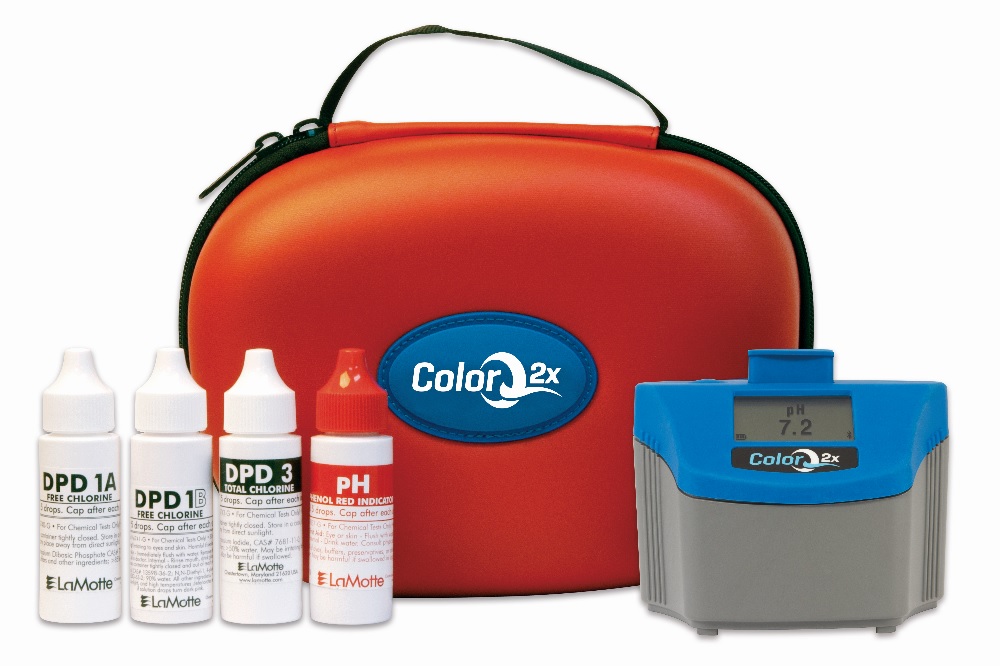
A
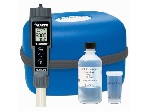
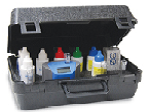
ColorQ, All-Digital Water Tester
can perform all of the common pool water
tests, eliminates the color-matching and
guesswork. There is a model, for
every pool testing need. Reliable
water testing will help solve and avoid problems. Better
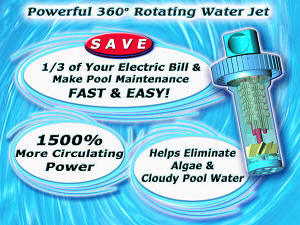
Circulation helps make everything work
more effectively. The
Circulator is a return jet
replacement fitting, that improves
filtration and eliminates the dead zones, that
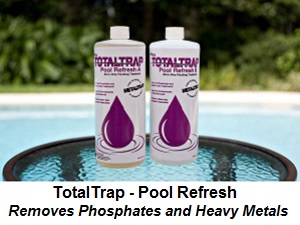
promote algae growth. Phosphates and Nitrates
can increase the growth of algae and
make treatment more difficult, as both
are vital plant nutrients. Nitrate
removal is not practical, but phosphate
removal is easy enough to do.
Adding Pool
Refresh Total Trap will allow
you to vacuum and filter out phosphates
and should make algae control more
effective. |
|
|
If you have a pool or spa water
testing need, we should have the
product.
►
Scroll down to read through some
Question & Answer information.
◄
|
|
Alternative Pool Water Sanitizers |
|
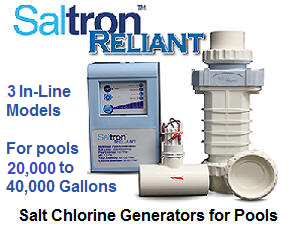
A
Salt
Chlorine Generator is definitely a
better way to do chlorine. Salt
chlorine generators are highly automated
and give you better control. The
salt level is about that found in human
tears. In-Line and no-installation-required models are
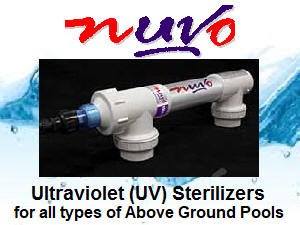
available. Adding an
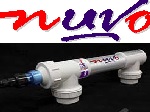
Ultraviolet Sterilizer kills
virtually all microorganisms passing
through the cell. While it must be
used with a persistent sanitizer, such
as chlorine, it
reduces the amount of chlorine required,
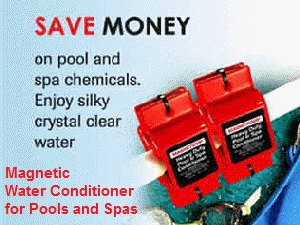
to maintain an optimum level. Magnetic Water Conditioners
help solve scaling problems, due
to high levels of calcium
hardness and are available in 4
models. |
|
|
If you have a pool or spa water
testing need, we should have the
product.
►
Scroll down to read through some
Question & Answer information.
◄
|
|
How to treat Black Algae and Resistant
types of algae? |
Black algae is
one of the most difficult varieties to control
and eliminate. This algae can appear as a
blackish discoloration or a tar-like deposit. In
either case, it is a problem to remove because
of the physical nature of this algae. It has, as
its outermost surface, a layer of
polymucosaccharide. This can act as a water
repellent barrier and shield the underlying
algae, from contact with the chemically-treated
water. In addition to shock treatment and
application of a polymer algaecide, it is
recommended that the pH be dropped to 7.2, the
circulation be directed towards the affected
areas and a "quat" algaecide be added. The
addition of the "quat" algaecide will not kill
black algae, but it can act as a wetting agent,
that will help the chemicals penetrate through
the polymucosaccharide barrier. This regimen
should be used with all types of algae that
appear to be resistant to normal treatment,
regardless of the color. Not all black stains
are caused by black algae: heavy metal
discoloration and plaster finish problems are
other possibilities. In addition to proper
sanitation, good circulation is a must to help
prevent algae growth in areas with stagnant
water or dead zones. The use of
The Circulator, as a
replacement for standard return jet fittings, can
dramatically improve circulation, better
distributing sanitizer to all areas of the pool. In addition to proper
sanitation, good circulation is a must to help prevent algae
growth in areas with stagnant water or dead zones. Adding a
60% polymer algaecide will provide some backup
algae control, especially important when chlorine or bromine
levels bottom out. It can buy you some time, until the
chlorine or bromine levels, can be replenished and restored
to optimum conditions. If problems arise,
refer to the Pool Problems
Page, as a source of problem-solving information, broken
down into various categories. Scroll down the page and
click on the linked
keywords,
catch phrases
or images, in the archived answers below, to access additional information, on that topic or product.
Do you know what's in
your water? If you're having problems, with
sanitation or water clarity, testing allows you to better
understand the chemistry and determine the cause of the
problem. Once understood, you can select the best
treatment option. Understanding the nature of the
problem, should be step one. For information about
our full selection of testing options, visit our
Test Equipment Store.
 |
Join our E-Letter Mailing List.
You'll receive 1-3 E-Letters a
month, featuring helpful pool
and spa advice, new product
information and sale
announcements. All we
require is your e-mail address
and you can opt out anytime you
wish.
Your information
will never be shared or sold. |
|
▼
Helpful,
Problem-Solving Information, in a question and
answer format.
▼ |
► Blackish Spots?
My inground pool has a marcite finish
that is a few years old and is in very good condition.
However, there are a few blackish colored spots on the
bottom, in the corners and near the ladder. I have tried
using a Siphoning Device on the end of a vacuum pole with
some acid solution, but nothing has happened. I can't rub
the spots off. Can this still be algae? Thanks.
Edward D, Bellingham, WA, 6/12/2020
The fact that the acid solution had no effect increases the
likelihood that it is algae. Black algae, in particular, can
be difficult. Fortunately you only have some spots and that
can make treatment easier. Your Marcite finish allows for
more direct treatment. You have several options. Brush the
surface to help expose the algae. Place a 3" trichlor tablet
on top of a spot and allow to remain in place for at least a
few hours. The tablets can affect some masonry finishes, so
either test it on an inconspicuous spot or verify treatment
suitability with the finish contractor. If improvement is
seen, repeat elsewhere, as necessary. Another option is the
use of a Granular Trichlor to sprinkle onto the spots. Shut
off the filter first, so that the granules sink straight
down. Use a brush to do the positioning. Another method is
to attach a 3" trichlor tablet to a gadget (available in
pool stores) on the end of a vacuum pole. This can be used
to rub the trichlor onto the spots. NONE OF THESE OPTIONS
ARE SUITABLE FOR OTHER THAN MASONRY FINISH POOLS - DO NOT
PERFORM ON VINYL LINED OR FIBERGLASS POOLS. In order to help keep
the algae from returning, you should consider the use of a
Polymer Algaecide. This product is effective against many
resistant types of algae, doesn't foam and is non-metallic.
To better assure proper overall pool water chemistry, visit
a pool store that has a very reliable, professional lab such
as a WaterLink
SpinTouch
Lab, rather than a less accurate test kit or strip
reader. If this
website was helpful, in answering your question, please
consider joining our
E-Letter Mailing List. I hope that
this
recommendation works out for you. treatment. You have several options. Brush the
surface to help expose the algae. Place a 3" trichlor tablet
on top of a spot and allow to remain in place for at least a
few hours. The tablets can affect some masonry finishes, so
either test it on an inconspicuous spot or verify treatment
suitability with the finish contractor. If improvement is
seen, repeat elsewhere, as necessary. Another option is the
use of a Granular Trichlor to sprinkle onto the spots. Shut
off the filter first, so that the granules sink straight
down. Use a brush to do the positioning. Another method is
to attach a 3" trichlor tablet to a gadget (available in
pool stores) on the end of a vacuum pole. This can be used
to rub the trichlor onto the spots. NONE OF THESE OPTIONS
ARE SUITABLE FOR OTHER THAN MASONRY FINISH POOLS - DO NOT
PERFORM ON VINYL LINED OR FIBERGLASS POOLS. In order to help keep
the algae from returning, you should consider the use of a
Polymer Algaecide. This product is effective against many
resistant types of algae, doesn't foam and is non-metallic.
To better assure proper overall pool water chemistry, visit
a pool store that has a very reliable, professional lab such
as a WaterLink
SpinTouch
Lab, rather than a less accurate test kit or strip
reader. If this
website was helpful, in answering your question, please
consider joining our
E-Letter Mailing List. I hope that
this
recommendation works out for you.
Sincerely. Alan Schuster, 6/13/2020
► Black
Swimming Pool Algae?
I have an 18,000 gallon vinyl inground
pool and have a growing problem with a black deposit in the
deep end of the pool. You can feel it on the surface - it is
almost like tar. It started off as a spot and is growing. Is
it black algae? What should I do? Your help will be
appreciated. Thanks.
Brad R. Cherry Hill, NJ, 7/23/2020
I suspect that you have black algae. Black algae is a
resistant type and it will take a regimen of steps to remove
the problem. I hope that your pool has a main drain. If not,
drop a vacuum head and hose into the deep end and attach to
a skimmer intake. Good circulation, in the effected areas is
important. Use a brush on the deposits to help loosen and expose the algae. Add a quick acting shock treatment at the
rate of 2 pounds per 5000 gallons, until a Free Chlorine
Test reading of 5-10 PPM is achieved. Add an initial dose of
a "Quat" Algaecide: this will not kill the algae, but will
act as a wetting agent to help the chemicals penetrate the
outer surface of the algae. Add an initial dose of a Polymer
Algaecide: this product is effective in controlling
resistant types of algae. Make sure that you are using a
Free Chlorine tester. Test the pH of the water and lower to
7.0, in order to increase the effectiveness of the chlorine.
Keep brushing the deposits, retesting the Free Chlorine and
keeping the level at 5-10 PPM. Add more shock at the rate of
1 pound per 5,000 gallons, as needed, to keep the Free
Chlorine at 5-10 PPM. The filter should operate
continuously, to maintain good water circulation in the deep
end. Poor circulation will only add to the problem. If you
would like to improve the circulation dramatically, adding
"The Pool Circulator" to each return will do just that. It is
simple to install. This combination of steps is necessary,
in order to control this problem. After the problem is
eliminated, resume normal chlorination and filtration.
Restore the pH to the optimum range. To help avoid a
recurrence, add a weekly dose of the Polymer Algaecide, as
directed on the label. I hope that these instructions will
prove effective. Enjoy the summer. At least what is left of
it.
expose the algae. Add a quick acting shock treatment at the
rate of 2 pounds per 5000 gallons, until a Free Chlorine
Test reading of 5-10 PPM is achieved. Add an initial dose of
a "Quat" Algaecide: this will not kill the algae, but will
act as a wetting agent to help the chemicals penetrate the
outer surface of the algae. Add an initial dose of a Polymer
Algaecide: this product is effective in controlling
resistant types of algae. Make sure that you are using a
Free Chlorine tester. Test the pH of the water and lower to
7.0, in order to increase the effectiveness of the chlorine.
Keep brushing the deposits, retesting the Free Chlorine and
keeping the level at 5-10 PPM. Add more shock at the rate of
1 pound per 5,000 gallons, as needed, to keep the Free
Chlorine at 5-10 PPM. The filter should operate
continuously, to maintain good water circulation in the deep
end. Poor circulation will only add to the problem. If you
would like to improve the circulation dramatically, adding
"The Pool Circulator" to each return will do just that. It is
simple to install. This combination of steps is necessary,
in order to control this problem. After the problem is
eliminated, resume normal chlorination and filtration.
Restore the pH to the optimum range. To help avoid a
recurrence, add a weekly dose of the Polymer Algaecide, as
directed on the label. I hope that these instructions will
prove effective. Enjoy the summer. At least what is left of
it.
Sincerely. Alan Schuster, 7/23/2020
►
Black Algae? Maybe Yes or
Maybe No?
Hello Alan, I have a pool that is
about 20 years old, with the original plaster. I am noticing
black spots and have been led to believe that
this happens with plaster this old. I am under the
impression that the only thing to do is drain, acid wash and
replaster the pool. Is this true about old plaster actually
encouraging black algae growth? What advice can you
offer?
Thanks for your help.
Tony B., 1/26/2017
The black spots could be black algae or it could be a
problem with the pool finish. A 20-year old plaster finish
would be quite susceptible to many staining problems. A
rough, badly etched surface can have nooks and crannies that
can facilitate algae growth. With the information provid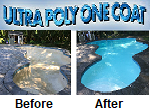 ed,
I can't tell which is more likely. Try this. Place a 3"
chlorine tablet on a spot and leave in place overnight. If
the stain is removed, it is black algae in all probability.
If the stain is not removed, it is either a metals problem
or a pool finish problem that will probably require a
refinishing. Try this. Place 1/2
pound of pH reducer powder in a white sock and drop onto a
stain. Leave in place for 15 minutes. If the stain is
removed, the problem is definitely metals: iron, copper,
manganese, etc. If not, try placing a few vitamin C tablets
on a stain, with the filter off. Leave in place until
dissolved. If this does not work, that leaves a pool finish
problem are the most likely cause. Realistically, I would
not invest a lot of time and money on this problem, given
the fact that the pool surface is 20 years old and well past
its expected life. That is unless the chlorine tablet, acid
or vitamin C worked. If not, it is not unusual to have
such problems, as the plaster wears thin. You have the
option of having the pool replastered or painting.
Ultra Poly One Coat is
a hybrid-epoxy coating, that is used in pools and water
parks, all across the country. It requires easy preparation,
with NO acid wash required. I hope
that I have been helpful. ed,
I can't tell which is more likely. Try this. Place a 3"
chlorine tablet on a spot and leave in place overnight. If
the stain is removed, it is black algae in all probability.
If the stain is not removed, it is either a metals problem
or a pool finish problem that will probably require a
refinishing. Try this. Place 1/2
pound of pH reducer powder in a white sock and drop onto a
stain. Leave in place for 15 minutes. If the stain is
removed, the problem is definitely metals: iron, copper,
manganese, etc. If not, try placing a few vitamin C tablets
on a stain, with the filter off. Leave in place until
dissolved. If this does not work, that leaves a pool finish
problem are the most likely cause. Realistically, I would
not invest a lot of time and money on this problem, given
the fact that the pool surface is 20 years old and well past
its expected life. That is unless the chlorine tablet, acid
or vitamin C worked. If not, it is not unusual to have
such problems, as the plaster wears thin. You have the
option of having the pool replastered or painting.
Ultra Poly One Coat is
a hybrid-epoxy coating, that is used in pools and water
parks, all across the country. It requires easy preparation,
with NO acid wash required. I hope
that I have been helpful.
Sincerely. Alan Schuster,
1/26/2017
► Black
(Algae) Pool?
Alan, please help. We have a big
24,000 gallon above ground pool. We tried to take the water
out (thank God we couldn't) and clean it. Well it is now
only about 6 inches below the skimmer, and we need to get it
ready for swimming and it has turned BLACK. What and how
much algaecide should we use to get it to a point were we
can start chlorinating it again. We had the chlorine levels
really low and the pump off for the winter. Please help us.
Donna and Michael, Deltona, FL, 2/23/2016
In your e-mail subject line, you used the phrase "black
algae." However, from the content of your letter, it is
apparent that this may not be the case. Clearly, you need to
start by getting the Free Chlorine elevated, as soon as
possible. Add 5 pounds
of a quick-dissolving shock or 5 gallons of liquid chlorine.
Keep the filter running and make sure that the pH is
7.2-7.6. Retest the Free Chlorine, after a few hours and
repeat this dosage, if the Free Chlorine level is below 1-3
PPM. Keep adding chlorine until the Free Chlorine is at
least 1-3 PPM, after an overnight period, or the water is
noticeably improved. The water may remain cloudy, as the
algae is decomposed. If at
this point, you see black deposits on the walls, it is
possible that you do have black algae. Treating black algae
will require a regimen as follows: boost the Free Chlorine
to 10 PPM, add an initial dose of a "quat" algaecide to act
as a wetting agent, add an initial of a polymer algaecide,
lower the pH to 7.2, redirect the water flow to send more
water towards the affected areas and use a brush to scrub
the deposits. Once the problem is solved, resume normal
chlorination and add a weekly dose of the polymer algaecide.
I hope that this information proves helpful.
Sincerely. Alan Schuster, 2/23/2016
► Not Quite
Black Algae?
My pool developed a black
discoloration about 3 feet in diameter on the bottom. It is
a 24' round above ground pool. It happened one day after I
added a couple of bags of shock. I have been treating it
with a black algaecide and shock for more than a week and
there is no improvement. I did some browsing through the
archives and I thought that I would give the acid powder in
a sock a try. I shut the filter off and dropped the sock
into the middle of the discoloration. Within minutes, I
could see a difference. As the acid was dissolving, it was
spreading along the bottom and the stain was disappearing.
Soon it was all gone. Can you explain what happened? Thank
you!
Stan, Staten Island, NY, 7/23/2009
The one thing that we do know is that it was not black
algae. Not all dark discolorations are black algae. Algae is
less likely to appear after a shock treatment. It seems
certain that the problem was caused by the presence of some
heavy metals: iron, manganese, copper, etc. When you added
the shock, the chlorine content rose and the pH changed and
that set some precipitation into motion. The fact that the
acid so easily removed the discoloration, confirms that the
problem was mineral and not algae. You have two more things
to do, in case you have not already done them. Add a dose of
a quality Mineral Treatment, such as phosphate-free,
Liquid
METALTRAP, to help complex the minerals that you just
dissolved. Bring in a water sample for heavy metal analysis.
This may help confirm the problem. Thereafter, use a
METALTRAP Filter to remove any heavy metals, prior to the
addition of any makeup water. Clearly, things are looking
better for you. Enjoy the summer and I'm glad the advice
worked so well. appear after a shock treatment. It seems
certain that the problem was caused by the presence of some
heavy metals: iron, manganese, copper, etc. When you added
the shock, the chlorine content rose and the pH changed and
that set some precipitation into motion. The fact that the
acid so easily removed the discoloration, confirms that the
problem was mineral and not algae. You have two more things
to do, in case you have not already done them. Add a dose of
a quality Mineral Treatment, such as phosphate-free,
Liquid
METALTRAP, to help complex the minerals that you just
dissolved. Bring in a water sample for heavy metal analysis.
This may help confirm the problem. Thereafter, use a
METALTRAP Filter to remove any heavy metals, prior to the
addition of any makeup water. Clearly, things are looking
better for you. Enjoy the summer and I'm glad the advice
worked so well.
Sincerely. Alan Schuster, 7/23/2009
► Black
Algae: Is It Or Isn't It?
We have an above ground 30' round pool
which is about 5 years old. The first 2 years, we had no
problems with clarity and no problems with water condition.
In the 3rd year, we noticed a dark stain on the bottom which
runs about 3-4 feet in length about 1' wide in the circular
shape of the pool. We've been told repeatedly that we are
dealing with black algae. We have gone to just about every
pool shop in the area and have tried multitudes of treatment
options, including mustard & copper products, while adding
the scrubbing morning, noon, night routine. While some of
the treatments worked, they only worked temporarily…only to
wake up one morning and find the same spot re-appearing.
(Perhaps they should call this organism magic algae.) Not
only has it been an investment to make our pool clear and
stain-free, we have worked very hard to maintain its
condition. Since we live in New England, where the pool
season is only 3-4 months long, at best, we and our kids
enjoy our pool. As we have spent hundreds of dollars over
the years on chemicals that we were promised would solve the
problem, and have spent plenty of hours cleaning our pool
rather than swimming, we are contemplating replacing our
liner completely. Do you think this is a radical remedy or
do you have one last solution for us? Thanks for any advice
you may have to offer. Regards from New England
Bridgitte T., New England, 5/3/2009
My guess it that it is not "black algae." You apparently
have tried to treat this as algae, without success. The
stain is probably the result of minerals such as: copper,
iron and/or manganese. A water analysis should help to
confirm this. Let's try
this! Shut off the filter. Put 1/2 pound of pH reducer in a
white sock and drop onto a stained area. Leave in place for
5-10 minutes. Move around with a vacuum pool, afterwards. If
improvement is seen, it is positive confirmation that the
problem is mineral, most likely due to iron or copper.
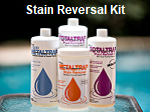
A MetalTrap Stain Reversal Kit
contains everything you need to remove the stains, eliminate
the metals from the pool water and help prevent a
recurrence, after the chlorine level is restored. Good luck
and enjoy the season.
Sincerely. Alan Schuster, 5/3/2009
► Black Pool
Algae Or Not?
Large pool facility, i.e. water park,
has an accumulation of slippery blackish-green stuff on a
wooden stair bridge walkway. There is a large pool that runs
under the bridge of stairs. The facility operations manager
says the blackish-green stuff on the stairs is black
algae. This area is an open area and traveled over
frequently, meaning that it's kept sufficiently watered from
pedestrians walking over it. Is it possible for algae, any
type of algae to grow on stairs? Also, would the same
techniques to get rid of it be that of getting rid of it
from a pool? Thanks so much for your help!
Melanie C., 5/20/2016
Unless you're a
microbiologist, it is difficult to put labels on
microorganisms. To me it sounds like mildew or fungus. Could
be it algae or something else? Probably. The easiest way to
eliminate the problem is with power washing and/or spraying
the area with liquid chlorine. It's not permanent and it
will come back. Inasmuch as people walk on the area, I would
not suggest applying algaecides to the surface, so as to
avoid creating a slippery surface. This is very common
problem in Florida and other damp, humid and warm locations:
on sidewalks, patios and roofing tiles. I
hope the advice helps.
Sincerely. Alan Schuster,
5/20/2016
► Out Of
Reach?
Your web site has been extremely
useful. I have an Continuous Swim Pool and initially used
the mineral purifier system with low level chlorine levels.
After a few months, I noted a sticky dark area on the vinyl
floor near one of the benches. where the return water goes
for the swim current. I am sure it is black algae and it
developed under one of the benches because of poor
circulation and low chlorine levels. The swim current is on
no more than 30 minutes or so a day and the area under the
bench is isolated from the normal pool circulation. There
is no way to scrub that area unless I partially drain the
pool and dismantle the whole swim current propulsion
assembly and benches. On the other hand, I have improved
the exposed area with treatment using a quat, polyquat, and
adding some copper. I am using bromine now with non-chlorine
and chlorine granular shock (putting some granules through a
crack between the bench and wall). I stopped the mineral
purifier. I am scrubbing the exposed area. Is it possible to
eradicate black algae without scrubbing behind the benches?
Can I expect to at least control it doing what I am doing?
Dismantling the system would be a major undertaking
especially if I could not eradicate the black algae
completely anyway or if it came right back. I would
appreciate your thoughts.
Sean H., Jacksonville, NC, 3/18/2007
Assuming that it is black algae, you seem to have followed
the regimen that I normally recommend. However, the use of
the copper algaecide was not something that I would have
suggested, under these circumstances. The mineral sanitizer
was already contributing copper to the water. The problem in
dealing with some types of algae is that they form a water
repellent film on their surface which can act as a chemical
barrier. Using both a polymer and quat algaecide might
provide better results, given the bromine is destroyed by
the SUN's UV rays. Try and add the bromine, after
sunset. You have correctly concluded, the combination of
inaccessibility and poor circulation is not helping the
situation. You can dramatically improve circulation an reap
the benefits, by installing The Circulator,
in each return jet fitting. Temporarily lowering the pH to 7.0 and boosting the
bromine level to 10 PPM and keeping it there for a few days
might help. Another viable option would be to use a power
washer to help dislodge the algae, allowing the chemicals to
better act in destroying the growth. You should be able to
use the power washer under water. Once you eliminate the
problem, I suggest that you consider adding an
ozonator, as
backup to the bromine. Good luck and I hope that I have been
of help. Let me know how it turns out!
Sincerely. Alan Schuster, 3/18/2007
|
Visit The Website Stores . . . for
better informed shopping!!! |
|
|
Shipping is FREE* . . . within
the Continental U.S.
A $9.99
handling charge will apply
to Continental U.S. Orders,
under $75.00. Orders
outside of the Continental
U.S. may require some
additional charge, based on
quantity and destination.
Most products can be
shipped World-Wide. International
and orders outside of
Continental U.S. - see
comments on the ordering
pages. |
|
|
Major
Credit Cards and PayPal are accepted. |
|
|
|